Updating your news feed...

NEWS EXPRESS is Nigeria’s leading online newspaper. Published by Africa’s international award-winning journalist, Mr. Isaac Umunna, NEWS EXPRESS is Nigeria’s first truly professional online daily newspaper. It is published from Lagos, Nigeria’s economic and media hub, and has a provision for occasional special print editions. Thanks to our vast network of sources and dedicated team of professional journalists and contributors spread across Nigeria and overseas, NEWS EXPRESS has become synonymous with newsbreaks and exclusive stories from around the world.












Loading banners
Loading banners...

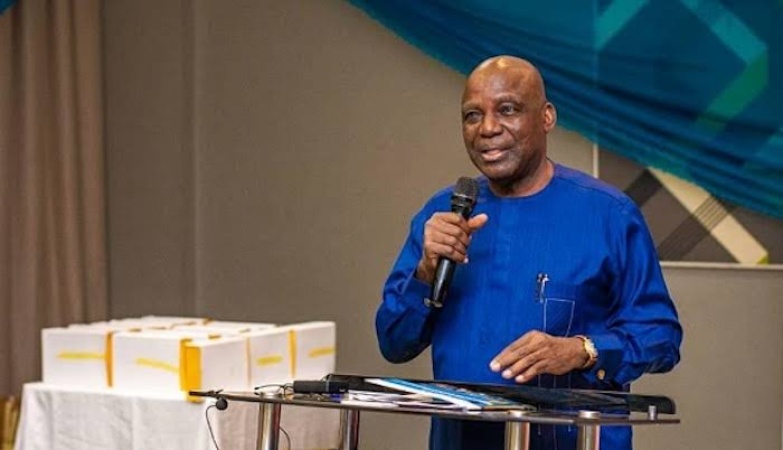
Ex-Minister of Power Prof Nnaji
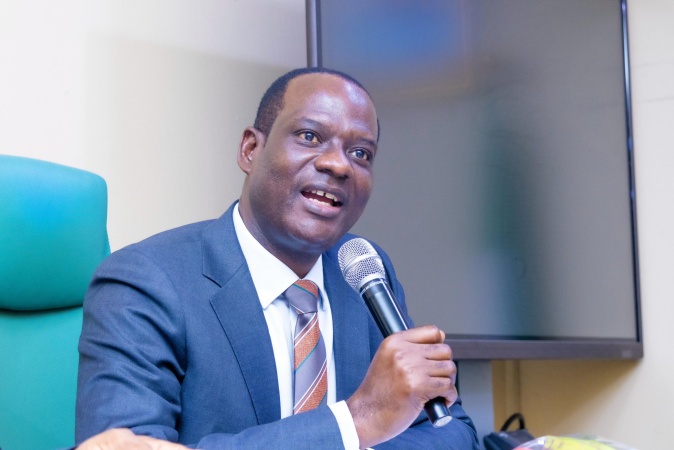
Bishop of Sokoto Matthew Kukah and former Minister of Power Prof. Bart Nnaji have unveiled an ambitious enterprise initiative to provide electricity, affordable housing, healthcare, practical education, and jobs to millions of Nigerians, particularly the poor.
Veritas University Abuja established the initiative, known as Veritas Enterprise, as an artificial intelligence (AI)-enabled company designed to identify urgent social and economic needs, mobilise technology and capital, recruit operators, and build independent businesses capable of delivering solutions on a scale.
Kukah and Nnaji co-chair the 13-member Founding Board of the new enterprise.
Nnaji, founder and chairman of Geometric Power Group and developer of the Aba Integrated Power Project, served as Nigeria’s Federal Minister of Power from July 2011 until his resignation in August 2012.
The Presidency also recently described him as a former Minister of Power who served from 2011 to 2012.
Kukah founded the Kukah Centre and is an Oxford Senior Rhodes Fellow, while Veritas Enterprise CEO Emmanuel “Emeka” Orjih is a Wharton MBA, development-finance veteran, and founding director of the Centre for AI, Digital Justice and Economic Rights.
According to the statement announcing the initiative, Veritas Enterprise will initially focus on major challenges facing Nigerians, including unreliable electricity, unaffordable productive equipment, weak primary healthcare, inadequate housing, food losses, unemployment, and small businesses’ inability to access larger markets.
Its electricity programme will combine Nigerian manufacturing with financing arrangements that let working people and organised groups obtain power systems with little or no upfront payment, subject to each product’s terms.
Explaining the vision, Orjih said the initiative would operate around what he described as the H3E framework — health, energy, education and enterprise.
“Our framework is H3E: health, energy, education and enterprise,” he said.
Orjih said Health Commons would extend primary healthcare, while clean electricity would power homes and productive activities.
Practical education, he added, would give people opportunities to use AI, while enterprise development would turn those capabilities into income, assets, and jobs.
The enterprise also plans to establish AI Parks in schools and universities where students, workers, and entrepreneurs can gain practical experience in artificial intelligence, like how medical students gain practical experience in teaching hospitals.
It will also deploy distributed mini data centres to expand access to computing while helping African institutions keep sensitive information on the continent.
The initiative targets nano and micro enterprises, which account for an estimated 97 to 99 per cent of businesses in Africa but remain largely fragmented and hard for institutional capital to reach.
Through AI, Veritas Enterprise plans to organise demand, verify participants, reduce service costs, and connect businesses with productive assets, technology, finance, and markets.
Its areas of operation will include small enterprises, finance, healthcare, education, food, housing, clean energy, industry, computing, logistics, labour mobility, exports and creative enterprise.
Other members of the Founding Board include Veritas University Vice-Chancellor, Rev. Fr. Prof. Hyacinth Ichoku; Prof. Emeka Aniagolu; Dr. Sam Amadi, former electricity regulator; Michael Ibrahim Magaji, former Citibank executive and President-General of USOSA; Dr. Margaret Ejima Akoje; Oluwatoyin Aralepo; Valentine C. Amadi; Akinwande Pearse; Prof. Paul Obo Idornigie, SAN; and Prof. Gabriel Bassey Egbe.
The initiative grew out of Humanitas AI, launched at Veritas University after Pope Leo XIV issued Magnifica Humanitas.
At the Vatican presentation of the encyclical, the Pope appeared alongside Christopher Olah, co-founder of Anthropic, the company behind Claude, and accepted an invitation to work with the Church and technology community.
Veritas University subsequently became the first university in the world to sign the Humanitas AI Compact on June 25, 2026.
Veritas Enterprise said it would work through universities, Catholic institutions, associations and community networks with established trust and local reach.
The Catholic education network comprises approximately 232,000 schools and universities worldwide, including roughly 82,000 schools in Africa, according to the statement.
AI will organise demand across these networks, while leading universities, international technology companies, and financiers will provide knowledge, technology, and capital.
The statement added that Nigerian production would help build local industry and create jobs.
The enterprise’s University Enterprise Commons will also connect nearly 700 faith-based tertiary institutions with technology-focused universities and polytechnics to develop businesses that address social problems.
Veritas Enterprise and the University Enterprise Commons are currently completing their first deployment programme with leading universities, technology companies and international financiers.
The rollout is expected to begin in the coming months through recognised associations, cooperatives, unions, universities, and faith institutions.
The organisers said further announcements would provide details on the programmes, locations, participating institutions, eligibility, and timelines, urging interested Nigerians to wait for information through their existing organisations. (The Nation)