Updating your news feed...

NEWS EXPRESS is Nigeria’s leading online newspaper. Published by Africa’s international award-winning journalist, Mr. Isaac Umunna, NEWS EXPRESS is Nigeria’s first truly professional online daily newspaper. It is published from Lagos, Nigeria’s economic and media hub, and has a provision for occasional special print editions. Thanks to our vast network of sources and dedicated team of professional journalists and contributors spread across Nigeria and overseas, NEWS EXPRESS has become synonymous with newsbreaks and exclusive stories from around the world.
















Loading banners
Loading banners...

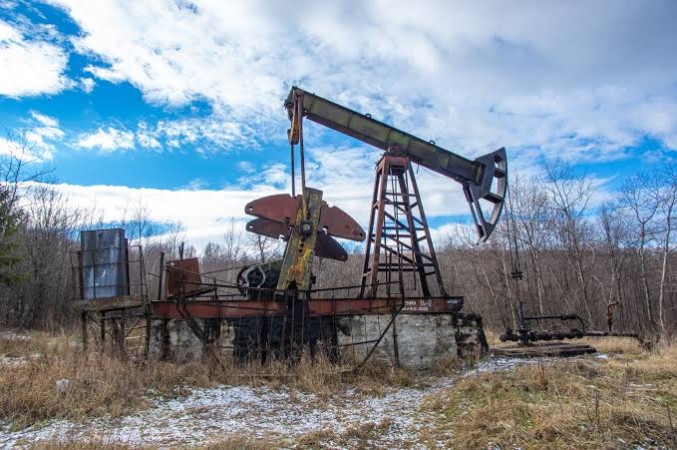
The abandoned oil fields
The Nigerian Upstream Petroleum Regulatory Commission (NUPRC) has recovered more than 50 fallow oil fields for fresh development after enforcing the Petroleum Industry Act (PIA) provisions on acreage management.
This is coming as the upstream regulator has reiterated its plans to enforce the drill-or-drop policy in a bid to end the ‘warehousing’ of blocks awarded to operators, as the commission intensifies its drive to unlock dormant assets and accelerate oil and gas production.
The commission disclosed this in Abuja during a panel session as part of its fifth anniversary, where operators and regulators outlined the scale of investment expected in Nigeria’s upstream sector and the reforms required to translate the country’s substantial hydrocarbon resources into greater economic value.
The NUPRC’s Director, Acreage Management, Olaide Shaw, who spoke on one of the panels, said the recovered fallow fields had been returned to the licensing process after their previous holders failed to develop them.
She explained that the commission’s “drill or drop” policy was designed to ensure that companies holding oil and gas acreage either progressed with their committed work programmes or relinquished the assets for other investors capable of developing them.
“About two years ago, we had the fallow fields campaign, which really, really, you know, fluttered the industry. We were able to recover over 50 fallow fields by implementing a portion of the PIA. And today, you would see that those fallow fields have been put into subsequent licensing rounds for folks that will be able to develop them,” Shaw said.
According to her, the recovered fields had subsequently been put into licensing rounds for investors prepared to develop them, stressing that any acreage that remained undeveloped would again be returned to the pool.
“An acreage that is being ‘warehoused’ means taking photo-ops, putting a licence in the briefcase, taking lovely pictures, posting on social media, and then when the licence is about to expire, (the awardee) runs to the regulator, ‘I need more time.’ More time for what? No plans whatsoever, unresourced, (just) photo-ops,” she said.
According to her, acreage warehousing also occurs where companies with large portfolios concentrate their resources on their most attractive assets while retaining less-prioritised blocks without assigning resources to develop them.
She contrasted that with a working acreage, where seismic acquisition, drilling preparations, procurement, contracts and other development activities were actively taking place.
“A working acreage is one that has activities. It is resourced, money is spent, it’s being worked, seismic is going on, you’re ordering your long-lease items, showing commitment to work. You are basically also signing your drilling contracts,” Shaw said.
She added: “Acreage warehousing is a no-no. Any acreage that has been warehoused, we guarantee you, we’ll put them in the basket.”
She further stated that the commission has now gone totally digital, stressing that this has enhanced the work of the commission.
“Today in the Commission, we don’t have papers moving from desk to desk. This means that we’re able to approve any of the applications from wherever we are. So we’ll continue to do that.
“The other commitment that is very critical in unlocking hydrocarbons is data. And we’re working aggressively with our multi-client partners such as TGS, Verizon and the rest of those to ensure that data is available so that you can quickly mature,” Shaw explained.
The intervention came as Renaissance, one of the major independent operators in Nigeria, outlined an ambitious plan to raise its production to one million barrels of oil equivalent per day by 2030.
Chief Executive of Renaissance Energy, Tony Attah, said the company was currently producing about 265,000 barrels of oil per day and planned to increase this to about 500,000 barrels per day, while simultaneously expanding its gas contribution to Nigeria.
“Our ambition is for 1 million barrels of oil equivalent a day by 2030. And in today’s calendar, you’re counting now in months,” Attah said.
He disclosed that Renaissance was already delivering more than 2.2 billion cubic feet of gas per day to the Nigeria LNG project, a level originally targeted as part of its 2030 ambition.
Attah, however, said the company’s ambition had evolved beyond supplying gas for export, stressing that Nigeria needed to retain more gas domestically if it was to achieve industrialisation.
“Consistent with our vision of industrialisation of Nigeria, we’re very well aware that export gas will not industrialise Nigeria. So for that, we are committed to bringing in 1 BCF of gas into Nigeria,” he pledged.
He said Renaissance was currently supplying about 200 million standard cubic feet of gas per day domestically and was therefore targeting an increase of almost five times that volume.
Attah identified collaboration with the NUPRC and the Nigerian National Petroleum Company Limited (NNPC) as critical to achieving the target. “The partnership with NUPRC and NNPC, of course, are the main levers that we need to be able to make this happen,” he said.
In his intervention, both as a keynote speaker and panelist, Chief Executive of First E&P and Governor, Organisation of Petroleum Exporting Countries (OPEC), Ademola Adeyemi-Bero, said the country was in the middle of a major investment cycle that could attract about $100 billion into the oil and gas industry.
He stressed that the impact of the investment must be felt within Nigeria through local contractors, service companies, communities, employment, taxes and other economic activities.
“We are moving from an extractive industry to value retention. So when that $100 billion has been spent, we must make sure it’s felt in Nigeria. Not just in China or Korea or Singapore or Houston. It must be felt here,” he said.
Adeyemi-Bero said particular attention should be paid to strengthening the domestic oilfield services industry so that Nigerian contractors have the vessels, rigs, equipment and financing required to execute the projects that were coming.
“When you say drill or drop, we must make sure that when somebody comes to drill a well with us, the competence is there, the capacity is there. We can do the best FDPs, take the best investment decisions. But our execution must be world-class,” he said.
He urged financial institutions to provide greater access to capital for service companies, noting that inadequate contractor capacity could ultimately delay or stall final investment decisions.
The OPEC governor also assured that when the time comes for Nigeria to request a new quota next year, the country will get it.
Adeyemi-Bero said Nigeria’s target of increasing oil production to 3 million barrels per day by 2030 represented a major challenge, but argued that the country should focus less on debating whether the target was achievable and more on building the project pipeline required to get there.
“Bonga Southwest is supposed to be 180,000 barrels a day when it comes. So, we need roughly eight Bongas. It’s not impossible. It’s when we say we stop because it’s a challenge that we fail,” he said.
He also cautioned against awarding acreage to investors without the financial capacity to execute their commitments, noting that exploration wells were particularly difficult to finance through debt.
“It’s important that those who win it, we actually assess that they can actually do this. Because debt will not make it happen. It will always be equity,” he said.
Also speaking, Eni’s Maurizzio Pinna, said the focus should be on collaboration and faster project execution, stressing that the company was committed to bringing its fast-track approach to project development in Nigeria.
Similarly, the NUPRC’s Executive Commissioner, Development and Production, Enorense Amadasu, said the regulator was focused on creating an ecosystem that would make the upstream industry more competitive and predictable.
“As 21st century operators that want to be ahead of others with global distinction, we want to enable business. Our drive in making sure that we achieve the national aspiration. That we make business competitive. That we provide clarity.
“That we make the work in the industry to be very predictive and sensitive, such that when the investors come, they know that they get value for their money,” he pointed out.
He said the commission ultimately wanted operators to become increasingly self-regulatory while the regulator concentrated on consistency, continuous improvement and removing barriers to investment and production.
Also speaking on one of the panels, Executive Vice President and Country Chair, Shell Nigeria, Elohor Aiboni, said the acceleration of investment in the upstream sector was already underway, particularly in the deepwater.
She cited Bonga North and other deepwater projects as being in execution, while the signing of some addendums to existing arrangements had created opportunities for additional projects. (THISDAY)