Updating your news feed...

NEWS EXPRESS is Nigeria’s leading online newspaper. Published by Africa’s international award-winning journalist, Mr. Isaac Umunna, NEWS EXPRESS is Nigeria’s first truly professional online daily newspaper. It is published from Lagos, Nigeria’s economic and media hub, and has a provision for occasional special print editions. Thanks to our vast network of sources and dedicated team of professional journalists and contributors spread across Nigeria and overseas, NEWS EXPRESS has become synonymous with newsbreaks and exclusive stories from around the world.














Loading banners
Loading banners...

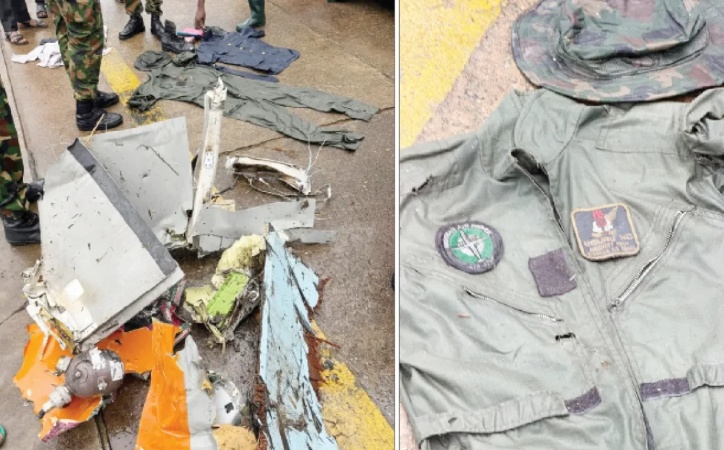
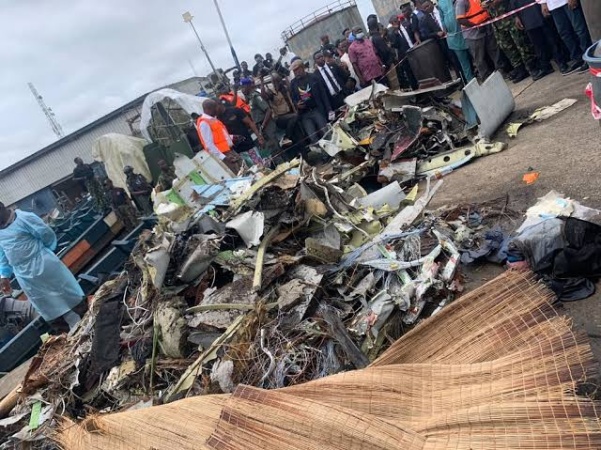
Scene of the crash
Residents of Igbokoda in the Ilaje Local Government Area of Ondo State have described the late pilot of the Nigerian Air Force (NAF) ATR-42 aircraft that crashed in the community as ‘a big hero.’
The residents said the Ill-fated aircraft appeared to have developed a problem while airborne before the pilot allegedly struggled to steer it away from densely populated areas to the swampy terrain.
The aircraft came down in the Igbokoda area on Monday before becoming submerged, prompting an intensive search and recovery operation involving the military and other emergency agencies
NAF had released the names of 25 personnel and passengers killed in the crash, comprising five crew members and 20 passengers.
The crew were: Squadron Leader MI Aburime, Flight Captain; Squadron Leader AP Man-Ugwueje, co-pilot; Flight Lieutenant IS Bako, co-pilot; Warrant Officer Abubakar A, aircraft technician; and Corporal Uguru HC, aircraft technician.
The aircraft, which was reportedly on a routine mission from Benin City, Edo State, to Lagos, crashed in a swampy area near the Forward Operating Base in Igbokoda.
Speaking to The Nation on Wednesday in Igbokoda, one of the residents, Abigail Ikuomola explained that the Ill-fated aircraft was already in difficulty before it descended rapidly into the swamp.
Ms Ikuomola, who witnessed the crash, said the movement of the aircraft also suggested that the pilot was attempting to regain control of the plane.
She added that the pilot’s final actions may have prevented a much bigger tragedy.
According to her, the ill-fated aircraft did not crash into the heart of Igbokoda community but ended up in a difficult-to-access swampy area, limiting the extent of destruction on the ground.
“The pilot is a big hero because he really averted a tragedy. The aircraft wanted to crash into the community but he had to manoeuvre it into the swamp behind the water. He should be celebrated in death for saving us from catastrophe.
“Although we are not happy about the tragedy. It involves lives and over twenty persons died. They are family members who paid the ultimate price,” She said.
The crash has continued to generate concerns among residents, particularly over what could have happened had the aircraft crashed directly into residential buildings or crowded part of the community.
Another resident, Abiola Ojajuni, who spoke with our reporter, maintained that the pilot’s apparent effort to control the aircraft in its final moments should not be overlooked in assessing the tragedy.
He said the circumstances surrounding the crash indicated that the pilot may have been trying to avoid buildings and populated areas.
Ojajuni added that the aircraft could have caused significant casualties if it had come down in a residential neighbourhood in the Igbokoda community.
“From what we saw, the aircraft was coming down and it looked like there was a problem. But it did not come down directly on houses. That is why many people believe the pilot tried to control where the aircraft would land.
“The pilot deserved commendation in death. He saved further situations that could have been a double tragedy. It was scaring we later heard the loud sound like a bomb,” he said.
Ojajuni further revealed, “We are mourning those involved in the crash, but we also have to acknowledge what could have happened if the aircraft had fallen on houses. From what we saw, it appears the pilot was struggling with the aircraft.”
The NAF authorities have yet to release a detailed report on the circumstances surrounding the crash.
Meanwhile, Governor Lucky Aiyedatiwa has said only the pilot of the aircraft could have explained what led to the crash.
Aiyedatiwa said accounts from residents indicated that the aircraft appeared to have developed a problem while airborne, adding that the pilot may have attempted to steer it away from the populated area before it crashed into a swamp.
The governor spoke on Wednesday when he visited the crash site to assess the ongoing search and recovery operation.
He said: “Only the pilot would have been able to explain the efforts made to manoeuvre the aircraft.
“From accounts given by residents, they saw the aircraft descending with what sounded like an engine problem. It was coming down and almost appeared set to crash within the community.”
Aiyedatiwa, who was accompanied to the site by the Commanding Officer of the Nigeria Navy, Forward Operating Base (FOB) Navy Captain Andy Alemongwa, described the incident as a tragedy, saying no survivor had so far been found among the approximately 25 people on board.
“Whatever happened that led to the crash of the aircraft here at Igbokoda is something only the pilot would have been able to explain. Unfortunately, there is no single survivor in that aircraft as we speak today,” he added.
The governor said the rescue operation had involved the Nigerian Navy, NAF, National Emergency Management Agency (NEMA), Ondo State Emergency Management Agency (SEMA), and residents of the community.
He said body parts had been recovered and preserved for further investigation, while clothing belonging to some Air Force personnel and fragments of the aircraft had also been found.
However, he said the main wreckage remained submerged in the swamp.
“Unfortunately, the main body of the aircraft has not been sighted. It is submerged in the swamp,” Aiyedatiwa said.
He explained that the difficult terrain initially hampered access to the crash site, prompting him to direct the Ministry of Works to deploy two swamp buggies to open up the waterways.
“When we realised there was no real access to the location, I directed the Ministry of Works to deploy two swamp machines, known as Swamp Buggies, to create wider access on the waterways,” he said.
Aiyedatiwa said the machines had since been deployed and were helping rescue teams gain better access to the area with larger boats.
He added that Navy and local divers were continuing the search for the submerged aircraft, noting that the area was particularly deep.
He commiserated with President Bola Tinubu, the families of the deceased and the Nigerian Air Force over the loss of the personnel.
The governor said the deceased were young Nigerians who had committed themselves to defending the country’s territorial integrity.
He also commended the Federal Government for declaring three days of mourning and ordering the lowering of the national flag in honour of the fallen personnel.
Aiyedatiwa said the consequences would have been worse had the aircraft crashed in the middle of the community.
“I also thank God that the aircraft did not crash in the middle of the community. That would have been a major catastrophe for the entire area,” he said.
The Nigerian Navy has intensified the search for the submerged aircraft, deploying specialised ‘sonar equipment’ to locate its wreckage.
The Flag Officer Commanding, Western Naval Command, Rear Admiral Abubakar Abdullahi Mustapha, and the Air Officer Commanding, Logistics Command, Nigerian Air Force, Air Vice Marshal Abubakar Abdul Suleh, had inspected the crash site as military authorities intensified recovery efforts.
Mustapha said the use of sonar became necessary because the aircraft went beneath the water in the swampy terrain, making visual identification and conventional recovery methods difficult.
“Military personnel have continued to work around the crash location as efforts are made to establish the exact position of the aircraft and recover the wreckage.
The recovery operation is expected to provide investigators with critical evidence that could help establish what happened before the crash,” he said.
He added that the aircraft’s cockpit, engines, flight-control systems and other components could provide vital clues about the circumstances leading to the incident. (The Nation)