Updating your news feed...

NEWS EXPRESS is Nigeria’s leading online newspaper. Published by Africa’s international award-winning journalist, Mr. Isaac Umunna, NEWS EXPRESS is Nigeria’s first truly professional online daily newspaper. It is published from Lagos, Nigeria’s economic and media hub, and has a provision for occasional special print editions. Thanks to our vast network of sources and dedicated team of professional journalists and contributors spread across Nigeria and overseas, NEWS EXPRESS has become synonymous with newsbreaks and exclusive stories from around the world.






.webp)

.webp)

Loading banners
Loading banners...

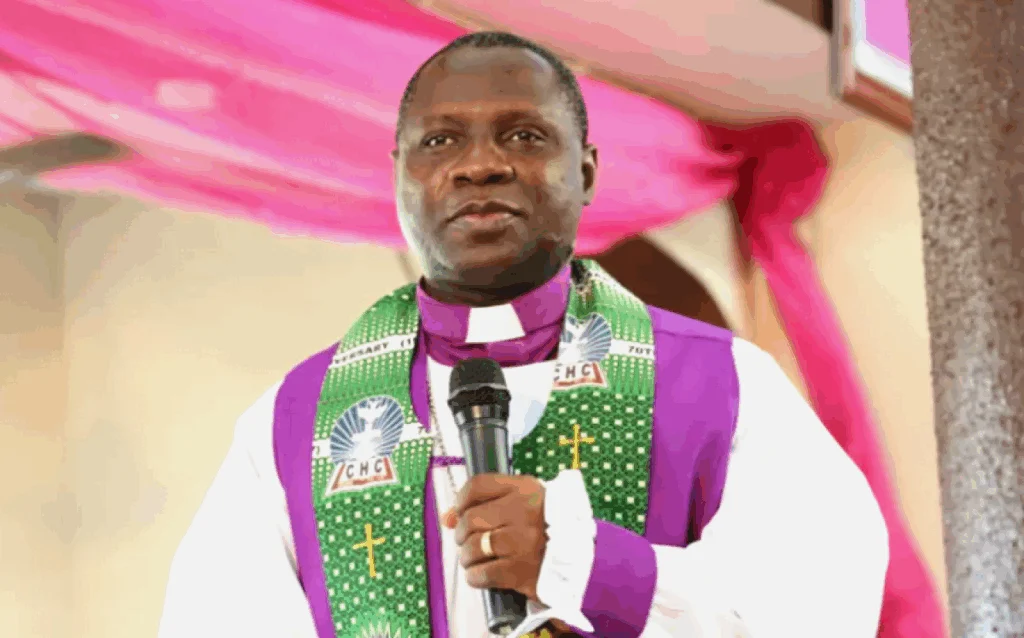
President of the Christian Association of Nigeria (CAN), Archbishop Daniel Okoh, has urged political parties and their candidates to refrain from exploiting religion, ethnicity and regional sentiments ahead of Nigeria’s 2027 general elections.
Okoh made the call in Abuja on Friday while delivering a press statement to mark CAN’s 50th anniversary, themed “Walking Together in Faith: Celebrating 50 Years of CAN’s Journey.”
He warned that political leaders must not allow electoral competition to deepen religious and ethnic divisions or expose young Nigerians to violence.
“Political parties and candidates must resist the temptation to weaponise religion, ethnicity and regional sentiments,” Okoh said, stressing that Nigerians had witnessed enough bloodshed and division during election periods.
He urged political actors to make the 2027 elections a contest of ideas and policies rather than one characterised by violence, intimidation, hate speech and incitement.
According to him, political leaders should take responsibility for the conduct of their supporters and ensure that every Nigerian is free to vote according to their conscience without coercion or manipulation.
“Elections should be a contest of ideas, not a contest of violence; a competition for public service, not a licence for personal destruction,” he said.
The CAN president also called for a more nuanced understanding of insecurity and conflict in Nigeria, cautioning against reducing every crisis to a Christian-versus-Muslim confrontation.
While reaffirming CAN’s commitment to speaking out when Christians are attacked or discriminated against, Okoh said defending Christians should not be interpreted as hostility towards Muslims or other religious communities.
“Defending Christians does not mean fighting government. It does not mean hating Muslims or any other religious community,” he said.
He stressed that CAN opposed violence against anyone based on religion, ethnicity, or political persuasion.
“When a Christian is attacked because of his faith, we will speak. When a Muslim is attacked because of his faith, we should speak. When an innocent Nigerian is killed by terrorists, bandits or criminals, we must all speak,” he said.
Okoh said conflicts in Nigeria could have multiple dimensions, including religion, ethnicity, land disputes, political power, criminality and competition over resources.
He called for the protection of constitutional guarantees of religious freedom and equal citizenship, saying no Nigerian should be treated as a second-class citizen because of their faith, ethnicity, state of origin or political affiliation.
The CAN president also renewed calls on the Federal Government to strengthen Nigeria’s security architecture, saying insecurity remained one of the country’s most destructive challenges.
He cited terrorism, banditry, kidnapping, communal violence and farmer-herder conflicts as among the problems that had displaced communities, disrupted education and livelihoods, and affected places of worship.
“Early warning must lead to early response,” Okoh said, urging authorities to work more closely with communities and civil society organisations to identify emerging threats before attacks occur.
He acknowledged efforts by President Bola Ahmed Tinubu’s administration to reduce insecurity but said more could be done to improve the performance of security agencies.
“Every Nigerian is looking forward to seeing the end of killings in this nation,” he said.
Okoh said CAN would continue to maintain a relationship with government based on principle rather than political convenience.
“CAN is neither a government opposition party nor a government praise-singing organization. We are a Christian institution with a national responsibility,” he said.
He said the association would support government policies that promoted citizens’ welfare while speaking out when government failed to protect citizens or when constitutional rights were threatened.
“Our loyalty to truth cannot be compromised or subordinated to political proximity,” he said.
The CAN president also expressed concern over the economic difficulties confronting Nigerians, citing the rising cost of living, unemployment and the struggles faced by small businesses and families.
He urged the government to pursue policies that stimulate productive economic activity, create meaningful employment, support small and medium-sized enterprises and protect vulnerable Nigerians.
“Economic reform cannot become an abstract exercise divorced from the realities of ordinary families,” he said.
Reflecting on CAN’s history, Okoh said the association was established in 1976 to provide a platform for Christian unity and collective engagement on issues affecting the Church and Nigerian society.
He recalled that church leaders from different Christian traditions met in 1976 following an invitation by the Federal Military Government, then headed by General Olusegun Obasanjo, to discuss the introduction of the National Pledge and Flag Salutation in schools.
The church leaders subsequently met at the Catholic Secretariat in Lagos, where discussions on establishing a national ecumenical body eventually contributed to the emergence of CAN.
Okoh said the association had spent the past five decades engaging issues including religious freedom, democracy, good governance, insecurity, corruption, humanitarian crises, education, healthcare, poverty, youth development and electoral integrity.
He also highlighted CAN’s engagement with successive governments, security agencies, legislators, international organisations and development partners.
Looking ahead, Okoh said CAN would place greater emphasis on young people and women, describing them as critical to the association’s future.
He said CAN would pursue stronger programmes for mentoring, leadership development, skills development and participation in decision-making.
He also said the Church must engage responsibly with digital technology and artificial intelligence, particularly as young Nigerians increasingly use digital platforms for communication, learning and public discourse.
On women, he acknowledged progress in their participation within CAN structures but said more needed to be done to ensure meaningful representation in leadership.
“The future of CAN cannot be secured merely by speaking about the importance of women and young people. We must make real space for them at the table,” he said.
As CAN enters its next half-century, Okoh said the association would focus on deepening Christian unity, strengthening interfaith engagement, expanding humanitarian work and improving its institutional capacity.
He reaffirmed CAN’s support for the Nigeria Inter-Religious Council (NIREC), saying the platform should be strengthened to promote peaceful coexistence among Nigerians of different faiths.
CAN also plans to expand its involvement in areas including healthcare, education, poverty reduction, mental health, climate change, humanitarian assistance and community development.
Okoh described the 50th anniversary not as a retirement celebration but as a “re-commissioning” for the association.
“Fifty years is a milestone, but it is not the end of the journey,” he said. He called on Christians and other Nigerians to join CAN in promoting unity, peace, justice and national development.
The association’s 50th anniversary programme will include a road walk on October 3, an anniversary crusade on October 4, a football competition involving CAN teams from the six geopolitical zones from October 7 to 9, and a national ecumenical workshop on October 10.
Other activities include a Bible quiz and community responsibility project on October 13, a women and youth assembly on October 14, and a jubilee colloquium on October 15.
An anniversary music cantata is scheduled for October 16, while the presentation of awards and launch of the history of CAN, titled “CAN @ 50: Walking Together in Faith,” will take place on October 17.
2027: CAN President warns politicians against weaponising religion, ethnicity
President of the Christian Association of Nigeria (CAN), Archbishop Daniel Okoh, has urged political parties and their candidates to refrain from exploiting religion, ethnicity and regional sentiments ahead of Nigeria’s 2027 general elections.
Okoh made the call in Abuja on Friday while delivering a press statement to mark CAN’s 50th anniversary, themed “Walking Together in Faith: Celebrating 50 Years of CAN’s Journey.”
He warned that political leaders must not allow electoral competition to deepen religious and ethnic divisions or expose young Nigerians to violence.
“Political parties and candidates must resist the temptation to weaponize religion, ethnicity and regional sentiments,” Okoh said, stressing that Nigerians had witnessed enough bloodshed and division during election periods.
He urged political actors to make the 2027 elections a contest of ideas and policies rather than one characterised by violence, intimidation, hate speech and incitement.
According to him, political leaders should take responsibility for the conduct of their supporters and ensure that every Nigerian is free to vote according to their conscience without coercion or manipulation.
“Elections should be a contest of ideas, not a contest of violence; a competition for public service, not a licence for personal destruction,” he said.
The CAN president also called for a more nuanced understanding of insecurity and conflict in Nigeria, cautioning against reducing every crisis to a Christian-versus-Muslim confrontation.
While reaffirming CAN’s commitment to speaking out when Christians are attacked or discriminated against, Okoh said defending Christians should not be interpreted as hostility towards Muslims or other religious communities.
“Defending Christians does not mean fighting government. It does not mean hating Muslims or any other religious community,” he said.
He stressed that CAN opposed violence against anyone based on religion, ethnicity, or political persuasion.
“When a Christian is attacked because of his faith, we will speak. When a Muslim is attacked because of his faith, we should speak. When an innocent Nigerian is killed by terrorists, bandits or criminals, we must all speak,” he said.
Okoh said conflicts in Nigeria could have multiple dimensions, including religion, ethnicity, land disputes, political power, criminality and competition over resources.
He called for the protection of constitutional guarantees of religious freedom and equal citizenship, saying no Nigerian should be treated as a second-class citizen because of their faith, ethnicity, state of origin or political affiliation.
The CAN president also renewed calls on the Federal Government to strengthen Nigeria’s security architecture, saying insecurity remained one of the country’s most destructive challenges.
He cited terrorism, banditry, kidnapping, communal violence and farmer-herder conflicts as among the problems that had displaced communities, disrupted education and livelihoods, and affected places of worship.
“Early warning must lead to early response,” Okoh said, urging authorities to work more closely with communities and civil society organisations to identify emerging threats before attacks occur.
He acknowledged efforts by President Bola Ahmed Tinubu’s administration to reduce insecurity but said more could be done to improve the performance of security agencies.
“Every Nigerian is looking forward to seeing the end of killings in this nation,” he said.
Okoh said CAN would continue to maintain a relationship with government based on principle rather than political convenience.
“CAN is neither a government opposition party nor a government praise-singing organization. We are a Christian institution with a national responsibility,” he said.
He said the association would support government policies that promoted citizens’ welfare while speaking out when government failed to protect citizens or when constitutional rights were threatened.
“Our loyalty to truth cannot be compromised or subordinated to political proximity,” he said.
The CAN president also expressed concern over the economic difficulties confronting Nigerians, citing the rising cost of living, unemployment and the struggles faced by small businesses and families.
He urged the government to pursue policies that stimulate productive economic activity, create meaningful employment, support small and medium-sized enterprises and protect vulnerable Nigerians.
“Economic reform cannot become an abstract exercise divorced from the realities of ordinary families,” he said.
Reflecting on CAN’s history, Okoh said the association was established in 1976 to provide a platform for Christian unity and collective engagement on issues affecting the Church and Nigerian society.
He recalled that church leaders from different Christian traditions met in 1976 following an invitation by the Federal Military Government, then headed by General Olusegun Obasanjo, to discuss the introduction of the National Pledge and Flag Salutation in schools.
The church leaders subsequently met at the Catholic Secretariat in Lagos, where discussions on establishing a national ecumenical body eventually contributed to the emergence of CAN.
Okoh said the association had spent the past five decades engaging issues including religious freedom, democracy, good governance, insecurity, corruption, humanitarian crises, education, healthcare, poverty, youth development and electoral integrity.
He also highlighted CAN’s engagement with successive governments, security agencies, legislators, international organisations and development partners.
Looking ahead, Okoh said CAN would place greater emphasis on young people and women, describing them as critical to the association’s future.
He said CAN would pursue stronger programmes for mentoring, leadership development, skills development and participation in decision-making.
He also said the Church must engage responsibly with digital technology and artificial intelligence, particularly as young Nigerians increasingly use digital platforms for communication, learning and public discourse.
On women, he acknowledged progress in their participation within CAN structures but said more needed to be done to ensure meaningful representation in leadership.
“The future of CAN cannot be secured merely by speaking about the importance of women and young people. We must make real space for them at the table,” he said.
As CAN enters its next half-century, Okoh said the association would focus on deepening Christian unity, strengthening interfaith engagement, expanding humanitarian work and improving its institutional capacity.
He reaffirmed CAN’s support for the Nigeria Inter-Religious Council (NIREC), saying the platform should be strengthened to promote peaceful coexistence among Nigerians of different faiths.
CAN also plans to expand its involvement in areas including healthcare, education, poverty reduction, mental health, climate change, humanitarian assistance and community development.
Okoh described the 50th anniversary not as a retirement celebration but as a “re-commissioning” for the association.
“Fifty years is a milestone, but it is not the end of the journey,” he said. He called on Christians and other Nigerians to join CAN in promoting unity, peace, justice and national development.
The association’s 50th anniversary programme will include a road walk on October 3, an anniversary crusade on October 4, a football competition involving CAN teams from the six geopolitical zones from October 7 to 9, and a national ecumenical workshop on October 10.
Other activities include a Bible quiz and community responsibility project on October 13, a women and youth assembly on October 14, and a jubilee colloquium on October 15.
An anniversary music cantata is scheduled for October 16, while the presentation of awards and launch of the history of CAN, titled “CAN @ 50: Walking Together in Faith,” will take place on October 17. (Tribune)