Updating your news feed...
NEWS EXPRESS is Nigeria’s leading online newspaper. Published by Africa’s international award-winning journalist, Mr. Isaac Umunna, NEWS EXPRESS is Nigeria’s first truly professional online daily newspaper. It is published from Lagos, Nigeria’s economic and media hub, and has a provision for occasional special print editions. Thanks to our vast network of sources and dedicated team of professional journalists and contributors spread across Nigeria and overseas, NEWS EXPRESS has become synonymous with newsbreaks and exclusive stories from around the world.


Loading banners
Loading banners...

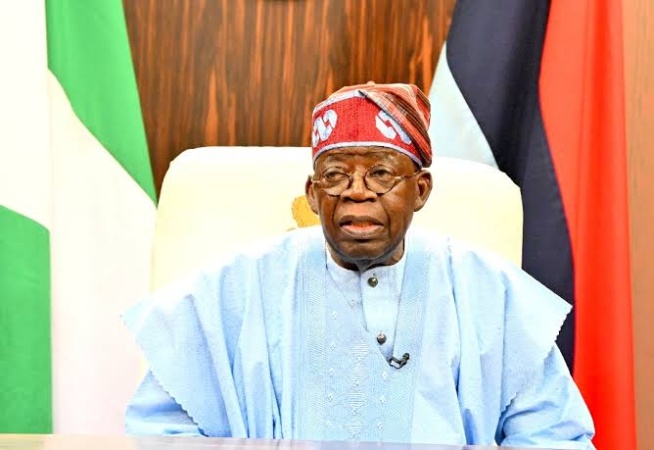
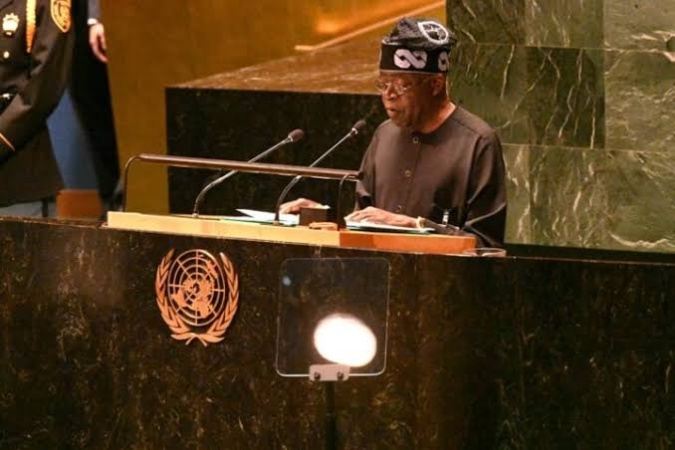
After weeks of speculation, President Bola Ahmed Tinubu has confirmed that he will not be physically present at the 81st Session of the United Nations General Assembly (UNGA) in New York, United States.
This is the third consecutive UNGA session that President Tinubu would be absent from since assuming office in 2023.
Jimoh Ibrahim, Nigeria’s Permanent Representative to the United Nations, had earlier said Tinubu would attend the 81st UNGA, saying that provisions had been made for him to sit close to Donald Trump, his American counterpart.
However, in a statement on Sunday, Stanley Nkwocha, spokesman to the Vice President, announced that Tinubu had directed Shettima to lead the Nigerian delegation to the event.
“President Bola Ahmed Tinubu has mandated Vice President Kashim Shettima to represent him and lead Nigeria’s delegation to the 81st Session of the United Nations General Assembly, UNGA, in New York, United States.
“VP Shettima will lead a high-level delegation comprising Governor Siminalayi Fubara of Rivers State; Governor Dauda Lawal of Zamfara State; ministers and other senior government officials.
“The 81st UNGA General Debate will be held from September 22 to 28, 2026, under the theme, “Restoring trust, managing transformation: A United Nations that delivers for all.”
“At the General Debate, Senator Shettima will deliver Nigeria’s national statement, outlining the country’s position and priorities on major global issues with implications for national development, peace and security, economic growth and international cooperation.
“The Vice President will also participate in high-level meetings during the UNGA week, including engagements on the Right to Development, climate action and other issues of strategic importance to Nigeria and the African continent,” the statement said.
Shettima is also expected to join other world leaders at the traditional reception for Heads of Delegation and participate in a series of bilateral meetings with leaders of other countries, international organisations and development partners on the sidelines of the General Assembly.
The engagements will provide Nigeria an opportunity to advance President Tinubu’s economic diplomacy, deepen strategic partnerships and strengthen the country’s voice on reform of the global financial architecture, sustainable development, climate finance and multilateral cooperation, it added.
Osita Okechukwu, a former DG of Voice of Nigeria and All Progressives Congress chieftain justified Tinubu’s absence, in an interview with Trust TV on Sunday, saying, “The framers of the Constitution are not idiots; the constitution that provided for the President also provided for the Vice President. They said If you don’t go, let your Vice President go.
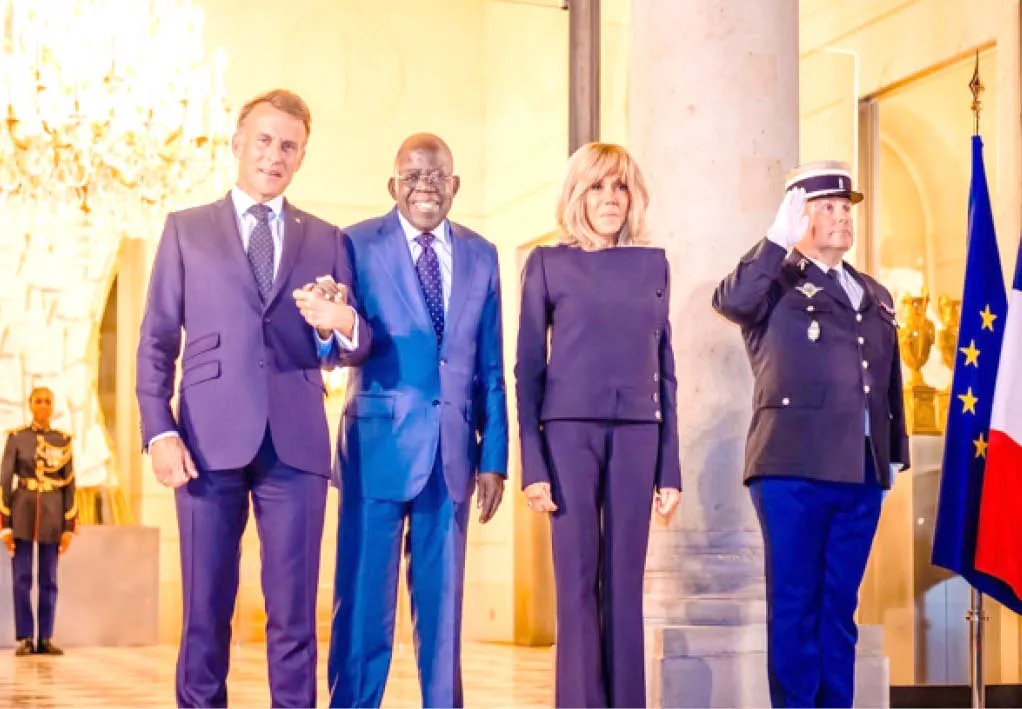
“If you ask why he is not going, you look at the table of Mr President to know the priorities that he has. Like yesterday, he was negotiating projects in France. You don’t know the details or how far they have gone. These are investors.”
Meanwhile, Nigeria’s Permanent Representative to the United Nations, Ambassador Jimoh Ibrahim, has dismissed concerns over President Tinubu’s absence from the 81st session of the United Nations General Assembly (UNGA), insisting that Nigeria will retain its front-row seat and continue to play a full diplomatic role at the global gathering.
Ibrahim said Vice President Shettima would lead Nigeria’s delegation to the high-level session on behalf of President Tinubu, while the Minister of Foreign Affairs, Ambassador Bianca Odumegwu-Ojukwu, and other senior government officials would participate in key engagements throughout the General Assembly.
In a statement issued by the Nigerian Mission to the United Nations in New York, the envoy explained that it is a common diplomatic practice for presidents to be represented by vice presidents or foreign ministers when they are unable to attend the annual gathering.
According to him, more than 60 per cent of world leaders scheduled to address the ongoing UNGA session are not attending in person.
Ibrahim also assured that Nigeria would maintain its designated seating arrangement at the Assembly, including its prominent front-row position.
Atiku taunts Tinubu over UNGA absence
Reacting to Tinubu’s absence at the UNGA, former Vice President Atiku Abubakar demanded an explanation from the president over his repeated absence from the global gathering.
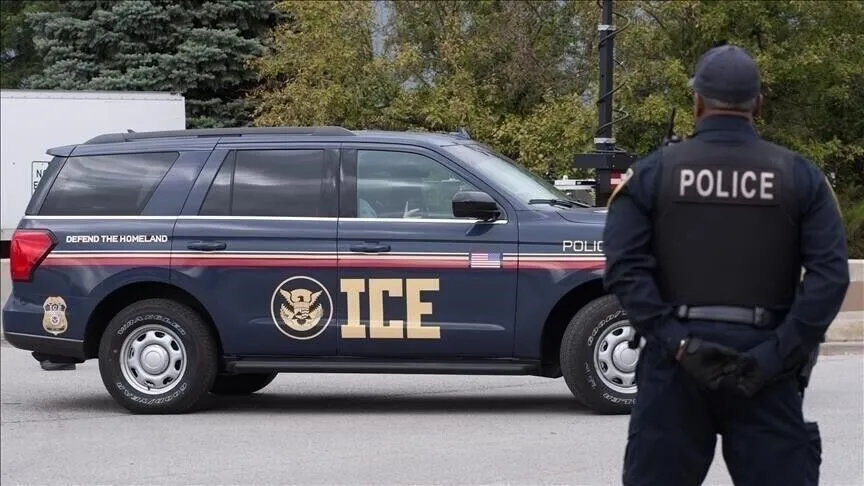
In a statement issued on Sunday by his Senior Special Assistant on Public Communication, Phrank Shaibu, Atiku asked whether the president’s documented history with United States law-enforcement agencies has become a burden on Nigeria’s foreign relations.
He said Tinubu stayed away from the 79th UNGA session in 2024, the 80th in 2025 and now the 81st in 2026, repeatedly sending Shettima to stand in for him.
He said three consecutive absence could no longer be dismissed as coincidence or routine delegation but constituted a pattern of presidential evasion requiring an honest explanation.
Atiku said: “The United Nations General Assembly is one of the world’s most important diplomatic gatherings. It brings together the representatives of the UN’s 193 member states and provides a unique platform for presidents and prime ministers to defend their countries’ interests, negotiate partnerships and shape global decisions on trade, security and development”.
“Vice President Shettima may represent Nigeria capably, but representation by delegation cannot permanently substitute for the personal authority, visibility and responsibility of the President.
“Tinubu cannot continue to treat Nigeria’s seat at the world’s biggest diplomatic table as though it were an inconvenient appointment that can be endlessly outsourced.
“Presidential absence on the global stage has consequences. UNGA is not merely a ceremonial gathering or an annual photo opportunity. Its sidelines are where leaders hold decisive bilateral meetings, court investors, negotiate trade partnerships, mobilise development finance and make the case for their countries.
“When a President makes himself absent from that stage for three consecutive years, his country loses opportunities. Investment does not follow silence. International capital does not pursue a country whose leader repeatedly abandons the room in which consequential economic relationships are being built.
“…Tinubu may consider attending UNGA a matter of personal prerogative, but the economic and diplomatic consequences of his absence are being paid by Nigerians. A President may surrender his seat, but a nation cannot escape the bill.”
’Tinubu’s absence at UNGA fishy’
Experts have also expressed their thoughts over the continuous absence of the president at the UNGA.
Dr Riyauddeen Zubairu Maitama, a lecturer in International Relations at the Bayero University Kano (BUK), has expressed concern over the president’s repeated absence at UNGA, describing it as “fishy” and potentially damaging to Nigeria’s diplomatic standing.
According to him, the UNGA is not just a ceremonial gathering but a critical forum where world leaders articulate their positions on pressing global issues, negotiate bilateral agreements, and strengthen networks that shape international governance.
“The absence of a leader, particularly the leader of Nigeria, which is the most populous country in Africa, for the third consecutive year is showing something that is fishy to Nigeria’s concern and position in the present international system,” he said.
Maitama suggested that Tinubu’s decision might be linked to controversies surrounding his records in the United States, which opposition parties have reportedly sought to make public.
He argued that such issues could discourage the president from attending in person, fearing further implications.
He stressed that while delegations led by the vice president are capable of representing Nigeria’s interests, the symbolic presence of the president carries greater weight in international negotiations.
“Having the president in that gathering or at a bilateral meeting will make other parties support Nigeria’s position or concede to Nigeria’s agitation. This may make Nigeria have its interests protected better,” he noted.
The lecturer warned that Nigeria’s absence at the highest level could weaken its influence in Africa and globally, as other nations may not take its positions as seriously without the president leading the delegation.
He emphasised that Nigeria’s role as Africa’s diplomatic leader and one of the world’s most populous countries makes its presence at UNGA vital.
Beyond symbolism, Maitama argued that the president’s absence could affect Nigeria’s ability to secure strategic agreements.
Ambassador Suleiman Dahiru, a Nigerian career diplomat, also feels the president’s case in the US may be responsible for his decision to avoid the country.
“Maybe the problem that Atiku is raking up is disturbing him,” he said, adding that “this government has not taken foreign policy seriously”.
“And that is why, for over two years, ambassadors were not appointed. And I refuse to accept the fact that Nigeria didn’t have money. Nigeria has money. It is just misapplication of resources.
“So, the president is not going, and I knew right from the word go he’s not going.”
He expressed dismay that Nigeria does not have the clout to influence global decisions any longer.
Diplomatic strategy?
Speaking on the issue, an international Relations expert, Dr Wasiu Kewulere of the Kwara State University, said the President’s repeated absence from the UN General Assembly could be linked to diplomatic considerations that may not necessarily be in the public domain.
He said sending a representative, particularly the Vice President, could provide the Nigerian government with greater flexibility in responding to sensitive diplomatic issues and negotiations that may arise during the global gathering.
According to him, the decision could also be part of a diplomatic strategy aimed at avoiding confrontations or assertions that could arise from the president’s physical presence at the forum.
Kewulere, however, rejected the suggestion that the President’s absence from the UNGA, on its own, amounted to a major setback for Nigeria’s standing in the international community.
According to him, attendance at the General Assembly is not a sufficient parameter for measuring a country’s strength or influence internationally.
Kewulere said the country’s diplomatic relations experts might also have advised the president to allow his representative to attend the UNGA, given the evolving tensions among major global powers.
He cited the geopolitical rivalry involving the United States and Eastern blocs, saying Nigeria, as a major country, might be seeking to avoid being drawn directly into such competing interests.
The don also linked the development to Nigeria’s foreign policy interests, particularly its relations with the United States and its position on conflicts in the Middle East.
He said Nigeria’s positions on the Israeli-Palestinian conflict and the Iran-Israel tensions could make direct interactions between the Nigerian President and the US administration diplomatically sensitive.
“Trying to avoid such a scenario where there could be a direct interaction between the head of state and government of Nigeria and the US might be another very good diplomatic arrangement,” Kewulere said.
He clarified that physical presence at the UNGA was not by itself a measure of a country’s international standing.
Kewulere said other factors, including military capability, economic strength and the role a country plays in international affairs, were more significant indicators of its influence.
The international relations scholar also expressed concern about the declining effectiveness of the United Nations.
He argued that repeated failures to enforce some of its resolutions and sanctions had raised questions about the organisation’s relevance.
“As I speak, the UN is becoming gradually inept, as the League of Nations was before the UN itself was actually established,” he said.
Kewulere said the continued weakening of the UN could eventually lead to calls for a different global arrangement, particularly if major international conflicts and geopolitical tensions persisted. (Daily Trust)