Updating your news feed...
NEWS EXPRESS is Nigeria’s leading online newspaper. Published by Africa’s international award-winning journalist, Mr. Isaac Umunna, NEWS EXPRESS is Nigeria’s first truly professional online daily newspaper. It is published from Lagos, Nigeria’s economic and media hub, and has a provision for occasional special print editions. Thanks to our vast network of sources and dedicated team of professional journalists and contributors spread across Nigeria and overseas, NEWS EXPRESS has become synonymous with newsbreaks and exclusive stories from around the world.







Loading banners
Loading banners...

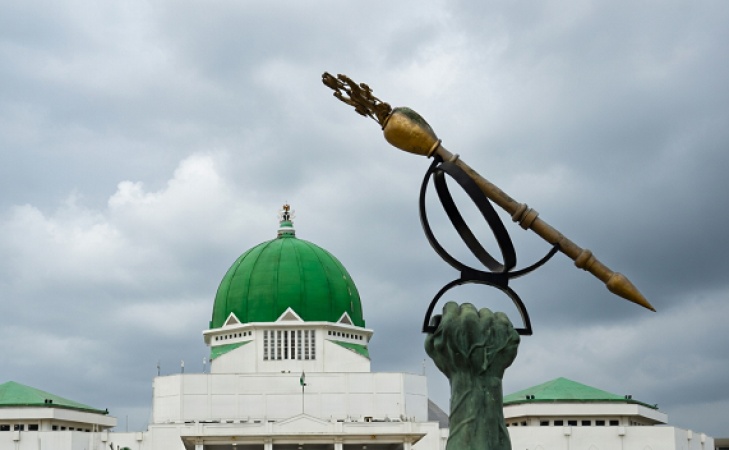
Ahead of the 2027 general election, the Gender Strategy Advancement International (GSAI), Peering Advocacy and Advancement Centre in Africa (PAACA) and Civil Society Advocacy Centre (CISLAC) have claimed that female candidates for National Assembly positions were not carried along by their respective political parties.
They disclosed that only 443 women are among the 4,408 candidates contesting seats in the Senate and the House of Representatives.
GSAI Executive Director Adaora Onyechere Sydney-Jack, who spoke on behalf of PAACA, PWAN and CISLAC at a press briefing yesterday in Abuja, called on political parties and media organisations to give women candidates more equitable coverage ahead of the elections.
The figures, according to her, are based on the final lists of National Assembly candidates released by the Independent National Electoral Commission (INEC), which showed that women constitute 10.1 per cent of the 4,408 candidates, while men account for 3,965, or almost 90 per cent.
Of the 1,195 candidates contesting the 109 Senate seats, only 115 are women, representing 9.6 per cent of the field.
Similarly, 328 women are among the 3,213 candidates seeking election to the 360 seats in the House of Representatives, representing 10.2 per cent.
Sydney-Jack said the figures, although showing an increase in the absolute number of women candidates compared with 2023, underscored structural barriers confronting women seeking elective office.
She recalled that in 2023, 380 women contested National Assembly seats, that is, 92 for the Senate and 288 for the House of Representatives.
Sydney-Jack added that from the figures presented, Jigawa, Nasarawa, Niger and Yobe have no female senatorial candidates, while Akwa Ibom has the highest number, with 10 women contesting senatorial seats.
For the House of Representatives, Lagos has the highest number of female candidates with 31, followed by Imo with 21, while Anambra and Rivers have 20 each.
She further linked the low level of female representation to the high cost of politics, limited access to political financing, nomination fees, campaign expenses, mobilisation costs and women’s comparatively weaker access to established political networks.
She said: “These figures demonstrate that the challenge is not a lack of qualified women willing to serve, but persistent structural barriers within the political system.
“The outcomes of successive elections and party primaries reinforce the need to consider special measures, including reserved seats for women, as part of broader electoral reforms.
“Reserved seats are not a replacement for competitive elections. They are an inclusion mechanism designed to address historical barriers and ensure that women’s voices, experiences, and leadership perspectives are represented within Nigeria’s legislative institutions.” (Saturday Sun)