Updating your news feed...
NEWS EXPRESS is Nigeria’s leading online newspaper. Published by Africa’s international award-winning journalist, Mr. Isaac Umunna, NEWS EXPRESS is Nigeria’s first truly professional online daily newspaper. It is published from Lagos, Nigeria’s economic and media hub, and has a provision for occasional special print editions. Thanks to our vast network of sources and dedicated team of professional journalists and contributors spread across Nigeria and overseas, NEWS EXPRESS has become synonymous with newsbreaks and exclusive stories from around the world.
























Loading banners
Loading banners...

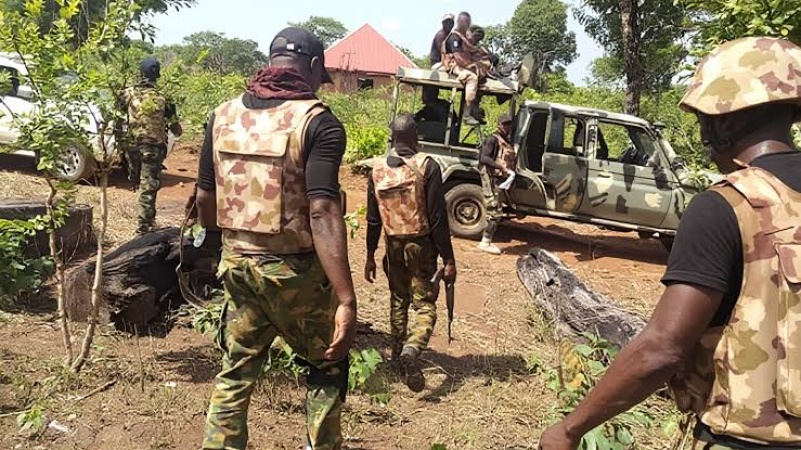
Armed Boko Haram terrorists
Boko Haram fighters are using artificial intelligence chatbots developed by major technology companies to build more powerful bombs, plan attacks and solve operational problems during combat, according to research by the University of Cambridge.
Al Jazeera, which reported this on Friday, said the study was based on interviews with 27 former members of the terrorist group’s two factions — the Islamic State West Africa Province and Jama’at Ahl as-Sunnah lid-Da’wah wa’l-Jihad.
Some of those interviewed said members routinely consulted OpenAI’s ChatGPT, Anthropic’s Claude, Google’s Gemini, Elon Musk’s Grok, Meta AI and China’s DeepSeek for technical and military advice before, during and after attacks.
Material obtained by Al Jazeera also showed supporters of the wider Islamic State group exchanging information on how to bypass AI safety controls and obtain weapons-related guidance.
Researchers from Tech Against Terrorism reportedly infiltrated a pro-ISIL online technical forum where users discussed ways of circumventing restrictions intended to prevent chatbots from providing dangerous information.
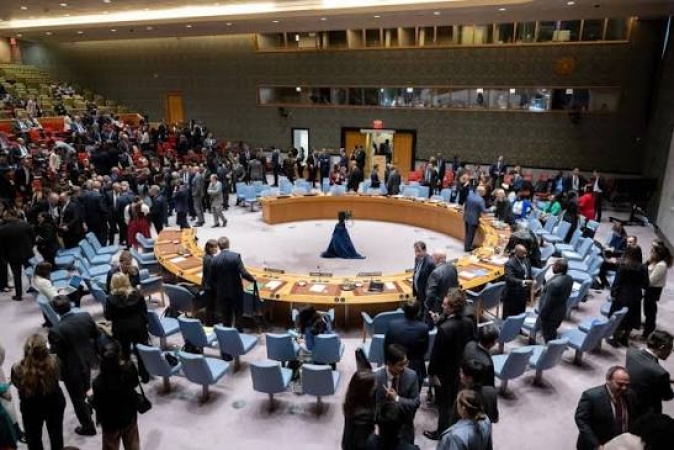
The findings come amid growing concern over extremist groups’ adoption of emerging technologies. United Nations officials warned the Security Council in February that ISIL and its affiliates were increasingly using advanced AI.
“There is nothing we haven’t received an answer on,” a former ISWAP commander told the Cambridge researchers.
Former fighters described an organised system through which selected members were trained to use AI inside insurgent-controlled areas of northeastern Nigeria.
One former commander said trainers assembled senior members in a room and used a projector to demonstrate how AI platforms worked. They were also allegedly taught how to evade safeguards preventing the systems from answering harmful requests.
According to the study, laptops fitted with privacy and encryption tools were supplied to the fighters, while accounts and paid subscriptions to several AI platforms were created for them.
The former members repeatedly identified the wider ISIL movement as the source of the training.
The research suggested that the use of AI went beyond occasional consultations by individual fighters. Both ISWAP and JAS allegedly established specialist AI units staffed by engineers, weapons experts and bomb-makers.
One former JAS commander described a 23-member unit operating from a solar-powered room. The unit reportedly answered technical questions, analysed information and trained senior commanders.
Former fighters said bomb-makers kept laptops nearby while assembling explosive devices and returned to AI chatbots whenever they encountered problems.
Antonia Juelich, who conducted the Cambridge study, said about 10 of the 27 former fighters interviewed spoke about using AI in connection with explosives. This included efforts to increase the destructive power of bombs and extract explosive material from unexploded military ordnance. Uelich said the greatest danger was not merely that fighters could obtain weapons information already available in manuals and online, but that AI could provide tailored responses to particular problems.
She said fighters could describe the materials available to them, ask follow-up questions and receive guidance adapted to their immediate circumstances.
Former members also claimed that AI was consulted on recovering material from unexploded ordnance and adapting commercially available drones to carry explosives.
The technology was reportedly used at different stages of combat. In one account, images transmitted by a fighter wearing a body camera were uploaded to ChatGPT for analysis before fresh instructions were relayed to those on the battlefield.
When commanders once asked a specialist how to operate newly acquired firearms, his answer illustrated how common the practice had become: “Just ask Grok.”
The study also alleged that insurgents consulted AI for advice on overcoming trenches dug around military positions, determining the number of fighters needed for operations and analysing why previous attacks had failed.
Researchers from Tech Against Terrorism said ISIL supporters outside Nigeria were similarly discussing how to “jailbreak” AI systems by making them ignore their safety restrictions.
One forum user reportedly compared the process to removing the speed limiter from a vehicle so that it could travel faster than its manufacturer intended.
“This is the tip of the iceberg,” Lucas Webber of Tech Against Terrorism said.
Juelich acknowledged that regulating AI could be difficult because questions about military tactics might have legitimate research or journalistic purposes. She, however, said requests for assistance in making bombs were clearly prohibited and should be stopped by companies’ safeguards.
OpenAI prohibits the use of its systems for terrorism, violence and weapons development. Anthropic and Meta also say they use automated safeguards to identify and block dangerous requests, while xAI prohibits attempts to circumvent its safety mechanisms.
Al Jazeera said it contacted OpenAI, Anthropic, Google, xAI, Meta and DeepSeek for comments on the findings.
The Cambridge interviews largely concerned the insurgents’ use of AI in 2023 and 2024. Juelich said this made the findings more alarming because AI systems had become substantially more capable since then.
“I worry about where this is heading,” she said. (Saturday Tribune)