Updating your news feed...
NEWS EXPRESS is Nigeria’s leading online newspaper. Published by Africa’s international award-winning journalist, Mr. Isaac Umunna, NEWS EXPRESS is Nigeria’s first truly professional online daily newspaper. It is published from Lagos, Nigeria’s economic and media hub, and has a provision for occasional special print editions. Thanks to our vast network of sources and dedicated team of professional journalists and contributors spread across Nigeria and overseas, NEWS EXPRESS has become synonymous with newsbreaks and exclusive stories from around the world.





















Loading banners
Loading banners...

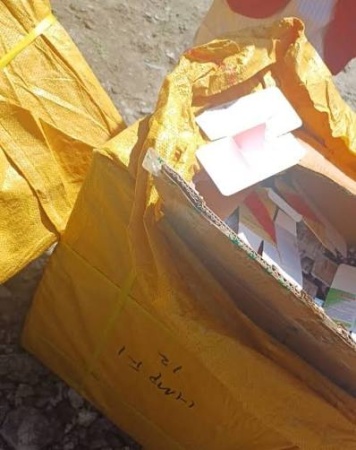
Counterfeit drugs uncovered by the NAFDAC
Nigeria’s food and pharmaceutical markets are facing renewed scrutiny over the circulation of suspected counterfeit, substandard and adulterated products, amid growing consumer complaints and a wave of testimonies shared across social media. Even the traditional markets are not spared.
From medicines and packaged foods to beverages and other consumer products, Nigerians have, in recent weeks, raised questions over products they claimed produced unusual effects, differed in taste or appearance from what they previously knew, or appeared defective, despite carrying valid-looking labels and dates.
However, while individual claims circulating online require laboratory confirmation before they can be conclusively classified as counterfeit or adulterated, public-health experts say the concerns expose a wider problem that cannot be solved by asking consumers to identify fake products from their packaging.
Recounting her frightening experience, a resident of Kubwa, Abuja, who spoke to the Nigerian Tribune on the condition of anonymity, recalled an incident in 2024 that left her suspicious of medicines sold in the country.
She had purchased an antimalarial from a major pharmaceutical outlet in the city to treat symptoms she had initially assumed symptoms were malaria-related.
But after administering the drugs, she stated there was no improvement.
Her concern increased after she subsequently visited another pharmacist in Jabi, where she said she heard an account involving a medicine that had allegedly been subjected to a product-verification process and found to be substandard.
She said the account made her reconsider her own experience.
“It was immediately I told the person, I said, ‘Ah! No wonder I almost died. So, this is where I bought my anti-malaria that didn’t do anything,’” she recounted.
She said she later developed a severe cough accompanied by chest discomfort and difficulty in breathing, and bought another medicine from a pharmacy in Kubwa.
According to her, she completed the medication without experiencing relief.
She eventually visited another pharmacy, identified in her account as Essoma Pharmacy, in Kubwa, where she said a pharmacist listened to her symptoms and provided another medicine.
She said she experienced significant relief after taking the medication.
The experience, she said, affected her confidence in buying medicines.
“I developed a strong phobia for buying even paracetamol in Nigeria,” she said.
The resident stressed that while not claiming that every pharmacy or medicine outlet was involved in the circulation of substandard products, her experience had made her cautious about where she purchased her medicines.
She attributed her confidence in the pharmacy she now patronises to what she described as its direct sourcing arrangements.
“Buying substandard medication is not something people joke with. It is real, and it is prevalent,” she said.
She called for more unannounced inspections of pharmacies and medicine outlets.
“If the National Agency for Food and Drug Administration and Control (NAFDAC) really wants to work, let them enter pharmacies. Unsuspectingly, nobody should suspect their coming. Just random visit,” she said.
Her allegations, concerning the medicines she purchased and the outlets involved, could not, however, be independently established by the Nigerian Tribune.
The anxiety over product safety has also spread into the food and beverage market, with consumers increasingly documenting suspected abnormalities online.
One such testimony came from Nwamaka, using the verified X account @ama_kaaa, who said she sells packaged food and drinks in a shop located around a school.
She had previously been reluctant to identify brands publicly because of concerns about possible legal consequences, but decided to speak after what she described as repeated complaints from customers.
According to her, one customer returned a baked yoghurt from a popular dairy manufacturer, saying it had expired.
She said her own inspection showed that the product was still within the printed date, but had an unusual smell.
She stated that the product carried a manufacturing date of July 25, 2026, and an expiry date of January 24, 2027.
Nwamaka said her shop subsequently stopped selling the product pending clarification.
She also recounted an incident involving another product (name withheld), saying a customer returned the product because of an unusual smell and taste.
According to her, the product appeared lumpy when poured out.
Again, these claims remain consumer allegations and require appropriate laboratory testing before any conclusion can be reached about the safety or authenticity of the products.
“It is no longer only about fake products.”
Nwamaka also raised concerns about a popular drink, saying she had encountered what she believed were counterfeit versions of the product.
Her broader concern was that consumers increasingly feel compelled to test products themselves.
She called for people who encounter suspicious products to document them properly, retain the products where safe to do so, and allow appropriate investigation to establish what went wrong.
Same sour tale in Lagos
Residents of Lagos, the nation’s commercial nerve centre, also have their own sad tales about the fake product pandemic to tell.
For instance, pharmaceutical shops in Oju Olobun, Enu-Owa and Adeniji Adele areas of Lagos Island have continued to face allegations of producing and distributing adulterated medicines, despite repeated enforcement raids by the NAFDAC.
A resident of the area, Zikrilahi Ajao, alleged that some operators in the drug markets engage in the production of fake syrups, intravenous fluids (drips) and blood tonics, describing the practice as an open secret among traders and residents.
According to Ajao, NAFDAC officials carried out several raids on the markets over the years, confiscating pharmaceutical products, allegedly worth billions of naira, but had failed to permanently put an end to these unwholesome practices.
He said the Enu-Owa drug market was raided twice by NAFDAC officials between June and October 2025.
He maintained that the alleged production of syrups, drips and blood tonics in the area was widely known among traders and residents.
“Even NAFDAC is aware of this. In the market, dealers sell both original and fake drugs. Those patronising them are also aware of this. It is not hidden,” he alleged.
He called for continuous monitoring of pharmaceutical markets in Lagos Island and stronger action against anyone found to be involved in the manufacture, distribution or sale of counterfeit or adulterated medicines.
“NAFDAC needs to do more in the area of monitoring and enforcement. Fake pharmaceutical products and GMO foods and beverages are part of the reasons many Nigerians are afflicted with cancer and kidney diseases,” he said.
Another resident of Patey, Lagos Island, Oriyomi Ojikutu, said traders operating in Lagos Island’s drug markets could be broadly divided into different categories.
According to him, while some traders deal exclusively in genuine pharmaceutical products, others sell a mixture of genuine and counterfeit drugs.
“At the Lagos Island drug markets, the price of a drug does not necessarily determine its quality,” Ojikutu alleged.
He explained that some dealers were more concerned about making profits than the potential consequences of the products they sell to consumers.
“You can buy a fake drug at the same price as the original. You may continue using it without knowing that it is counterfeit, only to discover later that it has had no positive effect on your health.
“Sometimes, it takes the intervention of a medical doctor to determine that a particular drug is fake. Officials of NAFDAC have raided these markets several times, but one wonders why the illegal trade continues,” he stated.
The Nigerian Tribune learnt that Enu-Owa drug market was sealed for more than a month in 2023, but was eventually reopened, with the illicit practices unabating.
However, shutting down the entire market permanently, a source stated, could be herculean, since such enforcement would also affect those dealing in genuine medication.
Also, an Abuja-based pharmacist, who spoke on the issue on the condition of anonymity, identified unreliable supply chains, price pressures, weak verification systems and inadequate surveillance as major challenges in tackling counterfeit and substandard medicines in Nigeria.
According to the pharmacist, retailers largely depend on trusted suppliers, wholesalers and pharmaceutical representatives, but the multiple layers in the distribution chain make it difficult to establish the authenticity of every product.
He added that the proliferation of cheaper medicines was particularly concerning, warning that unusually low prices should serve as a red flag.
“Most times, when you’re trying to reduce cost, when you’re trying to go for cheap drugs, that’s when you fall victim,” the pharmacist said, adding that some traders source products from major markets where both genuine and counterfeit medicines circulate.
The pharmacist also warned that counterfeit medicines are becoming increasingly difficult to distinguish by appearance.
“Sometimes, you don’t even know which one is fake. Sometimes the fake looks more original than the original,” the pharmacist said, stressing that pharmacists rely on trusted suppliers, scratch-card authentication and digital verification platforms to reduce the risk.
For Dr Samson Polycarp Salam, a field epidemiologist and Graduate Research Assistant and PhD student in Health Services Research, at the Joint School of Public Health, Old Dominion University, Norfolk, Virginia, United States, the central issue is whether Nigeria’s surveillance architecture can detect unsafe products quickly, establish the facts scientifically and communicate the findings transparently.
He explained that enforcement figures and surveillance data provide different pictures of the problem.
“Enforcement figures tell us what was intercepted. Surveillance tells us what proportion of what remains on the shelf meets specification. Both matter, and Nigeria is stronger on the first than the second,” he said.
The distinction, according to him, is critical because seizures alone cannot establish how widespread substandard products are among the products that consumers continue to encounter in shops, markets and pharmacies.
He described the Issue of counterfeit and substandard medicines as not peculiar to Nigeria.
Salam, who has spent more than a decade working in disease surveillance and outbreak response, in collaboration with international and Nigerian public-health institutions, said the phenomenon is driven by economic incentives within global supply chains.
The World Health Organisation (WHO) has estimated that at least, one in 10 medical products circulating in low- and middle-income countries is substandard or falsified, with the prevalence higher for some categories, including anti-malarials. Interestingly, the consequences have sometimes been catastrophic.
In 2022, about 66 children in The Gambia died from acute kidney injury linked to imported cough syrups contaminated with industrial solvents. A further WHO alert followed child deaths in India associated with a similarly contaminated product.
Salam said these incidents demonstrate why Nigeria should not wait until a major mortality event occurs before strengthening surveillance.
“Counterfeiting is driven by supply-chain economics rather than national capacity alone,” he said.
He added that even countries with mature regulatory systems continue to battle counterfeit products, meaning Nigeria’s response must combine regulation, intelligence, laboratory capacity, traceability and enforcement.
“The persistence of the problem there suggests that counterfeiting is driven by supply-chain economics rather than national capacity alone,” he said.
For Nigeria, he said, speed of detection should be treated as seriously as the number of products eventually seized.
One of the most striking features of the current controversy is the extent to which consumers have turned to photographs and videos to compare suspected products with what they believe to be genuine versions.
Salam said that approach is understandable, but scientifically inadequate.
Drawing on his experience as a Public Health and Data Analyst Officer with the Isabellah Health Foundation in Virginia, where he facilitated community discussions with young people on fentanyl, counterfeit medicines and related harms, he said people
Frequently struggle to distinguish genuine medicines from counterfeits when relying solely on appearance.
We’re unrelenting —NAFDAC, FCCPC
Interestingly, relevant regulatory agencies, the NAFDAC and the Federal Competition and Consumer Protection Commission (FCCPC), have assured they are unrelenting in their bid at sanitising the markets and ensuring the nation’s consuming public is safe from unwholesome foods.
For instance, NAFDAC stated that its decision to set up a 600-member national reserve of pharmacists, stemmed from the need to extend the agency’s regulatory enforcement beyond its traditional offices and respond quickly to fake drug and public-health emergencies across Nigeria.
The agency’s Resident Media Consultant, Sayo Akintola, explained that NAFDAC’s Pharmacists Reserve Volunteer Programme (PRVP), which brings together qualified pharmacists, already working in different fields, comprised volunteers, drawn from the 36 states and the Federal Capital Territory (FCT), representing the country’s six geopolitical zones.
According to him, the programme is designed to provide NAFDAC with a pool of trained, vetted, and readily deployable pharmacists who can support regulatory operations during product recalls, suspected circulation of falsified medicines, and emergencies in hard-to-reach communities.
The Director-General of NAFDAC, Professor Mojisola Adeyeye, also described the initiative as part of efforts at bringing regulation closer to Nigerians.
She said the volunteers would be trained in pharmacovigilance, compliance monitoring, quality assurance, data collection, post-marketing surveillance, and public sensitisation.
Adeyeye said NAFDAC’s long-term goal was to establish a standing pool of trained pharmacists in every state to work alongside the agency’s state offices.
She said this would extend the agency’s regulatory presence beyond its laboratories and ports of entry to markets, community pharmacies, patent and proprietary medicine stores, and Primary Healthcare Centres (PHCs).
The NAFDAC boss charged the pharmacists to maintain integrity, discipline and confidentiality, warning that they would encounter inducements and pressures designed to compromise their duties.
“The moment a regulator can be bought, the public loses its only protection,” Adeyeye said.
In the same vein, the FCCPC is insisting businesses must appropriately label their products as a way of addressing the issue of fake and unwholesome products.
Such labelling, Executive Vice Chairman of the Commission, Tunji Bello, insisted, must have details of production dates, expiry or best-before dates, batch numbers, manufacturer contacts, ingredients, allergen data, and the country of origin (if such product is imported).
The FCCPC boss explained that while the details would ensure traceability and also help buyers make informed decisions, he, however, threatened that the commission would not hesitate to wield the big stick against sellers and distributors, who keep ignoring those rules.
Open drug market fuels over 90 percent of fake drugs —PSN
The open drug market accounts for more than 90 per cent of the problem of fake and substandard medicines in Nigeria, the National Secretary of the Pharmaceutical Society of Nigeria (PSN), Gafar ‘Lanre Madehin, has alleged.
Madehin said the unregulated market exposes medicines to improper handling and storage, potentially compromising their quality and potency even when they are genuine when manufactured.
He urged Nigerians to buy medicines only from registered pharmacies, particularly outlets displaying the PSN-registered RX emblem and avoid roadside vendors as well as other unregulated sources.
He also advised consumers, who suspect a medicine is counterfeit, to report it to the pharmacy where it was purchased or to the NAFDAC.
Madehin cautioned, however, that a medicine failing to produce the expected result does not necessarily mean it is fake, as the illness may have been wrongly diagnosed or the medicine may be unsuitable for the condition.
He said NAFDAC’s track-and-trace initiative could, if effectively implemented, enable regulators to monitor medicines from manufacturers through the distribution chain to consumers and block counterfeit products from entering the formal market.
He called for stronger collaboration among regulators, pharmacists, the media and consumers, stressing that public education and patronage of registered medicine outlets were critical to combating fake and substandard drugs.
Pharmacist Bankole Gafar of Zulum Health Care said Nigeria’s heavy reliance on imported medicines also creates loopholes for counterfeit and unregistered drugs to enter the country.
He called for Increased local production and tighter regulation of pharmaceutical imports, noting that some fake medicines are produced locally in unregistered facilities, while others are manufactured abroad and smuggled into Nigeria.
Gafar said increased local production would reduce the vulnerabilities associated with drug imports, adding that regulatory measures and government support had already encouraged some pharmaceutical manufacturers to expand their operations in Nigeria.
He also urged Nigerians to buy medicines only from registered pharmacies, saying pharmacists had a professional obligation to protect their licenses and therefore had greater incentives to source medicines from genuine and traceable suppliers.
Gafar, however, cautioned against attributing rising kidney problems solely to medicines, noting that unverified online supplements and drug abuse could also cause health complications.
He called for stronger public awareness and regulation to ensure consumers know the source and quality of the medicines and supplements they use.
Olumide Akintayo, ex-Pharmaceutical Society of Nigeria President, cautioned that the green cross emblem alone should not determine where Nigerians buy medicines. He urged consumers to ask to see the certificate of registration of the pharmacy premises and the practising licence of the pharmacist in charge, which should be prominently displayed.
On the proliferation of fake drugs, he said responsibility cuts across the pharmaceutical value chain, including government, regulators, healthcare providers, medicine suppliers, and consumers.
He blamed Inadequate funding, weak laws, and regulatory shortcomings, while also faulting consumers who patronise unregistered outlets, including premises sealed by authorities.
Akintayo said weak enforcement and a culture of impunity had further worsened the problem, as existing laws often fail to impose meaningful consequences for violations.
He maintained that only registered pharmacies are legally permitted to dispense medicines and alleged that as many as 99 per cent of private hospitals dispense drugs, attributing the situation to regulatory weaknesses and inadequate monitoring.
He also raised concerns about medicine prices in private healthcare facilities, citing what he described as a World Health Organisation study showing significantly higher prices in private hospitals and pharmacies than in public-sector pharmacy facilities.
NAFDAC blacklists eight drug manufacturers over quality failures
The NAFDAC has blacklisted eight pharmaceutical manufacturers over serious regulatory violations, including quality failures, falsified documentation and non-compliance with regulatory standards.
The blacklisting means the affected manufacturers are barred from regulatory dealings and product-related transactions with the agency until the relevant regulatory issues are addressed.
Available data on NAFDAC’s 2026 enforcement actions showed that six of the eight blacklisting actions were recorded on March 22, representing 75 percent of the total.
The sanctions underscore the agency’s intensified regulatory surveillance of pharmaceutical manufacturers and its efforts to ensure that medicines and other regulated products meet prescribed quality, safety and efficacy requirements.
Meanwhile, NAFDAC has warned Nigerians against the circulation of a suspected counterfeit toothpaste being marketed as the registered ORACARE+ Toothpaste.
The agency identified the suspected counterfeit as ORACIRE+ Toothpaste, saying its packaging and appearance closely resemble those of the registered product.
NAFDAC said the alert followed a formal complaint and market intelligence indicating that the suspected counterfeit toothpaste was being distributed in Nigeria.
Its surveillance team reportedly discovered the product during a market inspection at Ojuwoye Market in Mushin, Lagos.
According to the agency, the similarity in appearance between the suspected counterfeit and the genuine product could make it difficult for consumers to distinguish between them.
NAFDAC warned that the safety and quality of the suspected product had not been verified, while its origin and composition remained unestablished.
It said counterfeit personal care products might not meet established quality and safety standards and could therefore, pose health risks to consumers.
Declare state of emergency on fake drugs , substandard products, Adeyanju tells Tinubu
In the meantime, human rights activist and lawyer, Deji Adeyanju, has called on President Bola Tinubu, to declare a state of emergency on the proliferation of fake and substandard drugs and consumer products in Nigeria.
Adeyanju, who made the call in a statement, on Tuesday, also demanded the removal of the Director-General of the NAFDAC and heads of other regulatory agencies, including the Standards Organisation of Nigeria( SON).
He claimed that the prevalence of counterfeit and substandard drugs and other consumer products in the country points to a collapse of regulation in critical sectors.
The activist accused NAFDAC of being incapable of effectively curbing the proliferation of fake and substandard products, noting that similar concerns extend to SON and other agencies responsible for protecting consumers.
Adeyanju urged the Federal Government to, as a matter of urgency, undertake a comprehensive review of the country’s regulatory system to restore public confidence and safeguard lives. (Nigerian Tribune)