ADAD
ADADUpdating your news feed...

NEWS EXPRESS is Nigeria’s leading online newspaper. Published by Africa’s international award-winning journalist, Mr. Isaac Umunna, NEWS EXPRESS is Nigeria’s first truly professional online daily newspaper. It is published from Lagos, Nigeria’s economic and media hub, and has a provision for occasional special print editions. Thanks to our vast network of sources and dedicated team of professional journalists and contributors spread across Nigeria and overseas, NEWS EXPRESS has become synonymous with newsbreaks and exclusive stories from around the world.



Loading banners
Loading banners...

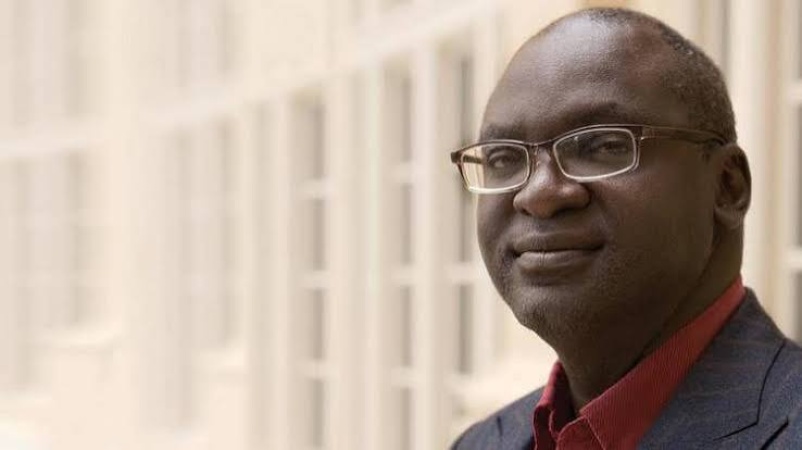
Human rights lawyer, Emmanuel Ogebe
Washington International human rights lawyer Emmanuel Ogebe has opposed the recently announced U.S. troop withdrawal from Nigeria this September.
Speaking in an interview broadcast on U.S. television on September 1, the award-winning advocate warned, “if the U.S. doesn’t follow through, there’s gonna be hell to pay. Christians will be attacked massively.”
Earlier at a prominent United States think tank the Hudson Institute, where he featured on a panel alongside former Assistant Secretary of State for Africa Tibor Nagy and ex-Capitol Hill Africa staffer Greg Simpkins, Emmanuel Ogebe accused the United States of pursuing contradictory policies towards Nigerians fleeing terrorism and religious violence, pointing to the death of a Catholic priest in America and the continued plight of thousands of refugees displaced by Boko Haram.
Ogebe made the remarks during a discussion on Nigeria’s crisis involving Islamist terrorists, violent herders, armed gangs and the United States’ foreign policy response.
The contradiction in Washington’s approach is reflected in what he described as the opposing positions of Democrats and Republicans.
“The Democrats lie about the situation in Nigeria, but they resettle refugees,” Ogebe said.
“The Republicans tell the truth about the situation in Nigeria, but they do not allow resettlement.”
He stated that Democrats had previously allowed some Nigerian Christians fleeing violence to enter the United States as refugees while, in his view, playing down the scale of religious persecution in Nigeria.
Republicans, he said, had been more willing to speak openly about attacks against Christians and the activities of Islamist groups but had adopted immigration policies that left many Nigerians facing uncertainty over their ability to remain in the United States or seek refuge there.
But it was the story of one Nigerian Catholic priest that Ogebe used to illustrate what he described as the human cost of that contradiction.
Father Ben’s Death
On June 28, Ogebe said, a Catholic nun identified as Sister Leticia was walking to Mass when she was abducted. During her captivity, she asked to be allowed to receive Holy Communion but was refused.
Four days later, on July 2, a Nigerian Catholic, Rev. Fr. Benjamin Okwy Madu, popularly known as Father Ben, took his own life in the United States.
According to Ogebe, Father Ben’s U.S. visa was due to expire on July 29, raising the prospect that he would be forced to return to a Nigeria where kidnappings and killings of clergy were a source of fear.
Ogebe then drew attention to the events of July 29—the same date Father Ben’s visa was due to expire.
“In Nigeria, in my state, a Catholic seminarian, Kelvin Ochai, was abducted, and on that same day, in the neighboring state, a Catholic priest, Rev. Fr. Samuel Oyetoro, was killed,” he said.
The four events, Ogebe argued, should not be viewed as isolated tragedies.
For Ogebe, the sequence captured the reality facing some Nigerian religious workers and helped explain why immigration policy could not be separated from the security crisis unfolding in their home country.
“American policy banning Nigerians in the U.S. caused a Catholic priest to take his own life rather than go to Nigeria and have Boko Haram take it for him,” Ogebe said.
He challenged Washington to consider the individual circumstances of Nigerians facing removal or visa restrictions, particularly those who have not committed crimes and fear returning to areas affected by terrorism and kidnappings.
“You can’t send Nigerians back to a country where they’re being killed,” he said.
Gwoza Refugees and U.S. Resettlement
Ogebe also pointed to Nigerians who fled Boko Haram attacks on Gwoza, Borno State, stuck in neighbouring Cameroon due to the administration’s airlift stoppage.
He urged Nigeria to do more to protect vulnerable citizens and called on Washington to ensure that its foreign policy and immigration decisions do not undermine each other.
For Ogebe, the debate is ultimately about more than political differences between Democrats and Republicans.
It is about the consequences of policy decisions for people such as Father Ben, whose fear of returning to Nigeria preceded his death; Kelvin Ochai, who was abducted while pursuing his path to the Catholic priesthood; Rev. Fr. Samuel Oyetoro, whose killing added to concerns over the safety of clergy; and thousands of displaced Gwoza residents still searching for a secure future.
He warned, the gap between America’s words and its policies will continue to be measured not only in diplomatic disagreements but in human lives.
In response to a question from the moderator, Ogebe had stated, “So, I think that the U.S. should not withdraw the 200 troops that are currently in Nigeria.
The only reason that the strikes of May were successful was because the U.S. troops were in Nigeria, and they had drones, and they partnered with the Nigerian military to strike. The reason why the Christmas Day bombings in Nigeria did not work was because there were no U.S. troops on the ground. When the Nigerian government was informed, someone leaked it to the terrorists, and they cleared out before the bombs struck.
Let me point out, for example, going back to the recent airstrikes.
The terrorist who was killed in that attack, who was the CFO of ISIS, the Nigerian government reported him killed two years ago. So, it took the United States intervening to really kill him this time. And this is why the U.S. cannot back out right now. In the first place, the job hasn’t been done. If they took out the CFO, what about their chief development officer? There’s got to be more terrorists and global jihadists where that came from, and so the job hasn’t been done.
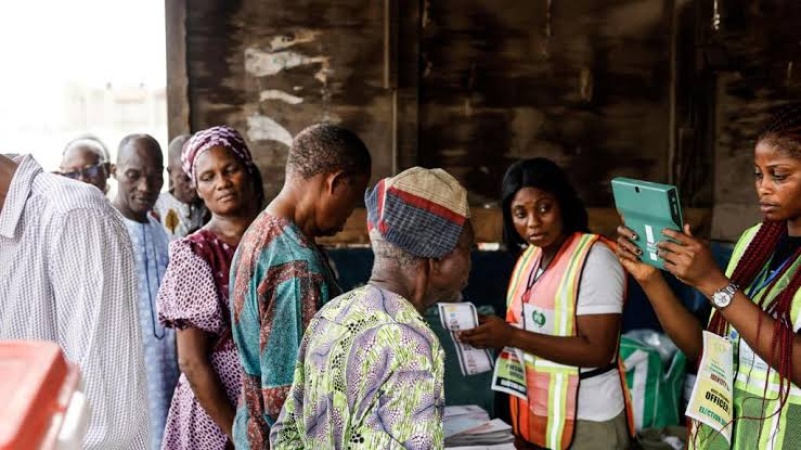
But again, because of the elevated threat matrix approaching elections, the US shouldn’t pull out those troops before the elections because ISIS and Boko Haram are going to keep attacking, um, population centers, sabotaging the elections, and so on and so forth.
And let me point out one key point. When the US troops came in, ISIS announced globally that all the jihadists in the Mid-east should stop coming to Nigeria for now. And so what do you think will happen when the United States pulls out? They will simply say to them, “Okay, they’ve left the ‘strait of Hormuz’. Come on back in.”