 ADAD
ADAD
Updating your news feed...
NEWS EXPRESS is Nigeria’s leading online newspaper. Published by Africa’s international award-winning journalist, Mr. Isaac Umunna, NEWS EXPRESS is Nigeria’s first truly professional online daily newspaper. It is published from Lagos, Nigeria’s economic and media hub, and has a provision for occasional special print editions. Thanks to our vast network of sources and dedicated team of professional journalists and contributors spread across Nigeria and overseas, NEWS EXPRESS has become synonymous with newsbreaks and exclusive stories from around the world.
.webp)


.webp)

.webp)

Loading banners
Loading banners...

Dr Chigozie Chukwu
From failing WAEC nine times and writing the Unified Tertiary Matriculation Examination (UTME) seven times to earning a PhD, becoming an Assistant Professor and attaining the prestigious Senior Fellowship of Advance HE (SFHEA), Dr Chigozie Chukwu’s journey is one of resilience, faith and determination. Now affiliated with the University of Wolverhampton in the United Kingdom, where he contributes to teaching, research and academic development, Chukwu has turned the struggles of his early years into a passion for empowering students and influencing development policy.
He spoke more in this interview culled from The Sun.
What was your childhood like, and what kind of environment and experiences shaped the person you are today?
My childhood was filled with complexities and memorable experiences. There were sweet moments, but honestly, there were more challenging ones.
I lost my father at a very young age, and that changed the direction of our family. Suddenly, everything became about survival, resilience and figuring things out. Growing up in a large family came with its own challenges. Resources were limited, attention was stretched, and there was always pressure to do more with less. It taught me early to be independent, to share and to look out for others.
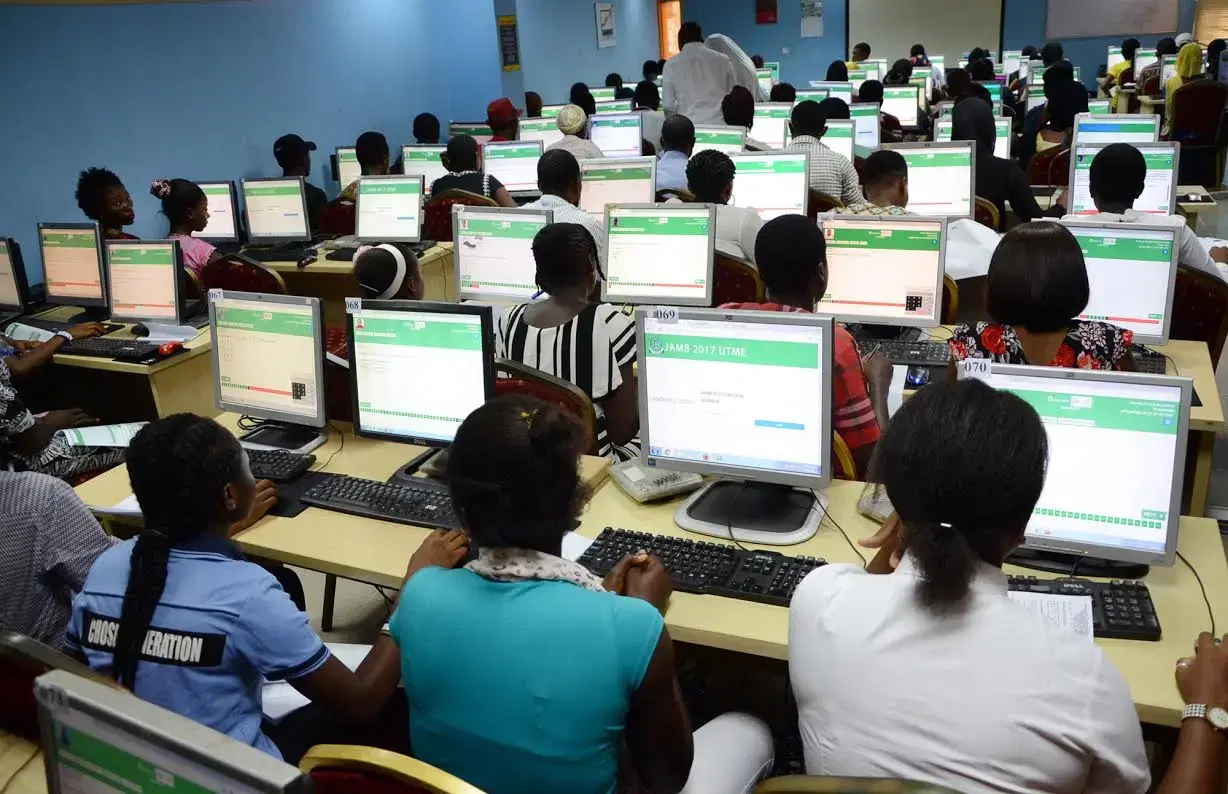
School was not easy either. My academic performance in primary school was poor, and I struggled to keep up. That continued into secondary school, where I failed the school certificate examination conducted by the West African Examinations Council (WAEC) nine times and sat for the UTME by the Joint Admissions and Matriculations Board (JAMB) seven times before eventually gaining admission. Those repeated failures were painful and discouraging, but they taught me persistence. I learned that just because you start at the back does not mean you have to stay there.
Looking back, those experiences shaped me deeply. Losing my father, facing financial hardship and enduring repeated academic setbacks taught me empathy, discipline and the value of hard work. They also gave me a deep appreciation of education as a tool for transformation — not just for myself, but for others from similar backgrounds.
There is a quote that has stayed with me: “It’s not about how hard you fall, but how you rise and who you become on the way up.”
That has really been the story of my childhood and early life. It was not easy, but it built the foundation of who I am today — someone who values resilience, service and the belief that circumstances do not have to define your future.
Where did you grow up?
I was born in Lagos, and I spent all my formative years there. Lagos shaped many of my early experiences and values. Growing up there was not easy. I did a lot of menial jobs to get by, but those experiences helped me grow and built my resilience. They taught me early that there is dignity in labour and that you have to be willing to do what is necessary to move forward.
Which schools did you attend during your formative years?
I started my primary education at Hope Children School. For secondary school, I initially attended Hope Bay College. After the passing of my father, I transferred to Festac Grammar School in Lagos, where I completed my secondary education.
Those years were important in shaping me, even though academically they were very challenging.
You said you failed WAEC nine times and JAMB seven times, alongside experiences of neglect and discouragement. How did you endure those years without giving up on yourself?
Those years were some of the hardest of my life, and I will not pretend otherwise. Writing WAEC nine times and JAMB seven times was not just about examinations; it came with neglect, whispers and discouragement. There were moments when even those who should have supported me had written me off.
What kept me going was a combination of stubbornness, faith and purpose.
After losing my father, I had seen what giving up looked like. I watched my family struggle and told myself I could not add quitting on myself to that story. Despite poor results and limited opportunities, I knew education was the only ladder I had.
I also learned to separate people’s opinions from my potential. The discouragement hurt, but it became fuel. Every “you won’t make it” pushed me to try again, but smarter. I began asking, “What am I doing wrong?” and treating every failure as data, not a verdict.
Above all, I held on to my faith in God and the belief that my story was not finished. There were nights I cried and almost gave up, but something kept telling me, “Just one more attempt.”
I continued because I wanted a different life — not just for myself, but to honour my father’s memory and show people from backgrounds like mine that their starting point is not their destination.
Those years taught me resilience, humility and empathy. I know what it feels like to be counted out, and I also know what it means to keep showing up until the door finally opens. Looking back, every struggle I endured was worth it.
How were you able to get through university given the financial challenges you’ve mentioned?
I studied Economics at the University of Abuja. To support myself, I leaned into entrepreneurship. I discovered I had a talent for teaching when I started helping my classmates understand course materials. That grew into private tutoring — both one-on-one and at a weekend tutorial centre I set up.
During holidays, I also ran a small trading business. I would travel from Abuja to Kano to buy brocade fabrics and then sell them in Lagos at a profit.
Between my tutorial work, trading and occasional support from my mother, I was able to fund much of my education largely independently.
Could you tell us about your Master’s degree?
After completing my BSc in Economics with Second Class Upper Honours in 2011, I returned to the University of Abuja in 2015 to pursue an MSc in Economics, which I completed in 2017.
The Master’s degree was an important stage in my academic journey because, by then, I had already experienced many setbacks. It showed me that the academic struggles of my earlier years did not have to define my future.
Was there a defining moment or turning point when you began to believe that your circumstances did not have to determine your future?
Yes, there was a defining moment, although it was not a big ceremony or a particular examination success. It was very quiet.
I was sitting with a stack of past WAEC and JAMB papers after another failed attempt. I was tired, and I could hear voices around me saying I was wasting my time. In that moment, I realised something: I had been waiting for my circumstances to change before changing myself. I was allowing loss, poverty and past failures to write the script for my life.
That night, I made two decisions.
First, I would stop asking, “Why me?” and start asking, “What next?”
Second, I would treat studying like a job. I created a timetable. I could not afford private lessons, so I had to figure things out on my own.
That shift — from victim to student, from waiting to working — was the turning point. I began to understand that my future could be built; it did not have to be inherited.
A line that stayed with me was: “Your present circumstances don’t determine where you can go; they merely determine where you start.”
Earlier, you spoke about your faith. How did it evolve during those difficult years, and who or what kept you spiritually and emotionally grounded?
My faith did not grow in a church hall during that season. It grew in small, quiet places — in struggle, waiting and repeated disappointment.
My first anchor was my mother. After we lost my father, she became both parents to us. I remember nights when things seemed impossible, and she would lay hands on me while I slept and pray. One of her favourite prayers was, “You will succeed in life, in Jesus’ name.”
She had neither money nor connections, but she had prayer and faith. Her prayers reminded me that even when people forgot about us, God had not. They gave me the foundation that I was seen, even when I felt invisible.
But the person God used most practically during that period was Mrs Mercy Okorie – God bless her greatly. She stepped in when almost everyone else had stepped back. She would sit with me while I cried, counsel me, give me food and encourage me when I was ready to quit. She spoke life into me when I had none left for myself.
What I will never forget is that she continued to buy my JAMB forms year after year, even when people said I had wasted enough chances. She simply said, “Let’s try again.”
She saw potential in me when others saw only failure. She kept me emotionally and mentally grounded and taught me that faith without action is empty. Through her, I learned that God often answers prayers through people.
My faith therefore became less about grand miracles and more about daily trust — trust in God, the process and the people He places along our path.
My mother gave me spiritual covering, while Mrs Mercy Okorie gave me practical support and belief. Together, they helped keep me from giving up on myself.
You once mentioned that before leaving for your PhD in 2020, your spiritual father prayed over you. Looking back now, with a PhD, international experience and academic recognition, what does that prayer mean to you?
That moment meant everything to me. Before I left Nigeria for my PhD studies in 2020, my spiritual father, Apostle Goodheart Ekwueme of Revival House of Glory International Church (RHOGIC) called me aside and prayed over me. He laid hands on me and committed my journey, my mind and my purpose into God’s hands.
At the time, I did not fully understand how significant that prayer would become. I was nervous and excited, but I was also carrying the weight of years of struggle — WAEC, JAMB, family expectations and everything that had brought me to that point.
Looking back, I see that prayer as both a covering and a commissioning. It was God reminding me, through a father in the faith, that I was not going alone.
During the difficult months abroad — the loneliness, academic pressure and cultural adjustment — I would remember that prayer, and it strengthened me. It reminded me that my assignment was bigger than simply obtaining a degree. It was about representation and lifting others as I climbed.
Academically, the moment became a reference point for responsibility. I realised that people had invested in me — my spiritual father through prayer, Mrs. Mercy Okorie through the JAMB forms she bought for me over the years, and my mother through her sacrifices. I could not waste the opportunity.
Professionally, it also shapes how I see my work today. The PhD, international experience and SFHEA recognition are not just about me. They are about honouring that prayer and paying it forward.
Every lecture I teach, every paper I write and every student I mentor is part of fulfilling what was spoken over me that day.
That prayer was not the end of a chapter. It was the beginning. Everything I have achieved since has been me walking in it.
You arrived in the UK in the middle of the COVID-19 lockdowns. What was that experience like, and how did you overcome the isolation, uncertainty and academic challenges to complete your PhD?
Arriving in the United Kingdom in 2020 was not the PhD experience I had imagined. I arrived amid lockdowns, uncertainty and closed borders. The airport and streets were quiet, and for the first few months, life was largely my room, my laptop and Teams.
I never knew what depression was until I came to the UK. I was adjusting to a new country, a different system, unfamiliar weather and a new way of life, while carrying the emotional weight of leaving home during a global crisis. You could not hug people, easily build a community or simply go to campus to meet supervisors and colleagues. Everything felt distant.
Isolation and uncertainty were my biggest personal challenges. Without family and with limited social interaction, loneliness was real. I had to learn to sit with myself, remain grounded in faith and intentionally reach out to people, even through a screen.
Academically, remote learning and research brought their own difficulties. My first year was largely online, with limited access to physical resources and fewer opportunities for face-to-face engagement. I had to become self-directed quickly, manage my time effectively and learn to build academic relationships remotely.
Research was also affected by limited access to data, fieldwork and collaboration, forcing me to rethink aspects of my methodology and become more flexible. Coming from a different educational background, I also had to adapt quickly to UK academic writing, critical thinking and research expectations.
But discipline, faith and supportive people got me through. I built a routine, leaned on my supervisors and kept reminding myself why I came — to grow, learn and return with something that could help others.
COVID did not make the journey easier, but it made me sharper. It taught me adaptability, independence and gratitude. I arrived in a storm, but I came through that season with a PhD, international exposure and a deeper understanding that growth is possible even in restricted spaces.
From associate lecturer to assistant professor, PhD holder and Senior Fellow of Advance HE, which milestone stands out as the most meaningful to you, and why?
If I am honest, each milestone has mattered for a different reason. Becoming an associate lecturer was my first foot in the door; becoming an assistant professor validated my ability to teach and lead at that level; while the PhD proved that persistence could rewrite a story that began with writing WAEC nine times and JAMB seven times.
But the milestone that stands out most is becoming a Senior Fellow of Advance HE (SFHEA). It is not about the title, but what it represents — international recognition of teaching excellence, student impact and a commitment to raising standards in higher education.
For someone who struggled academically and was told in many ways that he would not make it, being recognised for how I teach, mentor and support learners truly closes a circle for me.
Teaching is where my purpose lives. My heart is in the student who thinks they are “not smart enough”, the international student adjusting to a new system, and the young person from a background like mine who simply needs someone to say, “You can do this.”
FHEA tells me that the way I show up for those students is seen and valued. But it also comes with responsibility — to practise reflectively, mentor colleagues and contribute to the wider academic community.
So, while the PhD proved I could endure, and becoming an assistant professor, showed I could grow, SFHEA tells me I am making a difference where it matters most — in people’s lives. That is why it remains my most meaningful milestone.
How have your own academic struggles influenced your approach to teaching, mentoring and supporting students who may be facing similar challenges?
My academic struggles are the lens through which I teach. I did not start out strong. My performance in primary and secondary school was poor, and I failed WAEC nine times and JAMB seven times. I know what it feels like not to understand in class, receive poor results, feel ashamed and hear, “Maybe this is not for you.” I also know what it means to be counted out and, more importantly, to have just one person believe in you.
Because of that, my approach to teaching is built around three things: access, empathy and high expectations.
First, access. I do not assume every student has the same foundation. I break concepts down, use real-life examples and provide step-by-step guidance. I remember Mrs Mercy Okorie patiently sitting with me and even buying my JAMB forms when others had given up. I try to be that person for my students. When a student struggles, I ask, “What support do you need?”
Second, empathy. Struggle is not always academic. Students may be dealing with financial, emotional or personal challenges. I try to create a classroom where they feel safe to ask questions, make mistakes and try again. I share my story not for sympathy, but to remind them that their starting point is not their destination.
Third, high expectations. Empathy without standards is not enough. I push students because I know what persistence can achieve. I give honest, constructive feedback and mentor them on study habits, time management and seeking help early.
ltimately, my struggles taught me that potential is often hidden beneath fear and circumstances. As a lecturer and SFHEA, my role is to help uncover that potential. If I can help one student believe that their story can change, then every WAEC and JAMB failure I endured will have been worth it.
Beyond the classroom, what more should a lecturer offer students?
Delivering academic content is the baseline. A lecturer’s real responsibility goes far beyond the slides and syllabus.
First, I see myself as a builder of confidence. Many students enter lecture halls carrying doubts arising from past failures, family pressure or a feeling that they do not belong. I know that feeling.
My responsibility is to show them, through my teaching and the time I give them, that they are capable. Improved outcomes do not start with grades; they start when a student believes they can succeed.
Second, I see myself as a mentor and navigator. University can be overwhelming, especially for first-generation and international students. Beyond academic content, students need guidance on how to study, manage their time, write critically and access support services.
Third, I believe lecturers must serve as role models for character and purpose. Students observe how we respond to feedback, treat colleagues and handle setbacks. I try to model resilience, integrity and curiosity because those qualities will stay with them beyond the classroom.
Finally, there is a responsibility to equity. That means designing fair assessments, providing timely feedback and creating opportunities for students with different learning needs.
At its heart, teaching is not simply about transferring knowledge. We are shaping people who will go on to shape communities.
If my students leave with better grades and a stronger belief in themselves, then I have done my job.
How do you see your research in development economics, public finance and related fields contributing to Nigeria’s economic development and policy direction?
My research is driven by one question: How do we turn evidence into better outcomes for ordinary Nigerians?
My work focuses on the structural issues that constrain growth in low- and middle-income countries, particularly Nigeria. A significant part of my research examines how government spending, taxation and fiscal policy affect economic growth, poverty and service delivery. My published work also explores the relationship between public expenditure, institutional quality and development outcomes.
The message is clear: it is not simply about spending more, but spending wisely and ensuring accountability. For Nigerian policymakers, this means strengthening budget transparency, tracking projects at the state and local levels, and linking expenditure to measurable outcomes in health, education and infrastructure.
Another strand of my research examines the size, drivers and impact of the shadow economy. Nigeria has one of the largest informal sectors in Africa and globally. My work shows that informality is not just a tax issue; it is also a problem of governance and inclusion. Formalisation must therefore be accompanied by access to credit, simpler registration processes and social protection, if Nigeria is to expand its tax base without suffocating small businesses.
I also examine how trade openness affects growth. The lesson is that trade liberalisation alone is not enough. It must be supported by investment in human capital, infrastructure and strong institutions that reduce rent-seeking. That is how we move from growth that benefits a few to growth that creates jobs and opportunities.
I do not conduct research simply for academic journals. I want policymakers, legislators and technocrats to ask: “What does this mean for our budgets, reforms and people?”
Ultimately, my goal is to bridge the gap between academia and policy. Nigeria does not necessarily lack ideas; the bigger challenge is translating evidence into effective implementation. My research is my contribution to ensuring that policy is driven not by guesswork, but by data, strong institutions and the lived realities of citizens.
If you had the opportunity to advise Nigerian policymakers directly, what key reforms or priorities would you focus on to improve economic and social outcomes?
If I were advising Nigerian policymakers today, I would focus on three priorities: fiscal discipline, institutional reform and human capital investment. My research in development economics and public finance continually points to these areas.
Nigeria’s challenge is not just revenue but efficiency. We need a budget process that links every naira to measurable outcomes in health, education, roads and power, alongside stronger fiscal rules, transparent project-performance data and empowered oversight institutions.
We must also reduce the cost of formalising businesses through simpler registration, affordable credit and social protection for MSMEs. Rather than over-taxing compliant businesses, we should broaden the tax base by bringing more informal businesses into the formal economy.
Long-term growth also requires investment in education, healthcare and skills, including stronger technical and vocational education, alongside civil service reform and an independent justice system.
The bottom line is that Nigeria does not lack potential; we lack execution. Policy must move from announcements to implementation and from politics to evidence. If we get public finance right, reduce informality and invest in people, we can achieve growth that creates jobs and reduces poverty — not just higher GDP figures on paper.
Looking beyond academia, how have your family, personal interests and life outside work shaped you, and what legacy do you hope to leave behind?
Beyond the titles, I am someone who grew up understanding struggle.
Outside work, I am quite reserved and conservative by nature. I try to read widely, and I write and publish children’s educational materials. I also enjoy spending time listening to people who keep me grounded.
I believe strongly in giving back. Whether through mentoring students, speaking to young people or creating fun educational books for children, I try to be useful.
In the last 60 days alone, I have had the opportunity to speak to more than 500 young people through different youth programmes. Those engagements matter to me because someone once invested in me.
Life outside academia has also taught me humility. Failing WAEC and JAMB multiple times did not break me; it built me. It taught me patience, faith and how to see people — especially those who are struggling.
The legacy I hope to leave is simple: that I lifted others as I progressed.
I want to be remembered not simply for academic achievements or positions, but for the students who believed in themselves because I believed in them first; for policies that became better because research spoke to reality; and for showing that where you start does not determine where you finish.
If my life can give one person the courage to try again, then it will have been worth it. (The Sun)



