ADAD
ADADUpdating your news feed...

NEWS EXPRESS is Nigeria’s leading online newspaper. Published by Africa’s international award-winning journalist, Mr. Isaac Umunna, NEWS EXPRESS is Nigeria’s first truly professional online daily newspaper. It is published from Lagos, Nigeria’s economic and media hub, and has a provision for occasional special print editions. Thanks to our vast network of sources and dedicated team of professional journalists and contributors spread across Nigeria and overseas, NEWS EXPRESS has become synonymous with newsbreaks and exclusive stories from around the world.










Loading banners
Loading banners...

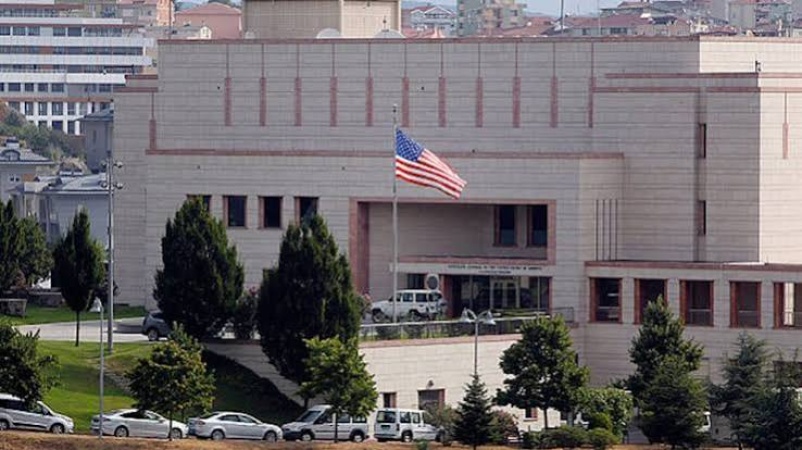
Obtaining a United States Visa has been one of the most sought-after destinations for Nigerians looking to travel for diverse reasons including tourism, education, business, relocation, medication, etc. For decades, the US immigration policy and visa issuance had been about meeting basic qualifications and applicants who presented satisfactory requirements were granted visas in diverse categories and those who didn’t were denied.
Needless to say, there was never really a time when the US visa processing was easy for Nigerians but, the requirement and procedure was fair at all stages until it wasn’t, giving rise to sudden dramatic, drastic landscape change in US visa application policies.
Today, Nigerian applicants face a combination of shortage of visa availability, restrictions of some visa categories, visa bond that is up to $15,000, tougher interview requirements, expanded security vetting, and the unbridle growth in demand.
This development reveals something bigger than a change in the appointment process. The US visa policy towards Nigeria shifted from a system largely centered on applicant qualification to one increasingly concerned with several additional questions such as: Will you leave when you’re supposed to? Can your identity and background be independently verified? Does your digital history support the story of your application? Are you financially sufficient? Does your travel fall within current national security restrictions? And in some cases, can substantial financial security be attached to your promise to leave? – to mention a few.
So, for Nigerian travellers therefore, the US Visa process has become less forgiving of inconsistency and more dependent on careful preparation.
Nigeria/US Visa Process: The Scale That Changed
of the major shocks came on July 8, 2025 when the US revised the reciprocity schedule for Nigeria, limiting most non-immigrant and non-diplomatic visas to single entry with a three-month validity period.
According to Asuquo, “the US visa has been one of the most frustrating travel processes for Nigerians between July 2025 and August 2026. So, the story is no longer simply about whether an applicant can secure an interview date or convince the consular officer in charge that they intend to return home.
“In 2025, the Nigeria B1-B2 visa which many travellers were now accustomed to receiving was revised to three months single entry which is from five months multiple-entry to three months validity one single entry.
“The Nigerian government formally protested the decision, noting that the decision also affected other categories including the F-Visa, the J-Visa and also argued that the policy placed additional burdens on Nigerian travellers, students, professionals and also families. To understand the scale that changed consider this: initially it was a B1-B2 arrangement which was up to sixty months, that is five years and multiple entry. Then the new reciprocity schedule was three months single-entry. This reality puts a Nigerian executive who previously obtained one visa and travels periodically to the US over several years in a situation where he or she now potentially requires a new visa application for a future trip after using one single visa.
“But it didn’t even end there; by January 2026 the entire situation changed again as the presidential proclamation introduced much more intense restrictions and Nigeria was now placed among 19 countries subject to partial visa rejection. So, for Nigerian nationals covered by that proclamation, the United States partially suspended the issuance of B1, B2 visas, F-visa which is student visa, M-visa which is vocational, J-visa which was the exchange programme and they were subject to limited exceptions.
“This distinction is extremely important to note – it is incorrect to just say America stopped issuing all visas to Nigeria. That is not what the official policy says. Other non-immigrant categories are not automatically captured simply because the applicant is from Nigeria while specific exceptions and case by case national interest exceptions can also apply. So, applicants covered by the proclamation may still submit applications and attend interviews but the State Department warned that they may nevertheless be eligible for visa issuance admission,” Asuquo noted.
She continued: “The proclamation applies to affected foreign nationals who were outside the US in January 2026 and did not have a valid visa at the time. The State Department explicitly states that visas that were valid before the proclamation took effect were not revoked simply because of the proclamation. This is an important distinction for Nigerians still holding valid visas as they had to look at every part of it. So, if they had to reject or revoke your visa, there were other things that were considered.”
The US Visa Bond Programme
“Another extraordinary development took effect in Nigeria from January 21, 2026. Nigeria was added to the US Government visa Bond programme. This meant that for a Nigerian passport holder who is otherwise eligible for a B1/B2, whose case can proceed to issuance, the consular officer can require a visa bond between the sums of $5,000 to $15,000. The amount is determined during the interview process as they are looking at other risk factors. At $15,000, that is the substantial financial commitment before considering air fare, accommodation or normal visa application fee which is $185,000,” Asuquo noted.
She however stated that the bond is frequently misunderstood as it is not an additional visa application fee and paying it does not guarantee a visa. “Applicants should not simply go online and pay $15,000 hoping that it will improve their chances. The State Department specifically instructs applicants to post a bond only after a consular officer directs them to do so using the official US Government process so that if a traveller complies with the term within the authorised period, the bond can be canceled and the money returned to the person who posted it. The State Department also says that bond is also returned where the visa holder never travels before the visa expires or where the applicant or traveller applies for admission but is denied entry. So, there is therefore a powerful message behind that policy.
The US states increasingly want measurable assurance that visitors will actually remain temporary visitors in their country and return after their trip. “This is an important technical point that the visa bond programme does not override the January 2026 presidential restriction. A person cannot escape a visa issuance restriction simply by offering to pay $15,000.”
Students Applicants Now Faces Digital Scrutiny
For students and exchange visitors, the scrutiny now goes beyond bank statements and admission, Asuquo stated. “Applicants digital footprint now forms part of the assessment. Now we tell applicants to know what they post on social media or any platform as their digital life is also being scrutinised during visa processing.
“In 2025, the US introduced expanded social media vetting for applicants in the F, M and J category. Applicants are instructed to make their social profile public to facilitate vetting of their identity and its admissibility. This represents a fundamental change in how applicants should think about visa preparation. So, for me, when profiling I would ask you for all your social media handles. I would go down to look at it and see whether you’ve written something discriminatory because people forget these things.”