ADAD
ADAD
Updating your news feed...
NEWS EXPRESS is Nigeria’s leading online newspaper. Published by Africa’s international award-winning journalist, Mr. Isaac Umunna, NEWS EXPRESS is Nigeria’s first truly professional online daily newspaper. It is published from Lagos, Nigeria’s economic and media hub, and has a provision for occasional special print editions. Thanks to our vast network of sources and dedicated team of professional journalists and contributors spread across Nigeria and overseas, NEWS EXPRESS has become synonymous with newsbreaks and exclusive stories from around the world.























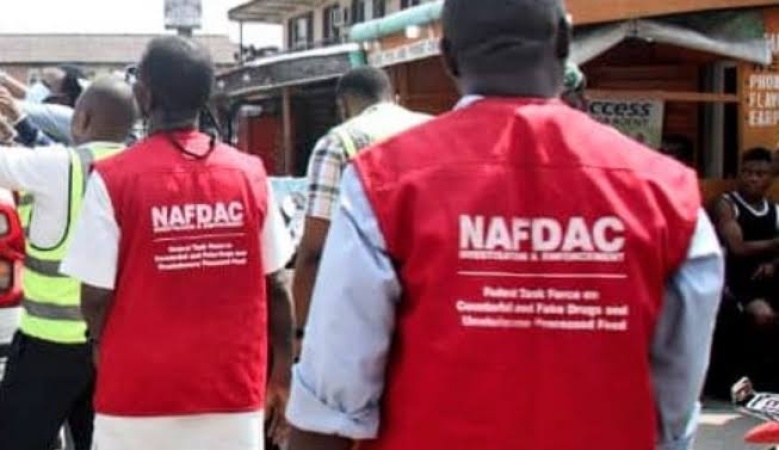
For Bukkola Adebayo, a trader at Oke-Ilewo, Abeokuta, the restriction on the sale of alcoholic drinks packaged in sachets and polyethylene terephthalate (PET) bottles below 200ml has brought an unwelcome downturn in business.
Adebayo, who sells alcoholic beverages alongside other items, said although she understood the health concerns behind the restriction, the policy had affected sales and reduced the number of customers visiting her shop.
said the National Agency for Food and Drug Administration and Control (NAFDAC) should have given traders enough notice before enforcing the ban, particularly to enable those with existing stocks to sell them.
For me, this is not the only thing I am selling in my shop, but for others, they have no option because they depend on the drinks to feed their families,” Adebayo said.
Her concerns mirror those of several traders across Abeokuta, who said the ban had compounded the economic hardship confronting them and their families.
traders spoke as the Ogun State Police Command and NAFDAC commenced a joint enforcement operation against sachet alcoholic drinks and PET-bottled alcoholic beverages below 200ml, as well as other unapproved products.
The enforcement has sparked anxiety among traders who fear that increased raids could further erode their already declining income.
Adebayo said she had not experienced harassment from the police or the National Drug Law Enforcement Agency (NDLEA), but heard that some operatives had visited the Akinolugbade area of Abeokuta and locked up shops.
Another trader at Totoro, Olabunmi Ogunbowale, said she had resorted to selling sachet alcoholic drinks secretly because the business was her only means of livelihood.
“I had no choice but to keep selling the sachet drinks secretly. Sometimes we sell the drinks at night because I have to cater for my family and it is the only source of my livelihood,” she said.
Ogunbowale appealed to the government to reconsider the policy, saying many women depended on the trade to survive.
“I am begging the state government to prevail on NAFDAC to allow us to keep selling the product because I don’t want to go into prostitution,” she said.
At Ita-Oshin, another trader, Kafila Odunjo, said the restriction had already taken a toll on her business because many customers preferred sachet drinks because of their affordability.
We only make big sales on the sachet drinks because it is easier for customers to buy alcoholic drinks in sachets of N100, N150 and N200,” Odunjo said.
She said customers who could previously afford sachet drinks were often unable to buy larger bottles costing about N1,000, resulting in a sharp decline in sales.
The effect is also being felt by some consumers, particularly commercial motorcycle operators who regard sachet alcoholic drinks as a cheaper alternative to bottled beer.
An Okada rider in Abeokuta, Abdulwasiu Folorunsho, said the rising price of bottled beer had made it difficult for low-income workers like him to afford.
As a commercial motorcycle rider, I don’t have money for beer of N1,500 or N2,000, so I go for the sachet alcoholic drink because it is easy for me to afford the N100 or N200 sachet drink to cool off my stress after taking passengers around the streets of Abeokuta,” he said.
Folorunsho, however, acknowledged the dangers associated with excessive alcohol consumption, including reckless behaviour and accidents.
“Sometimes when I take the sachet drink, I relax and have a sound sleep. Also, drinking the sachet alcoholic drink gives me and some riders power to work effectively, but too much of it could make them misbehave, which sometimes results in accidents,” he said.
Meanwhile, NAFDAC said its enforcement operation was aimed at protecting public health and reducing the harmful effects of cheap and highly portable alcoholic beverages, particularly among children and young people.
The Ogun State Coordinator of NAFDAC, Office 1, Akinwale Fagoroye, disclosed this when he led a delegation to the state Police Command headquarters in Eleweran, Abeokuta, where he sought police support for the statewide enforcement exercise.
Fagoroye said the operation, which began in Abeokuta, was being extended to other parts of the state and would continue until full compliance was achieved.
“The target is to remove from circulation alcoholic drinks packaged in sachets and PET bottles below 200ml,” he said.
He said NAFDAC enforcement teams were checking markets, motor parks, retail outlets, bars, warehouses and factories across the state.
According to him, the agency was also empowered to take action against fake, unregistered, substandard, adulterated, expired or wrongly labelled products, as well as facilities operating without the required approvals.
Fagoroye urged manufacturers, importers, distributors, wholesalers, retailers and consumers to comply with the directive and cooperate with enforcement officers.
Responding, the Commissioner of Police, Bode Ojajuni, assured the NAFDAC delegation of the command’s full cooperation and necessary security support during the lawful enforcement operations.
Ojajuni said the police were also enforcing the Liquor Act and other laws regulating the sale and distribution of alcoholic beverages in the state.
“The enforcement is aimed at preventing unlawful sale and distribution of alcohol and curbing activities that could endanger public safety, especially those exposing young people to harmful practices,” he said.
He urged residents and stakeholders to comply with relevant regulations and report suspected fake, unsafe or unapproved products, as well as illegal alcohol-related activities, to the appropriate authorities.
“The Ogun State Police Command remains committed to supporting lawful regulatory enforcement and other government efforts aimed at protecting lives and safeguarding the well-being of residents,” he added. (The Guardian)