Updating your news feed...

NEWS EXPRESS is Nigeria’s leading online newspaper. Published by Africa’s international award-winning journalist, Mr. Isaac Umunna, NEWS EXPRESS is Nigeria’s first truly professional online daily newspaper. It is published from Lagos, Nigeria’s economic and media hub, and has a provision for occasional special print editions. Thanks to our vast network of sources and dedicated team of professional journalists and contributors spread across Nigeria and overseas, NEWS EXPRESS has become synonymous with newsbreaks and exclusive stories from around the world.








Loading banners
Loading banners...

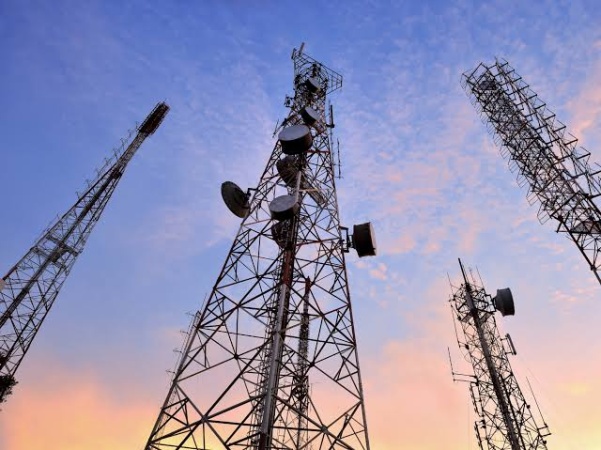
Despite the Federal Government’s pressure on states to harmonise Right of Way (RoW) charges to N145 per linear meter, several states continue to frustrate telecom operators with exorbitant application fees, undermining Nigeria’s broadband expansion drive.
An analysis of the ease of doing business statistics, obtained from the Nigerian Communications Commission (NCC), revealed disparate and exorbitant application fees by states despite charging N145/linear meter or outright removal of fees.
In 2020, the National Economic Council (NEC) directed states to adopt a N145 per linear meter uniform RoW charge to accelerate broadband rollout. The move was hailed as a breakthrough, expected to reduce costs for telecom operators and encourage investment in fibre optic infrastructure. But six years later, the reality is far more complex.
Checks showed that while Adamawa State removed RoW fees completely, operators must cough up N100,000 per application. In Cross River, despite agreeing to the N145/linear meter, it still demands N250,000 in application fees.
Ekiti charges the standard N145, but imposes a staggering N700,000 application fee, the highest in the country. Taraba keeps RoW at N145, but adds N350,000 in application charges. Oyo collects N145 per meter, plus a N50,000 application fee. In Yobe, operators still pay the N145/linear meter, plus N25,000 application fees.
Gombe, which is one of the few states offering genuine relief, with N145 per linear meter, still charges N10,000 application fees.
Meanwhile, several states openly defy the harmonisation policy. For instance, Kano charges N2, 754/linear meter, Delta demands N2, 706/linear meter. Rivers levies N2,256, Ogun imposes a jaw-dropping N6,600, Osun sets N1, 500 per linear meter, and Akwa Ibom charges N2,000 per linear meter.
Industry insiders argued that these application fees are simply RoW charges in disguise. By removing the headline fee and introducing mandatory “processing” or “application” charges, states are effectively sidestepping federal directives while continuing to extract revenue from operators.
Confirming the politics behind this issue, Chairman, Association of Licensed Telecom Operators of Nigeria (ALTON), Gbenga Adebayo, in an interview with The Guardian, said: “First, the states that have reduced their right-of-way, while a lot of them have reduced it, have other hidden charges that are still high. Some states, for example, will tell us right-of-way is zero, but you have to pay a developmental levy per linear meter. You have to pay an educational levy, you have to pay an effluent discharge levy, you have to pay an environmental levy, then you have to pay a capital deployment fee, application fees, among others. They add all that, while they claim the right-of-way is zero.
“So, in fact, it actually makes a mockery of the zero right-of-way claims. That’s one case in some states. In other states, the cost of right-of-way is so prohibitive, and the hostility on the part of government officials is so prohibitive, that it doesn’t make them commercially attractive to deploy there. Except those barriers are not removed, it’s not attractive for anyone.”
A former NITEL staff, Kehinde Aluko, warned that this practice is crippling investment decisions, stressing that fibre deployment projects are delayed or abandoned, particularly in states with the highest fees.
“The result is a widening digital divide: urban centres inch forward, while rural communities remain cut off from affordable Internet access,” he stated.
On consumer impact, Aluko said for ordinary Nigerians, the consequences are clear: “Higher data costs as operators pass on inflated expenses. There is also slower rollout of 5G and fibre broadband, especially outside major cities. There are also persistent connectivity gaps that undermine education, healthcare, and e commerce.
According to him, application fees of N700,000 in Ekiti or N350,000 in Taraba are not just administrative charges; they are barriers to progress, and this discourages operators from expanding into those regions, leaving millions of Nigerians offline. (The Guardian)