Updating your news feed...

NEWS EXPRESS is Nigeria’s leading online newspaper. Published by Africa’s international award-winning journalist, Mr. Isaac Umunna, NEWS EXPRESS is Nigeria’s first truly professional online daily newspaper. It is published from Lagos, Nigeria’s economic and media hub, and has a provision for occasional special print editions. Thanks to our vast network of sources and dedicated team of professional journalists and contributors spread across Nigeria and overseas, NEWS EXPRESS has become synonymous with newsbreaks and exclusive stories from around the world.





















Loading banners
Loading banners...


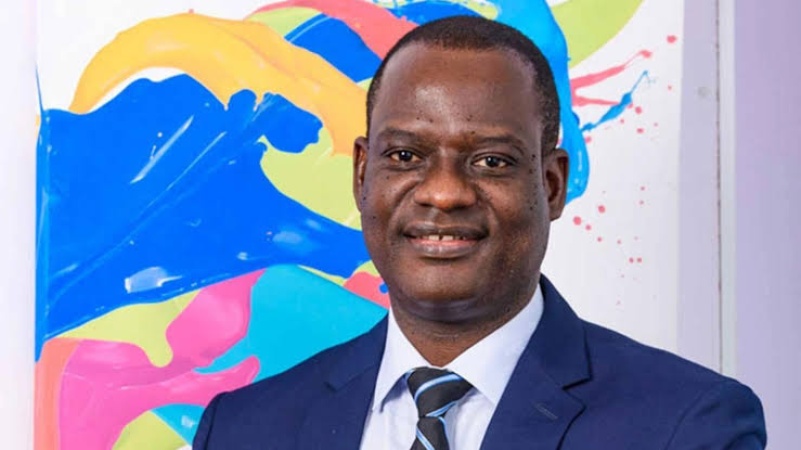
Dr Victor Ikem
By Dr. VICTOR IKEM
As a young advertising executive in the early years of my career, I had the opportunity to work on several global brands. As a client service executive, my role required me to interface regularly with senior managers and directors on the client side. Some were expatriates working within multinational organisations whose corporate cultures placed less emphasis on titles and rigid hierarchy.
In many Nigerian organisations with global ownership or international affiliations, there was a growing belief that one way to build a strong, modern corporate culture was to flatten the hierarchy. Respect for senior management remained important, but employees were increasingly discouraged from addressing executives by their official titles or traditional forms of deference such as “Sir,” “MD,” “Chairman,” or even “Mr.”
Instead, we were encouraged to address senior colleagues by their first names.
At the time, this was presented as part of the culture of a modern workplace: open communication, fewer barriers between management and employees, greater accessibility of leaders and a stronger sense of belonging.
I subsequently moved from advertising into the more traditional corporate environment of consumer electronics, where I worked extensively with Korean and Indian colleagues. There, the approach to titles was more nuanced. Both cultures have strong traditions of seniority, hierarchy and respect, yet multinational business practices had also introduced elements of the more informal Western corporate environment.
This tension between tradition and modern corporate culture became even more apparent during my years in banking.
While working as a manager in Corporate Affairs and Communications in Nigeria’s oldest bank, I was part of the core team responsible for the bank’s centenary celebrations. My responsibilities brought me into direct contact with the Group Managing Director at the time. Despite his position, he preferred to be called simply “Emeka.”
It made sense. He had come from a global banking environment and had worked across countries and cultures where titles carried considerably less importance in everyday professional interactions.
My Encounter with Mr. Tony Elumelu
I also remember being interviewed by Mr. Tony Elumelu for a management position in one of the Heirs Holdings subsidiaries.
Although it was a job interview, the meeting was remarkably cordial and mutually respectful. We spoke extensively about education, having attended some of the same universities at different times, and about our shared interest in Africa’s development.
I particularly remember him asking why I had left a role that gave me the opportunity to work across Africa to take up a banking position.
Although I eventually could not take up the role, my few subsequent encounters with Mr. Elumelu left me with the impression of a leader who was courteous, engaging and generous with compliments and regard for the people he encountered.
That personal experience is one reason the recent widely discussed encounter involving Mr. Elumelu and a young trainee executive presents an interesting case study. Beyond the personalities involved, it raises a much larger question:
What is the place of corporate titles, hierarchy and traditional respect in the modern African workplace?
The African Workplace Is Not Culturally Neutral
As a business owner myself, I have become increasingly sensitive to how respect for seniority is expressed in the workplace.
Having previously worked in organisations where employees were encouraged to drop corporate titles and address senior executives more informally, I have tried to create a balance.
I come from a society where age matters, achievement matters and titles often carry cultural significance. Titles are not always merely decorations attached to people’s names. In many African societies, they communicate achievement, responsibility, seniority, authority and social recognition.
Yet excessive emphasis on titles can also create distance.
A workplace where employees are terrified of the “MD,” “Chairman,” “Director” or “Oga” may discourage innovation, constructive disagreement and honest feedback. Employees may become more concerned about demonstrating deference than contributing ideas.
The challenge, therefore, is not simply whether corporate titles should be used or discarded. The real challenge is understanding context.
Respect and Professionalism Are Not the Same as Deference
Interestingly, just recently I had to advise one of my staff to reduce the number of times she used “Sir” while speaking with clients.
My concern was not that she was being too respectful. Rather, excessive use of “Sir” was beginning to undermine the sense of professional confidence and authority required in a client relationship.
A consultant, account executive, banker, lawyer or communications adviser must be respectful, but must also demonstrate competence and confidence.
There is a difference between respect and subservience.
There is equally a difference between informality and disrespect.
Understanding that distinction is an important part of emotional intelligence in the workplace.
The Mr. Tony Elumelu Episode Raises Important Questions
The recent encounter involving Mr. Elumelu and the young executive should therefore not be reduced to a debate about who was right or wrong.
There are deeper questions worth asking.
What exactly are young executives being taught in leadership and management training programmes today?
Are they being encouraged to abandon traditional African conventions around titles and seniority in favour of the flatter organisational structures associated with Western corporate culture?
Was the young executive simply applying a workplace culture she had been taught?
Or was her choice of address influenced primarily by her upbringing, personal values and understanding of professional etiquette?
And, equally important, what responsibility do organisations have to clearly communicate their expectations regarding forms of address, hierarchy and professional conduct?
These questions deserve serious interrogation rather than social-media judgement.
Global Companies, African Cultural Realities
This discussion becomes even more important as African companies become global businesses.
Companies founded and led by Africans increasingly operate across multiple countries and employ people from diverse nationalities, generations and cultural backgrounds. An organisation may simultaneously employ Nigerians, Ghanaians, Kenyans, South Africans, Europeans, Americans, Indians and Asians.
Even within Nigeria, expectations regarding age, titles and seniority can differ considerably across generations, industries and social backgrounds.
A 24-year-old graduate trainee exposed to Silicon Valley corporate culture may view calling the CEO by his first name as perfectly normal.
A 55-year-old executive raised within a more traditional African environment may interpret exactly the same behaviour very differently.
Neither perspective can simply be wished away.
This is where cultural intelligence must become part of corporate leadership.
Corporate Titles Still Matter — But Context Matters More
Westernised corporate culture has not completely displaced African traditions of seniority and recognition. Nor should African organisations simply reject the advantages of flatter organisational structures.
The modern workplace needs both.
Leaders should be accessible without diminishing the responsibilities attached to their offices. Employees should demonstrate respect without becoming excessively deferential. Organisations should encourage open communication while recognising the cultural environments in which they operate.
Corporate titles, therefore, still matter in Nigeria — but perhaps not because everyone must constantly say “Sir,” “Madam,” “MD” or “Chairman.”
They matter because titles communicate context.
They tell us something about responsibility, achievement and organisational relationships. But titles should never become substitutes for competence, character or mutual respect.
The more important lesson from the current debate is that African organisations must become intentional about defining their corporate cultures rather than simply importing workplace conventions from elsewhere.
Perhaps there is also an emerging area of scholarship here.
Researchers in organisational communication, human resource management and corporate leadership should begin to empirically investigate the relationship between Western corporate informality and traditional African concepts of hierarchy, seniority and respect, particularly as African businesses expand internationally.
How do these competing cultural expectations affect leadership, employee engagement, communication, innovation and workplace relationships?
The answers could become increasingly important to the future of African business leadership.
Ultimately, the lesson is not about deciding who was right or wrong in one encounter.
It is about recognising that respect, hierarchy, culture and professionalism are constantly negotiating with one another in the modern African workplace.
The successful African organisation of the future will be neither blindly Western nor rigidly traditional.
It will understand both worlds — and possess the cultural and emotional intelligence to know when each matters.
•Dr. Victor Ikem is a business coach at Docenti Global Business School and an entrepreneur with interests across consulting, communications and trading.