
Updating your news feed...
NEWS EXPRESS is Nigeria’s leading online newspaper. Published by Africa’s international award-winning journalist, Mr. Isaac Umunna, NEWS EXPRESS is Nigeria’s first truly professional online daily newspaper. It is published from Lagos, Nigeria’s economic and media hub, and has a provision for occasional special print editions. Thanks to our vast network of sources and dedicated team of professional journalists and contributors spread across Nigeria and overseas, NEWS EXPRESS has become synonymous with newsbreaks and exclusive stories from around the world.
















Bandits
When news broke that security operatives had rescued pupils and teachers abducted from a school in Oyo State after weeks in captivity, families in Woro and neighbouring communities in Kaiama Local Government Area of Kwara State welcomed the development with mixed emotions. The incident reopened the pain they have carried for nearly six months.
The question on the lips of residents of the affected communities is: “If the government could rescue those children, why not ours?”
This and other questions are being asked by mothers who haven’t seen their children since February 3, fathers whose wives disappeared into the forest with toddlers strapped to their backs, and elderly parents who still await positive news from their relatives, who are hoping to hear a familiar voice on the telephone or news of their release.
For them, the rescue in Oyo was more than another security success. It was a proof that people taken alive by armed groups could still be found. It rekindled the hope that the about 176 residents abducted during the attack on Woro and neighbouring settlements could also be brought home safe if similar determination was deployed.
Nearly six months after the attack, however, with the future looking bleak, those hopes are steadily giving way to despair. The victims remain missing and their whereabouts haven’t been officially disclosed. No rescue has been announced. The few telephone conversations families once relied upon have stopped coming in and have been replaced with silence.
“It is the silence that is killing us,” the village head of Woro, Alhaji Salihu Umar Bio, told Weekend Trust, his voice heavy with emotion.
The traditional ruler is not merely speaking on behalf of his people; his wife and one of his children are among those still in captivity.
“They no longer communicate with us. We have no access to them, and nobody is telling us how they are living – whether they are eating or sick,” he said.
For Bio, every passing day has become another reminder that his family remains incomplete.
The attack that devastated Woro in February didn’t merely destroy homes and claim lives; it tore families apart, emptied villages and left hundreds of people struggling to rebuild their lives with the burden of uncertainty.
Residents still remember that day with pain and agony following the death of over 150 persons at the last count.
Gunmen invaded the communities, killing scores of residents before herding women, children and other villagers into the vast Kainji forest.
Months later, the people left behind said life had never returned to normalcy.
The farms that once sustained many households now receive fewer visitors.
Some families have abandoned cultivation altogether, either because those who worked the land are among the abducted or because the fear of another attack has kept them away.
The atmosphere in the communities is no longer defined by farming or economic activities but conversations about those who never returned.
“Our people were abducted on February 3 and they are still there. Nobody seems to be talking about them anymore. That was why we organised a peaceful protest penultimate Friday. We wanted the government to remember that these people were still missing,” Bio said.
The village head said one of the greatest pains facing the affected families was not knowing what had become of their loved ones.
“If you call their telephone numbers today, they do not connect anymore. We do not know whether they have fallen sick. We do not even know whether everyone of them is still alive,” he said.
He recalled that among those abducted were children barely old enough to understand what was happening around them.
“There were children who were just three, five and six years old. There were also pregnant women. Some of those women may have given birth inside the forest by now; we simply do not know,” he said.
Each unanswered question has become another source of torment for the families.
According to Bio, the emotional trauma has not spared anyone.
“Mothers cry for their children, children cry for their parents, every day begins with prayer and ends with disappointment because there is still no news,” he noted.
According to the residents, the community’s frustration has also been fuelled by the gradual disappearance of national attention from their tragedy.
When the attack first occurred, government officials, security agencies and humanitarian organisations visited the area. Public sympathy poured in from across the country, but today, residents say they feel abandoned. Yet, for those whose loved ones remain in captivity, the nightmare continues every day.
Abductees turn farm workers, labourers
Another resident, Dr Abdul Ibrahim, who has been involved in community efforts to secure the release of the captives, however, gave more explanation about the plight of the abductees. According to him, information reaching community leaders is that the abductees have become part of an organised system operated by the terrorists.
“The victims are still inside the Kainji forest and the security operatives are very aware of their location. They have not been moved elsewhere,” he said.
The most disturbing aspect of the plight, he added, is the concern that many of the captives are no longer merely being held hostage but are being used as labourers.
“Most of the men work on farms inside the forest. They cultivate a very large expanse of land. We were told that the kidnappers even have small tractors they use in cultivation”, he said, adding that the development points to a level of organisation that goes beyond temporary camps established by fleeing criminals.
According to Ibrahim, the female captives are made to process shea butter, while harvested crops are being stored in large quantities.
“It will interest you to know that our women are also engaged in processing shea butter; and there are over 2,000 sacks of harvested crops already stored,” he said.
Another painful chapter in the community’s search to rescue its people, according to him, involves efforts to negotiate with the kidnappers.
Residents, members of the Kaiama community living in Abuja and other well wishers reportedly contributed money in the hope that it would open the door for discussion.
But Ibrahim said the effort collapsed. “The kidnappers rejected the money, said it was too little and asked us to go and meet the government because they were after the government, not the communities,” he alleged.
Ibrahim said members of the community had contributed over N150 million, but the kidnappers rejected the money, claiming they had already spent more than that in feeding the captives.
“They told us to meet the governors of Kwara and Niger states to bring tangible money because the victims are from the two state,” he said.
The failed negotiation marked the beginning of another painful phase for many families. Telephone conversations that once reassured them that their relatives were still alive suddenly stopped.
“After the second conversation, the kidnappers warned that it would be the last time the victims would speak with us. This was a long time ago. Since then, there has been no communication,” Ibrahim added.
The silence has lasted for months and heightened fears following fresh threats allegedly issued by the kidnappers.
According to Ibrahim, the armed men warned that some of the young girls among the captives could be forced into marriage if the stalemate continued.
Dr Aliyu Umar, a resident of the affected community who has been involved in rescue efforts through negotiation, said residents had explored every possible option to secure the victims’ freedom despite repeated setbacks.
He disclosed that after an earlier offer of N100 million was rejected by the kidnappers, the community promised to mobilise additional resources and increase the offer to N200 million and N250 million.
However, the abductors are yet to accept the latest proposal.
“However, a mediator is still in contact with them, and that is the only source of information we have,” he said.
Speaking on the condition of the victims, Umar said the community’s only updates came through the mediator, who assured them that the abductees were still alive despite the absence of direct communication.
“According to the mediator, our people are still alive, although we have no direct communication with them. He also told us that they are being held in the same camp,” he added.
He further revealed that the mediator had informed the community that some of abducted pregnant women had delivered their babies in captivity, increasing the number of people still being held.
“The mediator informed us that five of the abducted pregnant women have given birth in captivity. This means that the number of people in captivity has increased from 176 to 181,” Umar said, adding that the incident had devastated the entire community. He said many families had been left shattered and struggling to cope with the trauma.
He cited the case of Wakilin Sarki Hausawa, whose three wives and all his children were abducted, leaving only him behind. Umar said the man’s last wife was the woman seen in a widely circulated photograph holding twins, while one of his sons was killed in the presence of the family before the others were taken away.
When contacted, the state Commissioner for Communication, Bola Olukoju, told Weekend Trust in a text message that “The state government is judiciously working on it.”
Many victims’ relatives can no longer live normal lives. Our greatest prayer is the safe rescue of our people. We do not know how much longer this situation would continue.
“We see this as political. If you consider the reports coming out of Borno State – that out of N5 billion allegedly paid, only around N1.5 billion got to the bandits – it makes us feel that people’s lives are being used to play politics. That is how many of us see what is happening,” he added.
‘What is good for Oriire also good for Kaiama’
For many residents, the successful rescue of the Oyo schoolchildren has only strengthened their belief that their relatives can also be rescued if sufficient resources and determination are deployed.
Ibrahim said: “We saw what happened in Oyo State. Those schoolchildren were rescued alive. We are happy for those families, but it also reminded us that our people deserve the same effort. We keep asking ourselves why our people are still there.”
'Gov’t working on it’
Weekend Trust reports that the government has not been idle since the February attack. But the efforts have not satisfied the residents, who seek more collaboration with the federal government to replicate the Oyo scenario in Kwara.
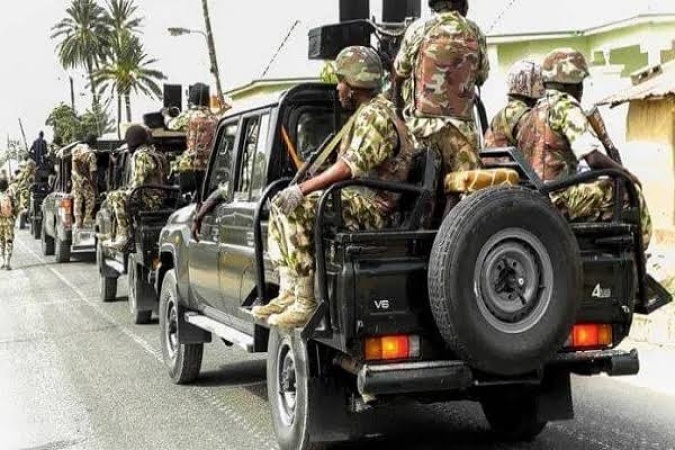
One of the major responses was by Operation Savannah Shield, a joint security operation involving the Nigerian Army and other security agencies to dislodge armed groups operating around the Kainji forest and the Kwara/Niger border.
The operation has since recorded a number of successes and troops have carried out clearance operations in identified criminal enclaves, rescued kidnap victims, recovered weapons and motorcycles, destroyed camps used by armed groups and increased military presence in several vulnerable communities across Kwara north.
The state government has also consistently said it is providing logistics support to security agencies, strengthening intelligence gathering and working closely with the Office of the National Security Adviser and the federal government to curb the growing activities of kidnappers and other criminal groups.
On several occasions, Governor AbdulRahman AbdulRazaq assured residents that his administration would continue supporting security agencies until normalcy returns to the affected communities.
Despite those efforts, however, residents of Woro said the continued captivity of their loved ones overshadowed every other achievement.
For them, every successful rescue operation elsewhere naturally raises expectations that similar efforts should produce results in Kaiama.
“The security agencies are aware of where the captives are being held. That is why we keep appealing to the authorities to intensify efforts to rescue them as quickly as possible,” residents said.
The village head echoed similar sentiments, saying,” We expected a proper search and rescue operation inside the forest. That is what we believed would happen after the attack. However, instead, months have passed and we are still waiting.”
On the money rejected by the terrorists, the village head, who confirmed that members of the community contributed money, said: “I do not know the exact amount that was raised and whether it had been taken to the kidnappers. What I know is that the community – at home, Abuja and other places – contributed because everyone wanted these victims to regain their freedom.”
He said the community had exhausted virtually every peaceful option available to it, explaining that the peaceful protest organised recently was not intended to embarrass the government but to remind the authorities that the tragedy was far from over.
He said, “Our people were abducted in February. Nobody seems to be talking about them anymore. We organised the protest because we wanted the government and the country to remember that they are still there.” (Weekend Trust)




