
Updating your news feed...
NEWS EXPRESS is Nigeria’s leading online newspaper. Published by Africa’s international award-winning journalist, Mr. Isaac Umunna, NEWS EXPRESS is Nigeria’s first truly professional online daily newspaper. It is published from Lagos, Nigeria’s economic and media hub, and has a provision for occasional special print editions. Thanks to our vast network of sources and dedicated team of professional journalists and contributors spread across Nigeria and overseas, NEWS EXPRESS has become synonymous with newsbreaks and exclusive stories from around the world.

.webp)
.webp)















.webp)


.webp)
Loading banners
Loading banners...

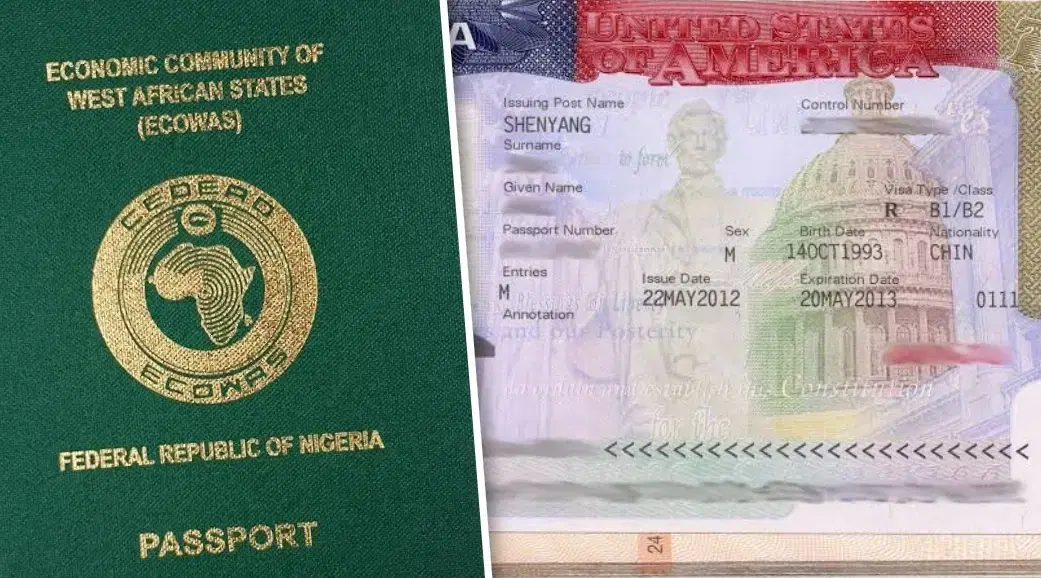
The United States has introduced a new global visa restriction policy targeting individuals involved in cybercrime, cyberscams and sextortion, with immediate family members of offenders also facing possible visa restrictions under the new measures.
Announced on Thursday by U.S. Secretary of State Marco Rubio, the policy forms part of the Trump administration’s efforts to combat online fraud, cyber-enabled crime and transnational criminal networks targeting Americans.
According to the U.S. government, the restrictions will apply to individuals responsible for or complicit in cyber-enabled crimes, including online investment scams and sextortion, regardless of their country of origin.
Announcing the policy, Rubio said the move aligns with President Donald Trump’s Executive Order 14390 on combating cybercrime, fraud and predatory schemes targeting Americans.
He described online investment scams as a growing threat, noting that they are “often orchestrated by Chinese transnational criminal organizations.”
Rubio added that scammers “have defrauded U.S. citizens of at least $10 billion in 2024 alone while fueling corruption, money laundering, and human trafficking.”
Rubio also highlighted the growing threat posed by online sextortion, particularly against minors.
“American children also have been specifically targeted by offenders operating overseas for sextortion scams, devastating families and futures,” he said.
Explaining the scope of the new visa policy, Rubio said, “This policy targets individuals responsible for, or complicit in, cybercrime and cyber-enabled crime, such as those involved in cyberscams and sextortion. Immediate family members of individuals engaged in such illicit activities may also be subjected to visa restrictions.”
He said the visa restrictions are part of a broader strategy by the Trump administration to dismantle criminal networks operating across borders.
“The Trump Administration is deploying every tool at our disposal—sanctions, prosecutions, asset seizures, extradition requests, and international law enforcement cooperation—to dismantle criminal scam networks and impose costs on those who enable them,” he said.
Rubio added that restricting visas sends a clear message to perpetrators of cyber-enabled crimes targeting Americans.
“By restricting visa issuance to those who are responsible for or complicit in these criminal enterprises, we are sending a clear message: The United States will go after those who prey on our citizens,” he said.
The new policy is being implemented under Section 212(a)(3)(C) of the U.S. Immigration and Nationality Act, which allows the U.S. government to restrict visas for foreign nationals whose entry could have adverse foreign policy consequences.
While the State Department did not identify specific countries or individuals that would be immediately affected, it said the restrictions apply globally to people involved in cybercrime and cyber-enabled criminal activities, including cyberscams and sextortion.
The latest measure comes as the Trump administration continues to tighten U.S. immigration and border policies through a series of executive actions and regulatory changes.
Earlier this month, the administration unveiled a proposed immigration rule that would limit the stay of most international students and exchange visitors in the United States to four years, replacing the decades-old policy that allowed them to remain for the duration of their academic programmes.
Under the proposal, holders of F and J visas would be required to obtain federal approval to extend their stay beyond the four-year period, even if they have not completed their studies, plan to pursue postgraduate education or are eligible for work experience linked to their academic programmes.
If implemented, the proposal would represent one of the most significant overhauls of the U.S. student visa system in decades and is expected to affect about 1.5 million international students and exchange visitors currently residing in the country. (Vanguard News)




