
Updating your news feed...
NEWS EXPRESS is Nigeria’s leading online newspaper. Published by Africa’s international award-winning journalist, Mr. Isaac Umunna, NEWS EXPRESS is Nigeria’s first truly professional online daily newspaper. It is published from Lagos, Nigeria’s economic and media hub, and has a provision for occasional special print editions. Thanks to our vast network of sources and dedicated team of professional journalists and contributors spread across Nigeria and overseas, NEWS EXPRESS has become synonymous with newsbreaks and exclusive stories from around the world.
.webp)
.webp)




.webp)

.webp)
Loading banners
Loading banners...

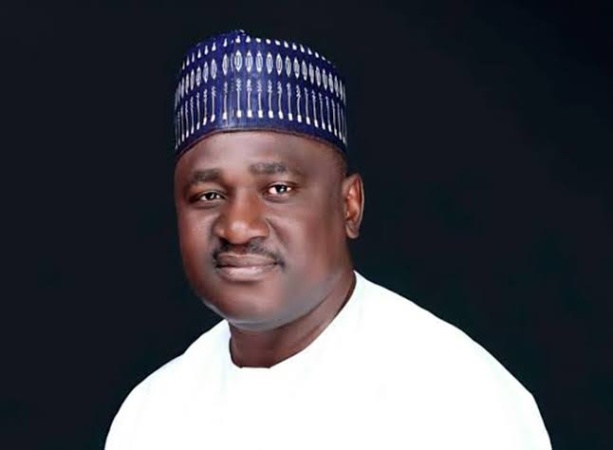
NUT National President, Comrade Audu Titus Amba
Comrade Audu Titus Amba is the National President of the Nigeria Union of Teachers (NUT), Deputy Vice President of the Nigeria Labour Congress (NLC), and Vice President of Education International, African Region. He speaks with CLEMENT IDOKO in this interview, on teachers’ welfare, implementation of government-approved incentives, insecurity in schools, curriculum reforms and the need to prioritise basic education. Excerpts:
Where are we now in the struggle for improved welfare of teachers in Nigeria, given the fact that the challenges in education remains the same?
The Nigeria Union of Teachers is a trade union and, like every pressure group, it advocates for the interests of its members. We engage government on issues relating to teachers’ welfare, workplace protection, professional development and other matters affecting teachers. But let me take you back. Even before I assumed office, my predecessors had been on the struggle for better education for the Nigerian child and improved welfare of teachers. We continued with that engagement, and through persistent negotiations and appeals, some welfare packages were approved by the then administration of former President Muhammadu Buhari. These include a special salary structure for basic and secondary school teachers, extension of mandatory service years from 35 to 40 years, construction of low-cost housing for teachers in rural areas, special allowance for rural teachers, peculiar allowance for science teachers, automatic admission into public schools for biological children of teachers, free tuition for their children, automatic employment for Education graduates, and loan facilities for agriculture, housing, vehicles and motorcycles, among others.
However, out of these approved packages, the only one that has been fully implemented is the extension of teachers’ retirement age from 60 to 65 years and length of service from 35 to 40 years. The other welfare packages are still awaiting implementation. I always say that when workers are adequately rewarded while in service, they will not necessarily agitate for an extension of service because they would have been able to plan for retirement, educate their children, access healthcare and provide decent accommodation for themselves. These are basic expectations of any worker. If your salary can take care of your family, provide education for your children, healthcare and decent accommodation, then you are more secure. For over 25 to 30 years, we have been advocating for a special salary structure for Nigerian teachers, but we are still pursuing it.
Stakeholders have observed that the NUT, of late has not been confrontational with the government in a bid to achieve upward review of salaries of teachers and other welfare packages for teachers. Is there something you are doing differently?
Yes, I can tell you for free that the leadership of the NUT has not relented in its constructive engagement with the Federal Government, particularly the Minister of Education, Dr Maruf Tunji Alausa, and other critical stakeholders to demand an upward review of salaries of teachers. Just as I told you earlier, the NUT has demanded a Special Salary Structure for teachers, and this is part of our engagement with the Minister of Education, because there is no alternative to the approval of a Special Salary Structure for Teachers. Nigerian teachers are poorly paid; their salaries cannot take them home. One of the key issues in our presentation to the Minister is the implementation of the approved welfare packages for teachers. Most of these packages were approved by the Federal Executive Council under the leadership of the late President Muhammadu Buhari, but implementation remains a challenge.
We do not want to embark on nationwide industrial action because the people who will suffer most are the children of poor Nigerians who depend on public primary and secondary schools. However, let me say clearly that it may get to a point where teachers may have no alternative if government continues to ignore their welfare concerns.
The NUT recently suspended action over the abduction of teachers and learners in Oyo State, when the victims were still in captivity. What really happened?
The situation was very difficult. When the kidnapping incident happened in Oyo State, including the killing of a teacher, we decided to declare an indefinite strike in the state to put pressure on government to ensure the safe release of the children and teachers. There was no pressure we did not go through. Parents were calling and asking how long their children would remain at home. Those directly affected by the incident naturally wanted the action to continue until their loved ones were rescued, but people who were not directly affected had different perspectives. There is a saying that only the person living in a leaking house knows where the leak is. That was the reality of what we faced.
In addition to that, we got proper briefings from the government and security agencies, and we were satisfied that concerted efforts were on to ensure the safe rescue of the schoolchildren and teachers from their abductors. So, the Nigeria Union of Teachers welcomed with great relief, joy and gratitude the safe rescue of the teachers and learners abducted on May 15, in Oriire Local Government Area of Oyo State, after 56 days in captivity. We commend the Federal Government, Oyo State Government, security agencies, community leaders and all those whose efforts contributed to the successful rescue of the abductees. We particularly salute the security operatives for their courage, professionalism and commitment. However, the NUT will not forget the two teachers who were brutally murdered by the terrorists. We extend our deepest condolences to their families, colleagues and the entire education community in Oyo State.
The tragedy is a painful reminder of the dangers confronting teachers across the country. From the abduction of over 270 schoolgirls in Chibok, Borno State, in 2014, to the kidnapping of 110 schoolgirls in Dapchi, Yobe State, in 2018, and other attacks in Kaduna, Katsina, Zamfara, Kebbi, Sokoto and other states, Nigeria’s education sector has continued to suffer from insecurity.
We are particularly concerned about the recent abduction of 42 schoolchildren in Mussa, Askira/Uba Local Government Area of Borno State, as well as the abduction of one teacher and 36 students and the killing of two teachers in Lassa, Borno State. These attacks have disrupted education and deepened the learning crisis confronting the country. The kidnapping and killing of teachers and learners constitute a direct assault on the right of Nigerian children to education. We will continue to engage government and demand stronger protection for schools, teachers and learners.
Nigeria often looks at Finland’s education system as a model. What lessons can Nigeria learn?
If you look at Finland, education is highly prioritised, and the teacher is at the centre of the system. Teachers are well trained, respected and properly rewarded. In Finland, parents are proud when their children choose teaching as a profession because teachers are highly valued. If Nigeria decides to prioritise teachers’ welfare, especially at the basic education level, the sky will not even be the limit. Teachers at the primary and secondary levels are the foundation of the entire education system. We build the foundation and hand over learners to tertiary institutions. We teach children from the beginning, sometimes teaching them how to speak, read, write and understand basic concepts. That foundation is critical.
I want to see the lost glory and respect teachers once enjoyed in this country restored. If President Bola Ahmed Tinubu focuses on revamping education by putting teachers at the centre through improved welfare, remuneration and training, the country will be better for it because no country grows beyond the quality of its education. My appeal to the President is to focus attention on basic education, the welfare of primary and secondary school teachers, and the provision of infrastructure that will enable teachers to properly groom young Nigerians.
It is often said that the outdated curriculum is responsible for the poor quality of graduates from the school system. What is the real issue?
Yes, this used to be part of a major challenge, but the NUT was part of the last review of the national curriculum. A lot of innovation has been introduced. The curriculum now encourages hands-on training of children in different skills. What is required is the provision of infrastructure and adequate training for teachers to ensure proper implementation. Teachers are the ones who implement education policies. Therefore, whenever government develops policies or curricula, teachers must be carried along. We are not against government policies. We believe every government wants to improve education. But those who will implement these policies in the classroom must be part of the process. You cannot shave someone’s head in his absence. The current Minister of Education is doing well in engaging stakeholders and trying to reposition the sector. His major task now is to ensure that teachers’ welfare receives the attention it deserves. You cannot achieve quality education when teachers are not properly paid and motivated.
As part of the blame-game over the rot in education in Nigeria, the Federal Government believes that education is on the concurrent list and that states and local governments are not doing enough to transform the system. What is your take on this?
Yes, education is on the concurrent list, but the responsibility of the Federal Government is to set standards. For instance, we have a national minimum wage. At the NLC, we negotiate with the Federal Government, and the outcome serves as a benchmark across the country. The Federal Government can also decide that the least salary for a primary school teacher should be a certain amount, and that becomes the benchmark no state should go below. When the NLC negotiated the current minimum wage, it was a difficult process. It took the intervention of the President to arrive at ?70,000. But as you are aware, some states are even paying above that. Imo State, for instance, is paying ?100,000. The Federal Government must provide the roadmap for states and private institutions to follow. It should determine the minimum salary and incentives for teachers.
Quite a lot of your teachers have been affected by the horrendous attacks on schools as witnessed recently in Oyo State. Can you put a figure to these unfortunate incidents?
It is difficult to provide an exact figure because many cases across the country are not reported. We focus mainly on cases where teachers are attacked or abducted in their places of work. If we begin to count every teacher who has suffered attacks or abductions across Nigeria, we may not be able to finish. There are schools in remote communities where incidents occur and information hardly gets to us. Whenever we receive verified reports of attacks on teachers in their places of duty, we speak out and demand government action.
What can be done to improve the safety of schools and learners in Nigeria?
Security requires collective responsibility. It is not only the duty of security agencies. I commend the Oyo State Government for strengthening its security architecture and expanding its Safe School Initiative after the recent incident. The government has also involved the NUT, community leaders and other stakeholders. Most security challenges are intelligence-driven. Those who attack schools usually rely on information. Therefore, communities, teachers, parents and security agencies must work together to provide early warning and protect schools. The safety of teachers and learners must remain a priority if we want quality education in Nigeria. (Nigerian Tribune)




