ADAD
ADAD
Updating your news feed...
NEWS EXPRESS is Nigeria’s leading online newspaper. Published by Africa’s international award-winning journalist, Mr. Isaac Umunna, NEWS EXPRESS is Nigeria’s first truly professional online daily newspaper. It is published from Lagos, Nigeria’s economic and media hub, and has a provision for occasional special print editions. Thanks to our vast network of sources and dedicated team of professional journalists and contributors spread across Nigeria and overseas, NEWS EXPRESS has become synonymous with newsbreaks and exclusive stories from around the world.











.webp)







Loading banners
Loading banners...

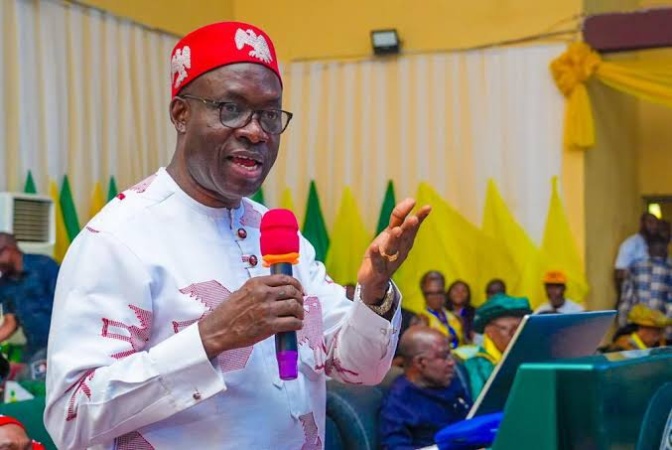
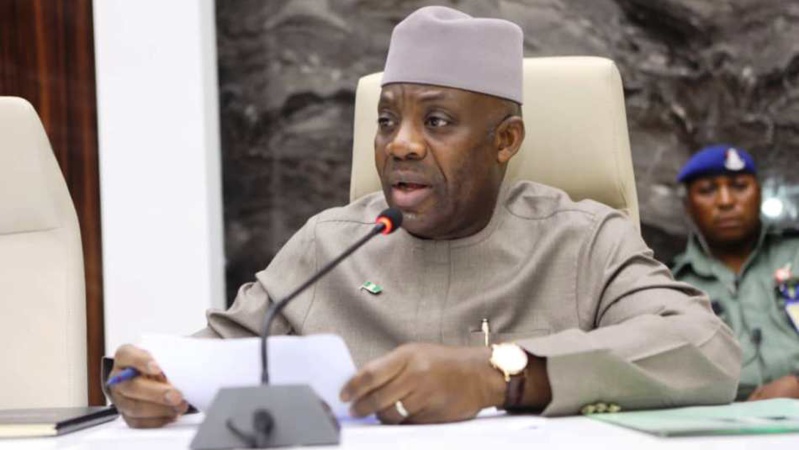
Governor Soludo
By PAMELA EBOH, Awka
Governor Chukwuma Charles Soludo of Anambra State has said that the current national discourse on state policing must transcend mere operational logistics to address the foundational imbalances within the country’s socio-political and judicial systems.
Speaking during a Town Hall appearance on Arise TV kn Thursday, Soludo articulated a robust vision for the recalibration of Nigeria’s federal architecture.
He characterized the growing national consensus on the establishment of state police forces as an inevitable, progressive advancement toward a more efficacious and functional federal structure.
The Governor asserted that the debate regarding the necessity of state police has effectively reached its terminal point, saying, “The issue is no longer whether to have state police,”
“The focus of the national conversation must now shift decisively toward the modalities of implementation—the “how” of governance.”
Drawing from his administrative experience in Anambra, the Governor highlighted the necessity of seamless coordination between federal, state, and private security apparatuses.
He however cautioned against isolating the security debate, framing it instead as “unfinished business” essential to establishing a sustainable federal security and justice framework.
Central to Governor Soludo’s critique of the current status quo is the persistent fiscal imbalance between the federal and subnational governments.
While pointing to an increasing devolution of functions from the Exclusive Legislative List to the Concurrent List—shifting responsibilities from the Federal Government to the states without a requisite, drastic revision of the revenue allocation formula.
Governor noted that the Federal Government currently retains approximately 53% of national revenue, while states receive a cumulative 26%—averaging a mere 0.7% per state.
He added: “To achieve true federalism, he advocated for a structural inversion of the fiscal pyramid- having a lean Centre where the Federal Government’s share should be capped at no more than 40%; and a base-heavy allocation, where significant resources must devolve to the subnational level, because the primary responsibilities of governance reside there.”
Critiquing what he called the Judicial Elephant in the room, Governor Soludo identified the nation’s legal system as the ”big elephant” hindering true federalism.
He observed that despite the movement toward decentralized security, the judiciary remains “ostensibly unitary” in character, with litigation—including land disputes—often protracted through the federal appellate hierarchy for decades.
Citing example with the state, Soludo said: “In Anambra for example, 70 percent of cases, even those involving violence related to land, end at the Supreme Court. Sometimes, these cases last for 30 to 40 years.”
He advocated for profound judicial reforms, including the establishment of State Courts of Appeal and State Supreme Courts, to ensure that the judicial system mirrors the federalist ideals applied to security and correctional services.
Concluding his remarks, Governor Soludo extended commendations to President Bola Ahmed Tinubu, describing the President as a “professor of federalism.”
He expressed optimism regarding the current trajectory of these policy conversations, affirming that as states increasingly undertake the construction of their own correctional systems, the momentum for comprehensive, multi-sectoral reform must persist.
Urging for the conversation to go on, Governor Soludo reiterated his commitment to a governance model that prioritizes the constitutional integrity and economic viability of Nigeria’s constituent states.