Updating your news feed...
NEWS EXPRESS is Nigeria’s leading online newspaper. Published by Africa’s international award-winning journalist, Mr. Isaac Umunna, NEWS EXPRESS is Nigeria’s first truly professional online daily newspaper. It is published from Lagos, Nigeria’s economic and media hub, and has a provision for occasional special print editions. Thanks to our vast network of sources and dedicated team of professional journalists and contributors spread across Nigeria and overseas, NEWS EXPRESS has become synonymous with newsbreaks and exclusive stories from around the world.







Loading banners
Loading banners...

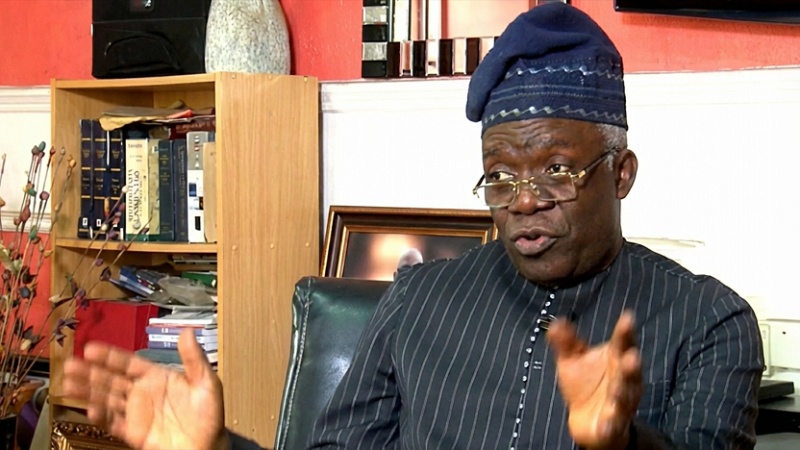
Human rights lawyer Femi Falana, SAN
Human rights lawyer and Senior Advocate of Nigeria, Femi Falana, on Tuesday warned that the country risks conducting another flawed electoral cycle in 2027 unless worsening insecurity, poverty, kidnapping and democratic deficits are urgently addressed.
Speaking in Abuja at the Annual June 12 Commemoration Lecture held in honour of late electoral umpire Humphrey Nwosu and the unveiling of the Humphrey Nwosu Center for Democracy and Human Rights in Abuja, Falana recounted behind-the-scenes efforts that led to the historic June 12, 1993 presidential election, describing Nwosu as a courageous patriot who resisted intense pressure from the military regime to halt the poll.
According to him, despite court orders and threats from military authorities, Nwosu insisted that the election would proceed, leading to what he described as “the freest and fairest election ever conducted in Nigeria.”
Falana disclosed that as legal battles raged over attempts to stop the election, Nwosu relied on legal advice from senior lawyers, including former Attorney-General Buhari Bello, to counter arguments that conducting the poll would amount to contempt of court.
“Professor Nwosu was determined to hold the election. They told him he was playing with fire, but he stood his ground and the election was held successfully,” Falana said.
However, the senior lawyer lamented that the ideals represented by June 12 have largely been abandoned by today’s political elite.
“Those who cannot conduct credible party primaries cannot conduct credible elections,” he declared.
Falana argued that the success of the June 12 election was rooted in issues-based politics rather than ethnic or religious considerations, noting that late business mogul and presumed winner of the election, Moshood Kashimawo Olawale Abiola, campaigned on poverty eradication, social welfare and economic justice.
Turning to current realities, Falana warned that Nigeria’s deteriorating security situation could undermine preparations for the 2027 general elections.
“As we are gathered here today, many children are in the custody of criminals. People are being abducted daily. Can we honestly say we are ready for elections under these conditions?” he asked.
He stressed that no meaningful electoral process can take place while terrorism, kidnappings and violent crimes continue to spread across the country.
The senior advocate also accused authorities of using the Cybercrimes Act to suppress dissent and free speech, alleging that citizens are increasingly being arrested and prosecuted for expressing views critical of those in power.
“Our right to free speech is gradually being taken away. If someone feels defamed, they should go to court and sue for libel, not deploy state machinery to intimidate critics,” he said.
Falana further criticised what he described as growing economic inequality and lack of accountability in governance, citing recent revelations that lawmakers earmarked N110 billion for vehicles and allowances despite widespread poverty.
He challenged Nigerians to demand transparency in public spending and monthly allocations to federal, state and local governments.
“What governments receive from Abuja today is far more than what they received before, yet Nigerians are getting poorer. Citizens must ask questions,” he said.
The activist also condemned negotiations with terrorists and so-called repentant insurgents, insisting that individuals involved in terrorism should face prosecution under existing laws rather than rehabilitation programmes.
On gender inclusion, Falana lamented the poor representation of women in Nigerian politics, contrasting Nigeria’s record with countries such as Namibia, Rwanda and South Africa where women occupy key leadership positions.
“You cannot have genuine democracy while excluding women from governance,” he stated.
Earlier, Executive Secretary of the National Human Rights Commission, Tony Ojukwu,SAN in his welcome address said the lecture was aimed at preserving the democratic legacy of Nwosu and promoting electoral integrity ahead of the 2027 general elections.
Ojukwu described June 12 as a defining moment in Nigeria’s democratic history and said the newly established centre would serve as a platform for civic education, electoral reform advocacy, leadership development and human rights promotion.
In a goodwill message, Engr. Nnaemeka Humphrey Nwosu , a son of the late prof Nwosu and founder of Humphery Nwosu foundation said the centre was established to ensure that the values of integrity, transparency, courage and service exemplified by his father continue to shape Nigeria’s democratic future.
He said the centre would focus on electoral integrity, human rights protection, civic education, youth and women leadership development, as well as research and policy innovation aimed at strengthening democratic institutions across Africa. (The Guardian)