ADAD
ADAD
Updating your news feed...
NEWS EXPRESS is Nigeria’s leading online newspaper. Published by Africa’s international award-winning journalist, Mr. Isaac Umunna, NEWS EXPRESS is Nigeria’s first truly professional online daily newspaper. It is published from Lagos, Nigeria’s economic and media hub, and has a provision for occasional special print editions. Thanks to our vast network of sources and dedicated team of professional journalists and contributors spread across Nigeria and overseas, NEWS EXPRESS has become synonymous with newsbreaks and exclusive stories from around the world.











Loading banners
Loading banners...


Dr Angela Ajala
…Says CoE can now award degrees independently
…FG begins major teacher education reforms
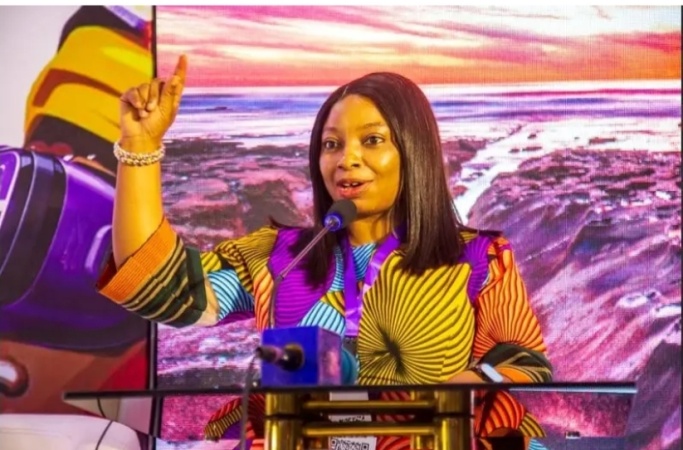
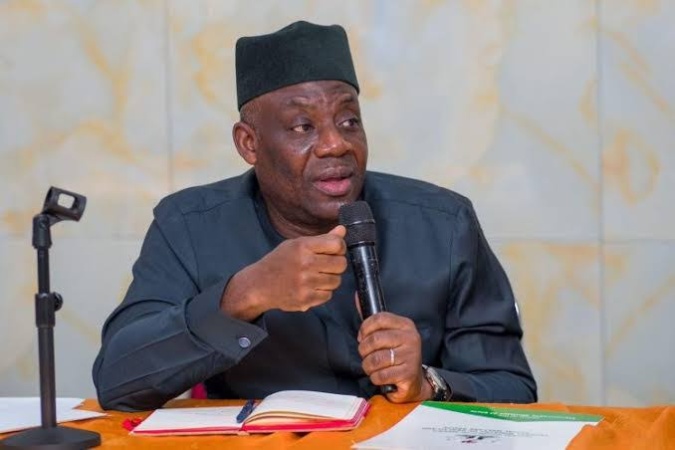
The Executive Secretary of the National Commission for Colleges of Education (NCCE), Dr. Angela Ajala, has disclosed that the full implementation of the Federal Government’s Dual Mandate Policy for Colleges of Education to award degrees will commence in the 2026/2027 academic session.
Ajala disclosed this during a media parley on the repositioning of teacher education in Nigeria held under the theme, “A New Dawn for Teacher Education in Nigeria.”
She described the policy as one of the most significant reforms in the history of teacher education in the country, noting that qualified Federal Colleges of Education would now award both the Nigeria Certificate in Education (NCE) and Bachelor’s Degrees in Education independently without affiliation to universities.
According to her, the reform was backed by the Federal Colleges of Education Act No. 132 of July 24, 2023, signed into law by President Bola Tinubu shortly after assuming office.
“The Federal Ministry of Education directed that the full implementation of the Dual Mandate should commence unfailingly from the 2026/2027 Academic Session,” Ajala stated.
She explained that under the arrangement, the NCE programme would run for three years, while the degree component would span two years.
Ajala added that the Commission had already drafted a curriculum that would allow NCE holders to transition smoothly into degree programmes.
She said: “We are working in collaboration with the National Universities Commission to work out the modalities for its seamless take-off as directed by the Federal Government.
“A draft curriculum that allows NCE to dovetail into the degree programmes has been drafted by the Commission and forwarded to NUC for more inputs to ensure that the quality of the degrees to be awarded by Colleges of Education are at par with that of the universities.”
The NCCE boss described the Dual Mandate as a “historic structural reform” aimed at strengthening teacher education and expanding access to higher education in Nigeria.
The executive secretary said: “Let me say this without hesitation: The Dual Mandate is the most significant structural reform in Nigerian teacher education in decades.
“For many years, Colleges of Education were seen by some people as limited institutions. That perception is now changing.”
She stressed that students seeking admission into Colleges of Education should no longer see the institutions as inferior alternatives to universities.
“A student who chooses a College of Education today is not choosing a lesser path.
“It means Colleges of Education are being repositioned as stronger, more competitive and more attractive institutions for teacher preparation,” she said.
Ajala noted that state and private Colleges of Education willing to participate in the policy would be required to domesticate the reform before implementation.
She explained that the policy would help reduce pressure on universities while improving institutional autonomy and teacher specialisation.
“The Dual Mandate Policy will help to expand access to higher education, reduce pressure on universities, strengthen teacher specialisation, improve institutional autonomy, attract more candidates into teaching and elevate the prestige and competitiveness of Colleges of Education,” she stated.
According to her, the reform was not intended to erode the traditional identity of Colleges of Education but rather strengthen it.
She added: “It is about strengthening that identity. It is about saying that teacher education must no longer be treated as a lower pathway. It is a professional pathway. It is a national development pathway. It is a future-shaping pathway.”
Speaking further, the NCCE Executive Secretary said the Commission was repositioning itself from being merely a compliance regulator to a development-focused agency concerned with actual learning outcomes in classrooms.
She further said: “We are shifting from being seen only as a compliance regulator to becoming a development-focused agency. We will not only ask: What is in the accreditation report? We must also ask: What is happening to the child in the classroom?”
Ajala lamented declining learning outcomes, shortage of qualified teachers and the poor perception of the teaching profession among many young Nigerians.
She noted that the revised teacher education curriculum would now place emphasis on digital literacy, artificial intelligence awareness, entrepreneurship, competency-based learning, inclusive education and emotional intelligence.
Ajala said: “The child has changed. The classroom has changed. Technology has changed. The economy has changed. The skills required for the future have changed. Therefore, teacher preparation must also change.
“We cannot prepare teachers for chalkboard-only classrooms when children are growing up in a digital world. Technology will not replace teachers. But teachers who understand technology will become more effective, more relevant and more prepared for the future.”
Ajala also disclosed that the Commission was reviewing admission pathways into Colleges of Education in order to remove unnecessary barriers while maintaining quality standards.
She insisted that while Nigeria urgently needed more teachers, only competent and professionally prepared individuals should be allowed into classrooms.
The NCCE boss said: “We want to remove administrative barriers, not professional standards.
“Teacher education must become accessible, but not careless. Flexible, but not weak. Inclusive, but not substandard.
“Nigeria needs more teachers, but Nigeria does not need just anybody in the classroom.”
Ajala described the media as critical stakeholders in the ongoing reforms and called on journalists to help restore the dignity of the teaching profession.
“The media is not a bystander in this reform. The media is a reform partner. For too long, teaching has been portrayed as a last-resort profession. That narrative is inaccurate. That narrative is harmful. That narrative must change,” she said.
She urged the media to focus attention on reforms and solutions within the education sector rather than only highlighting crises.
Ajala described teacher education reform as central to Nigeria’s future and national development.
“The future of Nigeria is not waiting somewhere far away. It is sitting in our classrooms today. But the quality of that future depends on the quality of the teachers standing before those children.
“This is a new dawn for NCCE, a new dawn for Colleges of Education, a new dawn for teacher education and a new dawn for Nigerian classrooms,” she added.
(The Nation)