ADAD
ADAD
Updating your news feed...
NEWS EXPRESS is Nigeria’s leading online newspaper. Published by Africa’s international award-winning journalist, Mr. Isaac Umunna, NEWS EXPRESS is Nigeria’s first truly professional online daily newspaper. It is published from Lagos, Nigeria’s economic and media hub, and has a provision for occasional special print editions. Thanks to our vast network of sources and dedicated team of professional journalists and contributors spread across Nigeria and overseas, NEWS EXPRESS has become synonymous with newsbreaks and exclusive stories from around the world.





















Loading banners
Loading banners...

In classrooms across Enugu State, a quiet but determined effort is underway to confront one of Nigeria’s most troubling crimes, human trafficking.
Through a school-based initiative, stakeholders are increasingly turning to education, awareness, and community engagement as tools to protect vulnerable children and reshape the future.
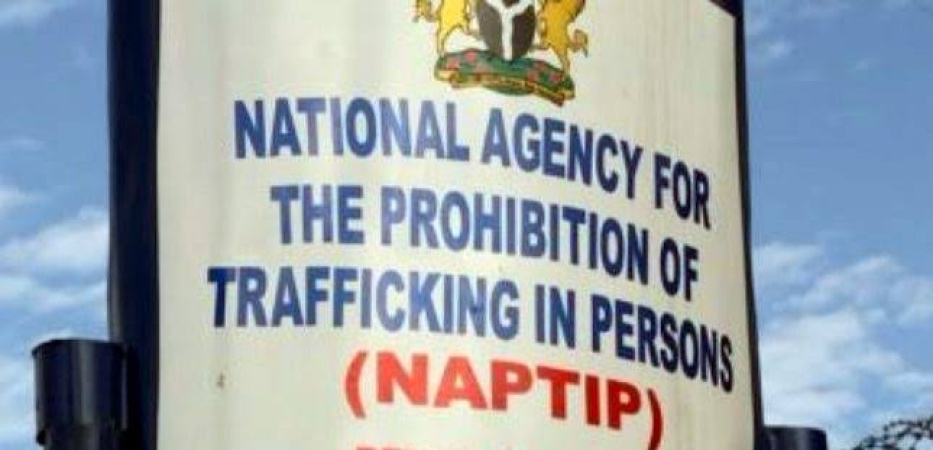
The School Anti-Trafficking Education and Advocacy Project (STEAP), funded by the Government of the Netherlands and implemented by the International Centre for Migration and Policy Development (ICMPD), in collaboration with the National Agency for the Prohibition of Trafficking in Persons (NAPTIP), is at the centre of this effort.
Designed to address the growing prevalence of human trafficking, especially among minors, STEAP adopts a “whole school community” approach. It targets not only students, but also teachers, parents, and community actors, recognising that vulnerability often extends beyond the classroom.
Speaking during a stakeholder engagement in Enugu, the Executive Director of Divine Era Development and Social Rights Initiative (DEDASRI), Emwalum Ogechukwu, said the project is focused on confronting the realities of trafficking through grassroots advocacy and sustained community involvement.
She said, “It is all about advocating, campaigning, and doing school outreach and outreach within the communities; communities that are within the schools to end the issues of human trafficking.
“We are targeting the young ones. That is why the theme itself is school. But you cannot work with young ones without their caregivers. And that is why we are targeting the communities that are within the school premises. So the project is all about working with all stakeholders to end the issues of human trafficking in Nigeria and here in Enugu State,” she said.
Ogechukwu noted that early outcomes from the project show encouraging signs, with increased awareness prompting students to speak up about suspicious activities and personal experiences.
“From the interactions so far, there have been achievements. You will hear it firsthand. Because of the sensitisation, students are coming out to share their experiences, how people lure them into trafficking them to Ghana, to Egypt, to Malaysia, and other places.
“That shows that this issue is something that is living with us and the need for us to fight it, to salvage our young ones and to save their future,” she added.
On sustainability, she explained that the project was deliberately structured to outlive its initial implementation phase by building on existing community systems.
“The way it is structured from the beginning shows that we are planning already to sustain it. Working with schools and SBMCs, which are already existing community structures, shows that we want continuity. Also working with civil society organisations that are state-based means that when ICMPD leaves, we will continue the work they have started. The training stays with us,” she said.
Also speaking, the Zonal Commander of NAPTIP, Jonathan Awa, described the initiative as a critical intervention in tackling trafficking at its roots, within communities and schools.
“Just in furtherance to our STEAP project, which is being implemented by NAPTIP, in conjunction with ICMPD, and funded by the Kingdom of the Netherlands, this is the second phase of what we are doing. Last year, we covered about 10 schools; now we are expanding to more. Altogether, we are working across 50 schools in 17 local government areas of Enugu State.
“What we are doing now is reviewing IEC materials, information, education and communication—to strengthen responses within schools. We want to hear from them directly, how the message should be framed to suit their realities. Human trafficking is like an umbrella; it covers child labour, sexual exploitation, organ harvesting, forced begging, and more. So the messaging must be specific and relatable,” he said.
Awa noted that the project has significantly improved awareness and reporting, even though challenges persist.
“It has been very successful and encouraging. People are now aware that human trafficking exists. Reports are coming in, not just on trafficking but on other forms of violence. But challenges remain, some people still don’t know where to report, some lack access to phones or ICT tools, and cultural ties, sometimes, discourage reporting when the offender is a familiar person. Even parents still allow children to go and work, instead of going to school. These are issues we must continue to address,” he said.
At the school level, the impact is already visible. Principal of Umuchigbo Community High School, Iji Nike, Princess Anne, shared how the project has transformed her school, particularly in reducing dropout rates among students.
“It’s wonderful. Since the implementation in my school, there has been a significant improvement in student enrolment, especially among girls. Before now, some would leave after December to go to Abuja or Lagos with people who lure them with flashy lifestyles. After a term or two, they return and realise it is not what they expected.
“There was a case where a parent brought her daughter back after two years. She had been taken away for what turned out to be trafficking. She wanted the girl to continue in SS1, but I insisted she return to JS2 to rebuild properly. It was painful, but necessary,” she recounted.
She added that consistent awareness campaigns within the school have changed attitudes among students.
“Before the Vanguard was introduced, my SS3 class had 121 students. This year, it is 198. Students now understand that education is their key and that they should not be deceived. Every Thursday during moral instruction, we dedicate time to discuss human trafficking—real-life examples, what to watch out for, and where to report.
“We have trained teachers, students, and even created systems where students can report anonymously. If they see anything or feel pressured, they know where to go. It has helped a lot,” she said.
Beyond awareness, the project has also contributed to improving school infrastructure and safety.
“For a school established in 2013, we had no toilet facilities. But through this project, six toilets were built. It has reduced insecurity because students no longer go into the bush. This organisation has helped us tremendously, and we will continue to share what we learn with parents and the wider community,” she added. (The Sun)