ADAD
ADAD
Updating your news feed...
NEWS EXPRESS is Nigeria’s leading online newspaper. Published by Africa’s international award-winning journalist, Mr. Isaac Umunna, NEWS EXPRESS is Nigeria’s first truly professional online daily newspaper. It is published from Lagos, Nigeria’s economic and media hub, and has a provision for occasional special print editions. Thanks to our vast network of sources and dedicated team of professional journalists and contributors spread across Nigeria and overseas, NEWS EXPRESS has become synonymous with newsbreaks and exclusive stories from around the world.







.webp)









.webp)



Loading banners
Loading banners...

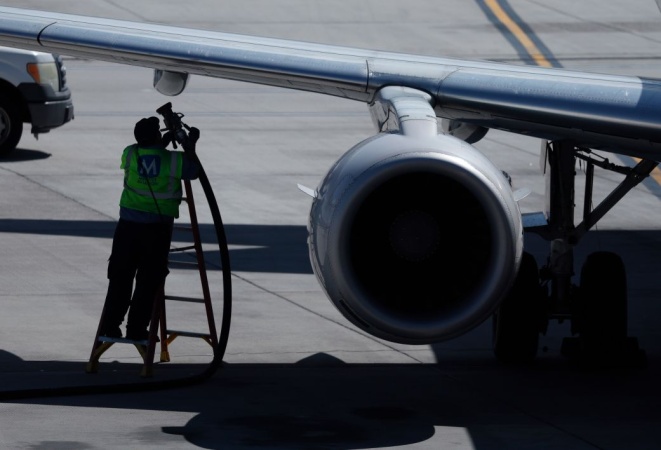
A worker fuels a United Airlines plane at Salt Lake City International Airport
Thought the summer travel season was looking bad? Brace yourself: It could get even worse.
On top of higher airfares and fees because of the war in Iran, airlines in Europe and Asia, many of which depend on imported jet fuel, are now facing a potential shortage, raising the odds of flight cancellations and schedule cuts.
The US is in no immediate danger of running out of jet fuel, but the global shortage is driving up fuel prices for US carriers. They are cutting back on cheap airfares and less profitable flights, a move that’s likely to drive up airfares for US travelers particularly in the summer months.
Even if the US and Iran reach a deal to reopen the Strait of Hormuz today, the die is cast for summer travel. Airlines are planning routes and setting airfares for months in the future.
United, for example, has cut its previously planned schedule by about 5% over the next six months.
Airlines — and their passengers — likely won’t see any relief until deep into the summer, if then. That’s because it will take months to resume normal supplies of oil and jet fuel.
“It’s going to take until at least July,” said Matt Smith, head US analyst at energy consulting firm Kpler. “And even that may be optimistic at this point.”
Fuel is the second-largest cost for airlines, just behind labor. A single-aisle commercial jet burns roughly 800 gallons of jet fuel an hour. Widebodies generally burn even more.
The four largest US airlines – United, American, Delta and Southwest — spent about $100 million a day on average among them on fuel last year.
Those costs are up dramatically since the war began. Delta last week said it could spend an additional $2 billion on fuel this year, even though it owns its own refinery. United could spend an extra $11 billion on fuel this year if things stay as they are, United CEO Scott Kirby told employees in March.
Last-minute walk-up fares to hot vacation destinations, such as US flights to the Caribbean, are up 74% from earlier this month, according to data from Deutsche Bank, while those fares to Hawaii from the mainland were up 21%.
US airlines don’t have to worry about shortages as much as foreign carriers. The United States is the world’s largest oil producer and one of the leading exporters of jet fuel.
But some of the other leading exporters of jet fuel are Kuwait and Bahrain, whose product is trapped because of the closure of the Strait of Hormuz, according to data from Kpler. Over 20% of global seaborne jet-fuel supply passed through the Strait of Hormuz last year, with just over two-thirds going to Europe.

Workers refuel an Airbus A350 with sustainable aviation fuel at Roissy airport, north of Paris
Much of the world’s jet fuel is refined in Asia; South Korea is the world’s No. 1 exporter. But much of the crude that Asian countries use to make jet fuel comes from the Middle East.
Asian countries are starting to limit jet-fuel exports, Willie Walsh, director of the International Air Transport Association, said last week. That could put more pressure on the price of US jet fuel.
Even if the strait does reopen for good, and soon, it will take weeks for oil and jet fuel trapped by the strait’s closure to reach customers in Europe and Asia. Not to mention the time it will take to restart the oil and jet fuel production halted by the war.
Higher fuel prices could be catastrophic for struggling airlines.
Budget carrier Spirit Airlines has filed for bankruptcy twice in the last 18 months. Just days before the war started, it announced a plan to emerge from bankruptcy by the summer.

A Spirit Airlines Airbus A320 taxis at Harry Reid International Airport behind parked aircraft in Las Vegas, Nevada.
But the airline warned in a March annual financial report that the jump in fuel costs would have an “immediate and substantial negative impact” on results, perhaps upending its deals with lenders and pushing it into liquidation.
Upstart discount airlines, an important supply of cheap seats, have struggled financially since the pandemic. “Financially weaker airlines that may struggle to absorb these combined pressures could default and/or return aircraft early,” Fitch Ratings warned earlier this month.
A shakeout among the discount carriers that takes cheaper flights out of the system could cause fares to rise across the board.
Major carriers are already cutting back their flight schedules, focusing on more profitable routes. Fewer available seats means the ones that are left will likely get more expensive as a result.
“There’s just no point in flying flights that are going to lose money that can’t cover the cost of fuel,” United’s Kirby told Bloomberg late last month. (CNN)