
ADVERTISEMENT

ADVERTISEMENT

ADVERTISEMENT

ADVERTISEMENT


.webp&w=256&q=75)
.webp&w=256&q=75)












Loading banners


NEWS EXPRESS is Nigeria’s leading online newspaper. Published by Africa’s international award-winning journalist, Mr. Isaac Umunna, NEWS EXPRESS is Nigeria’s first truly professional online daily newspaper. It is published from Lagos, Nigeria’s economic and media hub, and has a provision for occasional special print editions. Thanks to our vast network of sources and dedicated team of professional journalists and contributors spread across Nigeria and overseas, NEWS EXPRESS has become synonymous with newsbreaks and exclusive stories from around the world.
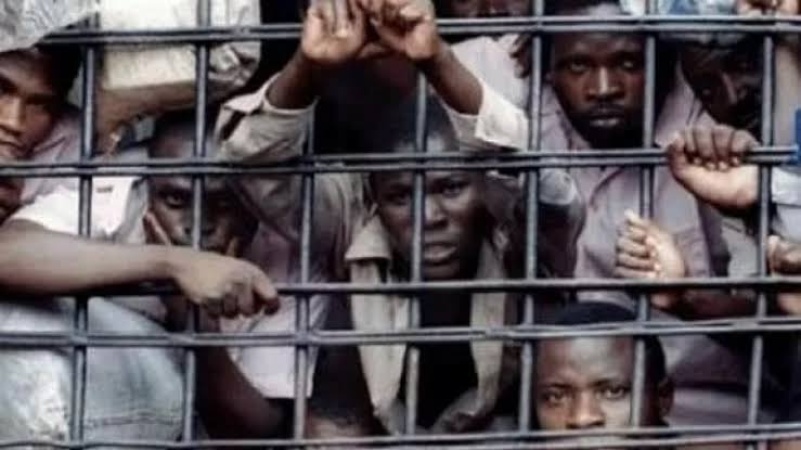
Disturbing reports of discomfort, dehumanisation, sickness, hunger, deprivation, torture and death have continued to emanate from correctional centres nationwide, which are failing in their primary role of reforming errant Nigerians. As this happens, senior prison officials and high-net-worth inmates rub shoulders, with the latter pulling off millions of naira in businesses from prison cells. TINA ABEKU and YETUNDE AYOBAMI OJO report on how criminality aided by official corruption and professional negligence is flourishing behind bars, thereby making a mockery of the facility’s primary assignment.
Twenty-four-year-old Olagoke Adewole, a barber, set sail from his native Osun State to Lagos State in search of greener pastures. Unable to secure a shop to practice his trade, he swiftly joined other able-bodied youths to load and offload trucks at Ketu Market, in the Kosofe Local Council of the state.
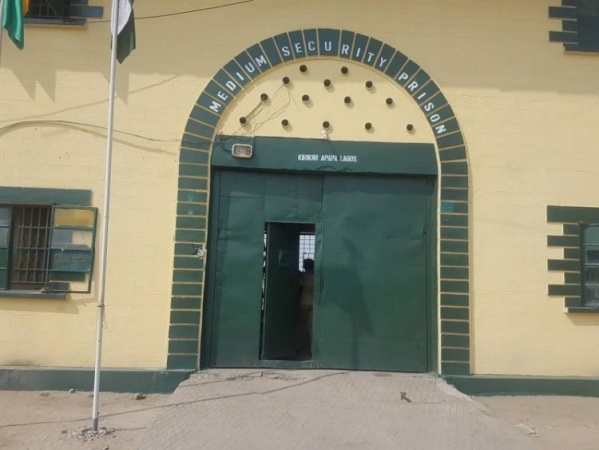
Unfortunately for him, that adventure was short-lived, as a theft occurred at his lodging, and he became one of the prime suspects. It was at that point that his ordeal, which began with arrest and detention by the police, ending up in a one-year stay at the Maximum Security Correctional Centre (MSCC), Kirikiri, Lagos, where he awaited trial.
Sharing his experience inside the prison, Adewole recalled: “I was in prison from November 19, 2024, till 2025 after I was arraigned at a Lagos Magistrate Court sitting in Ogba. The court remanded me to the facility pending legal advice from the Director of Public Prosecutions (DPP).
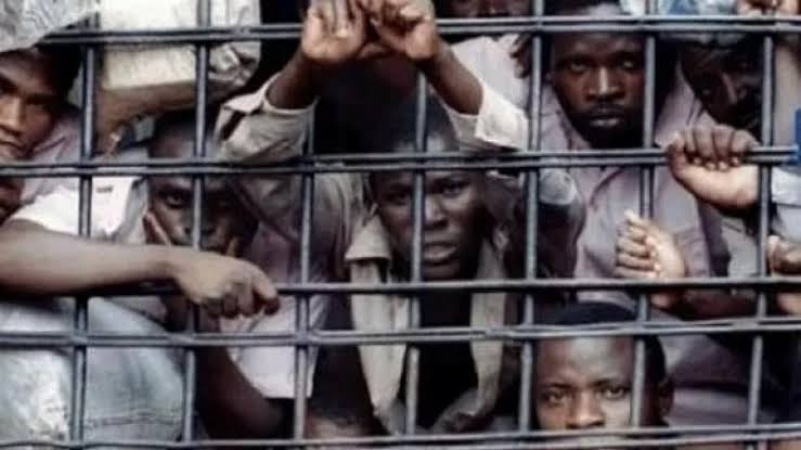
“Inside the facility, we slept on each other like sardines. We were 86 inside a cell room where people with various diseases, including untreated wounds, were lumped together. We all slept there, wearing only boxer shorts in rooms without ventilation.
“Because of the condition of some inmates, it was commonplace to find out that by sunset, some inmates would have passed on. Once this happens, the correctional officers will just come and remove their lifeless bodies, and life continues for the rest.
“Truly, hunger is the norm there as we were always served a half-milk tin of Garri for morning, afternoon and night meals. In fact, a lot of the inmates died of starvation in December 2024.”
Adewole added that inmates are deprived of the luxury of stepping out daily from the ‘chokehold’, which opened on different days for different categories of offenders.
Said he: “If the cells are opened for people charged with stealing on Monday, on Tuesday, it would be opened for those charged with armed robbery, and another set of offenders will have their way on Wednesday. So, an inmate can remain in the same spot, sitting in the cell for days. Getting potable water inside the prison yard was also a luxury.”
Aliu Ridwan, a 27-year-old tricycle rider, who equally spent time at the MSCC, also summarised that “life is very agonising inside the prison because we practically pay for almost all our necessities. To survive, I used to help fellow inmates wash their clothes for N50 or N100. I used the money to buy food because the government-provided food is not healthy, and the portions are very small.
“Prison officials don’t even worry about the fact that the beans served were laden with impurities and cooked without oil and pepper. Initially, I used to eat it like that, but later on, I supplemented it by buying more food with the little money I raised from family and friends who visit,” he stated.
Among the inmates, Ridwan recalled: “There are Marshals and other such titles in each cell room, and they play various roles in managing the inmates, including toilet cleaning. These cell rooms are so jam-packed that, with up to 86 in my own cell, we managed to sleep by lying on our sides. If any inmate rises to visit the gents during sleep, another inmate takes his place on the floor, and he must wait patiently until someone else gets up to ease himself.”
With hunger a major issue in the prison, Ridwan said, once the cells are opened, inmates dash to churches or the mosque to seek food and money. “So, for hungry inmates, when it comes to visiting either of the two worship centres for survival, being a Christian or Muslim is immaterial.”
Also shedding light on how funds transmitted to inmates are remitted, he said: “If a relative or friend sends N1,500 to an inmate, the owner of the account (with which the money is received) will take N300; the phone owner will take N200, and the cell marshal will take N500. In the end, the real receiver may not have more than N500 or N600. So, you see how disorientating the prison is.”
For another former inmate, Basit Rasak, 28, what is more appalling is the stark absence of infrastructure to support decent living in the entire setup.
He explained that while inmates pay for their drugs when they are sick, those who have the means buy cooking utensils to make their meals, mobilise officials and fuel court vehicles on trial dates.
Meant to be places of reformation for citizens who conflict with the law, hapless Nigerians, once behind bars, insist that these facilities are far from being fit for purpose.
Described by many of them as a living hell, these former inmates are unequivocal in their submissions that pervasive corruption, intractable lack of accountability, among others, continue to give credence to disturbing reports of discomfort, dehumanisation, sickness, hunger, deprivation, torture and death, which daily ooze out of correctional centres in the country.
Correctional centres as command centres for illicit businesses
While the sweltering number of inmates awaiting trial has attracted attention to the country’s slow judicial system, Nigerian prisons are also establishing themselves as notorious facilities for human rights abuses, outdated infrastructure, overcrowding, filth and sundry conditions.
But the correctional centres’ gradual evolution as a command centre for hordes of illicit trades and activities is a very troubling development that the Federal Government must hurriedly nip in the bud, especially as high-net-worth inmates induce correctional officers and convert the custodial facilities into crime havens.
Allegations from these facilities span from the constant movement of Inmates on Death Row (IDR), out of the custodial facilities under the guise of medical emergency, to the trafficking of drugs, rampant unauthorised conjugal visits, and the running of Point of Sale (PoS) businesses, among others.
While appearing before the Independent Investigative Panel on the Alleged Corruption, Abuse of Power, Torture, Cruel, Inhumane and Degrading Treatment Against the Nigerian Correctional Service, headed by the Permanent Secretary of the Federal Ministry of Interior, Dr Magdalene Ajani, a correction officer, Ayibakari Tonyeli, alleged that an Inmate on Death Row (IDR), Ifeanyi Nwanyimo, was on February 23, 2024, “said to be taken to hospital… but no medical officer accompanied them.”
He alleged that things turned for the worse in the custodial centre when the second in command, Mr Muhammed Mustapha, was deployed to the centre, and he appointed a new staff officer, Dendumo Dominic Godsgift, following the transfer of the previous one, who was involved in taking PoS machine (a contraband) into the yard to operate and also distributed Indian hemp.
“As if that is not enough, he also approved the use of adulterated kerosene for inmates to cook, and in this process, inmates acquired stoves for themselves to cook inside or outside their cells.”
At the panel, which Dr Uju Agomoh served as the secretary, the NCoS personnel said that Nwanyimo, who was moved from Abuja to the Okaka Custodial Centre in Yenegoa, Bayelsa State, was so powerful that he could facilitate the removal of any officer who attempted to hinder his operations.
“He single-handedly provided money for fuel purchase for pumping water in the prison yard, and for the provision of power for the administration quarters, in addition to giving handouts to less privileged inmates and his jail cell is installed with a television set and other niceties behind bars. He could also spend the whole day outside the prison walls and get smuggled in for morning roll calls.”
Another inmate, whose conduct also depicted what goes on in many correctional centres, is Joe Ejike, who was serving time for drug trafficking in the Kuje Medium Correctional Centre.
NCoS officials allegedly smuggled in mobile phones for him to direct the activities of his agents who were peddling drugs for him in Nigeria and across Europe and sundry places. He also shuttled in and out of jail for clandestine meetings in the guise of medical outings.
When the bubbles burst, Ejike was placed in high security isolation, and his access to medical outings, the loophole he used to meet associates, was revoked.
Earlier, the EFCC had also released a report stating that Hope Olusegun Aroke, a convicted Internet fraudster, despite being in a maximum security detention facility in Kirikiri, Lagos, used a network of accomplices to carry out a $1 million international scam.
Following this finding, the NCoS arrested the then-controller of the MSCC and a prison doctor, who were accused of facilitating Aroke’s lifestyle, and took disciplinary action, dismissing dozens of officers.
The anti-graft agency also seized luxury assets that Aroke acquired from prison using the alias “Akinwunmi Sorinmade”, including a property in the Lekki area of Lagos, and a 2018 Lexus RX 350 registered in his wife’s name.
Worried by past and present corrupt practices in correction centres nationwide, the Minister of Interior, Dr Olubunmi Tunji-Ojo, recently acknowledged the “unprofessional conduct” within the service, and reiterated: “The correctional service must not be a place where criminality is incubated. We have reports of unprofessional conduct, and we will not allow a few bad eggs to compromise the security of the state. It is unacceptable that a custodial centre meant for reformation has become a business centre for some officers.
“We are investigating cases where officers serve as conduits for communication and prohibited items for inmates,” Tunji-Ojo said, adding that efforts to install signal jammers and conduct more frequent cell sweeps are a start, “but technology cannot fix a moral deficit”.
With over 27 cases brought before the panel, many of which came from aggrieved personnel, who alleged a witch-hunt for speaking against sharp practices in custodial facilities by corrupt senior officers, the chairman of the panel also acknowledged that a lot is going on behind bars, as evidenced by the number of complaints and petitions the panel received.
Worsening economic realities take a toll on inmates
Even though inmates taking care of their necessities while in custody is not entirely new in the Nigerian correctional ecosystem, the rising food inflation in the larger society, and the struggling economy have made the burden on inmates weighty and almost unbearable for the poorest among them.
Despite the Federal Government allocating N14.83 billion specifically for inmates’ feeding nationwide in the 2026 budget, with a daily feeding allowance of N1,125 per inmate, this simply amounts to nothing in the face of rising inflation.
With about 78,100 inmates in custody, the NCoS faces the onerous task of catering for them, amid complaints of official corruption, poor feeding, and preferential treatment of inmates based on status.
Worse still, pretrial inmates who make up a large chunk of the inmate population (about 69 per cent) still pay logistic funds to facilitate their court appearances on each adjourned date.
According to figures obtained from the NCoS as of March 16, 2026, 50,990 of the 78,100 inmates are Awaiting Trial Inmates (ATI). This means that the total number of convicts in custody is just 27,110.
Aside from high food inflation, inefficiencies and corruption within the correctional system have led to improper allocation of scarce resources, further impacting the quality and quantity of food available.
Families of inmates also struggle to meet the rising costs associated with providing additional support, including logistics, leading to increased hardship for those incarcerated.
For instance, before the removal of the fuel subsidy three years ago, inmates at the Aba Correctional Centre allegedly paid N5,000 in logistics to and from the courts; now, owing to rising energy costs, the fee has been raised to N10,000. Failure to make this payment could result in an inmate, whose case is ongoing, spending “eternity” in custody while his or her case stalls for lack of appearance.
Many stakeholders in the system are peeved with the widespread anomaly, which is being normalised. One of them is the Executive Director of Hope Behind Bars, Oluwafunke Adekoya, who called on governments across the board to address systemic corruption that contributes to poor feeding and decrepit infrastructure in custodial facilities.
She said: “The government must go beyond surface-level adjustments to address major systemic issues that contribute to poor feeding in custodial facilities. These include improving transparency and accountability in the allocation and use of funds, as this also reflects on the daily struggle of inmates in Nigerian prisons.
“Investing in agriculture, particularly by maximising the potential of the Nigerian Correctional Service farm nationwide, will also go a long way in addressing feeding. Without more sustainable measures, the welfare of inmates will continue to be compromised, further exacerbating the already dire conditions in our correctional facilities.”
She noted that these farm centres, if properly managed and funded, could produce a significant portion of the food required to feed inmates, thereby reducing dependency on external food purchases and cutting costs while also engaging inmates in agricultural activities that could provide them with valuable skills, promote rehabilitation, and contribute to their eventual reintegration into society.
For the Executive Director and Founder, Public Awareness on Rights and Rehabilitation of Vulnerable Persons Initiative, Mrs Ogechi Ogu, since imprisonment does not amount to loss of humanity, incarcerated inmates are still humans, who have only lost the right to freedom of movement, but retain other basic human rights.
She stated that while in incarceration, inmates are expected to be treated with dignity and respect, stressing that this should manifest in the quality of the food and sanitation provided to them.
“It is commendable that in the wake of the recent allegation of poor feeding of inmates in one of the correctional facilities in the country, the Minister of Interior promptly responded by calling for an investigation into the matter. It is equally commendable that action has been taken to increase the feeding allowance to N1,125.
“While we celebrate these interventions, we must realistically assess the sufficiency of this amount in relation to the current cost of food items in the market today, bearing in mind that this increased sum covers the cost of preparation of the food. The truth is that this amount is still insufficient.
“Considering the economic situation in the country and especially the fact that ordinary Nigerians walking free in the society find it difficult to get one meal a day, I think our focus should be on what can be done to reduce the huge costs required for feeding inmates,” she said.
She emphasised that when the justice system deprives a person of the freedom to remain in society, caring for such a person falls on the government, and all stakeholders in the sector should collectively live up to expectations.
“This is also the time to advocate strongly for state governments to fully participate in the management of correctional centres in their states as already provided for in the constitutional enlistment of Corrections under the Concurrent Legislative List,” she advised.
From prison to correctional centres: What has changed?
Worried by the avalanche of sordid tales from the prisons, stakeholders rallied support across sectors and pushed for a change in the system. That push culminated in the enactment of the Nigerian Correctional Service (NCoS) Act, 2019. In 2019, the late former president, Muhammadu Buhari, signed the Act into law to reform the country’s prison system.
But apart from the nomenclature change from “Nigerian Prisons Services” to “Nigerian Correctional Services,” very little changed regarding the major issues affecting inmates’ rehabilitation and reintegration initiatives.
Among other things, that Act introduced non-custodial measures and other innovations aimed at minimising the abuse of inmates’ rights and decongesting detention facilities.
Notwithstanding all these, rights abuses, torture and inhuman treatment have remained constant happenings in correction centres despite sections 23 and 24 of the NCoS Act clearly criminalising torture and inhuman or degrading treatment of inmates.
Those sections provide that the human rights of inmates be respected while they are undergoing reformation and rehabilitation in preparation for their reintroduction into society at the end of their terms.
Besides, Nigeria, as a signatory to the United Nations Convention Against Torture, is bound by its requirements. That is why the Committee Against Torture in Nigeria (CAT-N) was set up to stamp out torture and other related vices, and to ensure justice for survivors and victims.
Keeping inmates in dehumanising conditions is a form of torture too. In fact, it is mental torture, which is prohibited by relevant statutes.
The Secretary of the Independent Investigative Panel on the Alleged Corruption, Abuse of Power, Cruel, Inhumane and Degrading Treatment of inmates against the Nigerian Correctional Service, Dr Agomoh, while decrying some of these challenges, noted that in some of the custodial centres visited by the panel, inmates slept atop each other, sleep turn-by-turn or in batches in very congested and poorly ventilated rooms, and in some cases sleep while standing.
Agomoh, who is also the Founder of Prisoners’ Rehabilitation and Welfare Action (PRAWA), emphasised: “Something has to be done about the issue of overcrowding.”
Speaking on milestones achieved in reforming the NCoS, Dr Agomoh said that, rather than just a change of nomenclature, much progress has been made within the system.
According to her, in the past, very little was known about the welfare of inmates, as NGOs were not allowed into the custodial facilities, but could only speak to prison officials through the window.
She said more recognised bodies are now getting access to the prison walls.
‘Correctional service operating in line with extant laws’
The NCoS, in shrugging off claims that inmates were providing their own necessities, emphasised that the Federal Government, through the NCoS, makes statutory provisions for the welfare of inmates, including daily feeding allowances, basic healthcare services, provision of clothing and bedding, as well as access to sanitary materials for female inmates.
According to the national spokesperson for the NCoS, Chief Superintendent of Corrections (CSC) Jane Osuji, the service remains committed to professionalism, transparency, accountability, and the humane treatment of all persons in custody, in line with extant laws and international standards.
“However, it is important to clarify that the Service operates a centralised feeding system, and no inmate is required to provide their own food. There are instances where inmates may receive supplementary items like food, toiletries, and sanitary items from family members, while in other instances, inmates may, based on procedures laid down by law, apply for self-feeding on medical grounds. Both instances are voluntary and not cultural or institutional requirements.
Responding to claims by pre-trial inmates that they pay for their own logistics to court, Osuji asserted that the responsibility for conveying inmates to and from court lies squarely with the NCoS.
“And this is routinely carried out. Having said that, logistical challenges such as distance to courts, high inmate volumes, and security considerations sometimes affect scheduling. At no point should inmates be compelled to pay for transportation to court. Any such practice is illegal and contrary to Service regulations,” she maintained.
She explained that the NCoS is currently leveraging reforms, such as the deployment of virtual court proceedings in collaboration with the judiciary and the enhancement of inter-agency coordination under the Administration of Criminal Justice Act (ACJA), 2015.
These measures, she said, are designed to reduce physical movement pressures and improve efficiency.
“Visits to inmates are governed by established procedures, and no visitor is required to pay to gain access. Where credible complaints arise, they are investigated, and appropriate sanctions are applied.
“The Service encourages the public to report such incidents through the NCoS complaint channels, as this aids in identifying and addressing misconduct promptly,” she stated. (The Guardian)


