
ADVERTISEMENT

ADVERTISEMENT

ADVERTISEMENT

ADVERTISEMENT


















.webp&w=256&q=75)

.webp&w=256&q=75)

Loading banners


NEWS EXPRESS is Nigeria’s leading online newspaper. Published by Africa’s international award-winning journalist, Mr. Isaac Umunna, NEWS EXPRESS is Nigeria’s first truly professional online daily newspaper. It is published from Lagos, Nigeria’s economic and media hub, and has a provision for occasional special print editions. Thanks to our vast network of sources and dedicated team of professional journalists and contributors spread across Nigeria and overseas, NEWS EXPRESS has become synonymous with newsbreaks and exclusive stories from around the world.

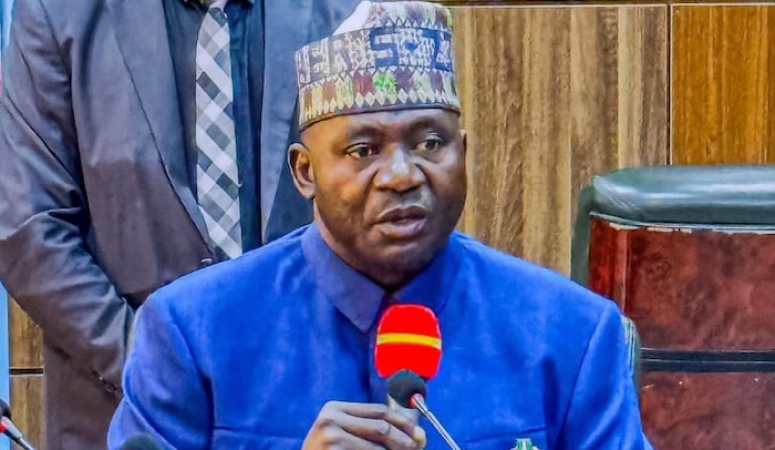
Minister of Finance and Coordinating Minister of the Economy, Wale Edun
The Federal Government’s decision to reduce import duties on vehicles, rice, and other key commodities under its 2026 fiscal policy has triggered a wave of reactions from economists, industry stakeholders, and policy analysts, reflecting the complex trade-offs embedded in the reform.
Announced by the Minister of Finance and Coordinating Minister of the Economy, Wale Edun, the policy introduces a revised national tariff regime covering 127 items.
In a circular signed by the Minister, the government announced that the new policy framework replaces the 2023 fiscal guidelines.
The policy also introduced reductions on essential food imports. Bulk rice tariffs dropped to 47.5 percent from 70 percent, while broken rice is now set at 30 percent.
Crude palm oil imports will attract an effective duty of 28.75 percent, and raw sugar tariffs now range between 55 and 57.5 percent, both reflecting cuts from earlier rates.
Additionally, tariffs on refined salt have been adjusted to 55 percent, while industrial and construction materials such as ceramic tiles and steel products now attract lower duties. Steel items, including zinc-coated sheets and rods, are largely pegged at 35 percent, while cold-rolled steel with low carbon content is set at 15 percent.
To encourage industrial growth, the government approved zero import duties on agricultural and industrial machinery, cargo ships, railway locomotives, and breathing equipment. Importers who initiated transactions before April 1 have been granted a 90-day grace period to clear goods under the old rates.
A new excise duty regime and green tax surcharge will take effect from July 1, 2026. However, vehicles below 2000cc, mass transit buses, electric vehicles, and locally manufactured auto components are exempted, signaling a policy shift toward cleaner transportation and domestic production.
While the government says the move is designed to stimulate economic activity, ease inflationary pressures, and support industrial growth, reactions from stakeholders suggest that the policy may produce both immediate benefits and longer-term risks.
Professor of Capital Markets, Uche Uwaleke, described the policy as a “deliberate balancing act” aimed at addressing short-term economic pressures while positioning the economy for long-term growth.
“In simple terms, the government is lowering the cost of bringing certain goods into the country while simultaneously trying to protect and stimulate local production in strategic areas,” he said.
According to him, the most immediate impact of the policy is likely to be felt in consumer prices. With Nigeria grappling with persistent inflation, especially in food, cheaper imports—particularly rice—could help moderate price increases and provide some relief to households.
“There is also a potential upside for productivity. Lower tariffs on machinery and industrial inputs, especially the zero-duty policy on key equipment, should reduce the cost of investment for businesses, boost manufacturing output, and support economic growth over time.”
Critics warn that the reduction in tariffs could expose local producers to intense competition from cheaper imports, potentially undermining domestic industries that have long relied on protectionist policies.
Uwaleke noted that Nigerian rice farmers, for instance, may struggle to compete with imported rice, which could now become more affordable due to lower tariffs.
“With duties reduced, imported rice may undercut locally produced alternatives, discouraging domestic production unless productivity improves significantly,” he said.
Similar concerns have been raised in the automotive sector, where stakeholders fear that lower tariffs on fully built vehicles could weaken the country’s nascent auto assembly industry.
On the other hand, Prof Uwaleke noted that “However, this is where the trade-offs become important. While consumers and import-dependent businesses may benefit, local producers, particularly in agriculture and manufacturing, could face stiffer competition. Nigerian rice farmers, for instance, have historically relied on high tariffs to shield them from cheaper imports. With duties now reduced, imported rice may undercut locally produced alternatives, potentially discouraging domestic production unless productivity improves significantly.
“The same concern applies to the auto industry. Lower tariffs on fully built vehicles may make cars more affordable, but they could also weaken incentives for local assembly and manufacturing, unless the complementary policies like exemptions for locally produced auto components are strong enough to offset that effect. In other words, the success of this policy depends heavily on whether local industries can become more competitive, not just protected.”
“From a fiscal standpoint, the policy introduces another layer of complexity. Lower import duties could reduce government revenue from customs in the short term. However, the government appears to be compensating for this through new excise taxes, green taxes, and the Import Adjustment Tax.
Professor of Accounting at Nile University, Ofili Ugwudioha, acknowledged that the policy could deliver benefits but stressed that it must be backed by concrete actions to improve productivity and the business environment.
“The reduction in import tariffs is an encouraging development, but it must be supported with the right policies,” he said, adding, “If farmers cannot access their farms or industries cannot operate efficiently, then reducing tariffs alone will not achieve much.”
He argued that while the zero-duty policy on agricultural machinery is commendable, broader structural challenges—such as insecurity, infrastructure deficits, and limited access to finance—must be addressed to unlock its full potential.
On the issue of vehicle imports, Ugwudioha noted that the introduction of a green tax could help discourage the influx of substandard and environmentally harmful vehicles into the country.
“Some of the vehicles imported into Nigeria are not roadworthy. The green tax is expected to curb that trend and promote cleaner transportation,” he said.
Also speaking with one of our correspondents, a mobility expert, Mr. Luqman Mamudu who spoke specifically on vehicle imports warned that lowering tariffs could encourage importation at the expense of local production.
“In reality, many exporting countries subsidise their automotive industries, meaning lower tariffs in Nigeria can quickly tilt the market back in favour of imports—particularly when key local support programmes under NAIDP remain only partially implemented.
“If the objective is to reduce vehicle prices, it is important to be clear: tariffs are not the primary driver of high vehicle costs in Nigeria. Exchange rate depreciation, forex scarcity, port and logistics charges, shipping costs, inflation, and rising global vehicle prices are far more significant factors,” he said. (Daily Trust)


