 ADAD
ADAD
Updating your news feed...
NEWS EXPRESS is Nigeria’s leading online newspaper. Published by Africa’s international award-winning journalist, Mr. Isaac Umunna, NEWS EXPRESS is Nigeria’s first truly professional online daily newspaper. It is published from Lagos, Nigeria’s economic and media hub, and has a provision for occasional special print editions. Thanks to our vast network of sources and dedicated team of professional journalists and contributors spread across Nigeria and overseas, NEWS EXPRESS has become synonymous with newsbreaks and exclusive stories from around the world.

















Loading banners
Loading banners...

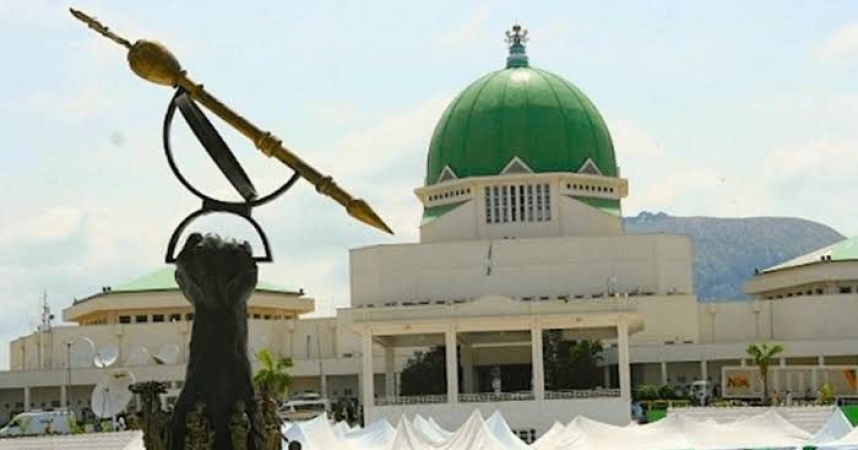
National Assembly
Pipeline surveillance: NASS committees pass vote of confidence in Tantita, others
The National Assembly joint committees on petroleum resources on Wednesday passed a vote of confidence in Tantita Security Services, the security agencies and NNPCL for restoring the nation’s oil production, which stood at about 1.8 million barrels per day as of April, an increase from about 900,000 barrels per day in 2022 when the surveillance contract was awarded.
The committees also dismissed the three petitions against the pipeline surveillance contract following a motion moved by the Chairman of the House Committee on Petroleum Resources (Midstream), Hon. Henry Okojie, at a one-day parliamentary roundtable on the state of pipeline security and the battle against crude oil theft.
The lawmaker pointed out that Tantita and the security agencies have recorded significant achievements in securing the nation’s petroleum assets, thereby increasing oil revenue for the country, and, as such, needed to be encouraged.
Speaking while declaring open the roundtable event, the Speaker of the House of Representatives, Rep. Abbas Tajudeen, disclosed that despite the ongoing tensions in the Middle East and the protracted conflict involving Russia and Ukraine, the need for valiant efforts at finding alternative energy sources has become necessary, adding that crude oil still remains the largest source of primary energy in the world, especially in the transport sector, where it still powers 95 per cent of all vehicles, planes and ships.
He pointed out that the current crises, particularly with the closure of the Strait of Hormuz, have resulted in price surges and supply shortages, with consequential impacts on the nation’s economic survival, saying, “As a nation, we must rise to the challenge, and this roundtable is a clear indication that the National Assembly is ready to lead the way.
He added further that in order to understand why the surveillance contract became necessary, “we must remember that Nigeria’s journey as an oil-producing nation has been a very challenging one.
According to him, “The discovery of petroleum has both earned us massive foreign exchange and resulted in environmental degradation and despair. As a result, the Niger Delta has witnessed profound agitations over the years, which often resulted in pipeline vandalism, crude oil theft, and illegal refining activities.
“Desperate communities and weak enforcement structures created a climate of instability in the oil sector with staggering consequences.
“At some point, Nigeria was losing billions of dollars annually, as between 10 to 30 per cent of crude oil production was lost to theft, undermining national revenue and questioning our capacity to remain a reliable oil producer.
“It was within this context that the federal government introduced the pipeline surveillance contract, including the engagement of private security actors and community-based structures.
“These interventions were designed to provide security to our oil facilities, with the understanding that without the help of the communities where these pipelines and other infrastructure were located, the job of securing them would be impossible.
“In the end, the synergy of private surveillance providers, our security agencies, and community engagement led to remarkable improvements in our daily production quotas.”
The Speaker said further that there have been clear, undeniable and compelling success stories, saying, “Recent reports indicate that most of the illegal tapping points have been dismantled, production levels have improved significantly, and oil receipts are approaching near-total delivery to export terminals, compared to the alarming losses of previous years when production sometimes plummeted to about 700 barrels per day.
“Today, largely due to these surveillance/security efforts, we have been able to ramp up production to about 1.8 million barrels per day. Importantly, the surveillance contract has been able to create direct employment for thousands of Niger Delta youths who were formerly agitators, providing a legitimate alternative to crime, and placing security back in the hands of the people who host the facilities.
“There is no doubt that we can do better. There are still a number of challenges, particularly as they concern accountability, transparency, and the effectiveness of certain surveillance frameworks.
“Recent public discourse suggests that crude oil theft still occurs at concerning levels, sometimes even under existing security arrangements. This underscores the need for continuous oversight and reform.”
He added that the National Assembly had remained at the forefront of confronting the challenges in the oil sector and has, through legislation, oversight and appropriation, taken deliberate steps to strengthen Nigeria’s response to threats to the oil industry.
According to him, “We have enacted and reviewed laws such as the Petroleum Production and Distribution (Anti-Sabotage) Act and other relevant statutes aimed at deterring pipeline vandalism while emplacing stringent penalties.
“We have also worked to strengthen institutions like the National Oil Spill Detection and Response Agency (NOSDRA), recognising the need for improved monitoring and environmental accountability.
“Both are the fruits of comprehensive and deliberate policy actions that were enabled by the passage of the landmark Petroleum Industry Act (PIA). Some of the provisions of this Act, like the Host Community Development Trust, made corporate social responsibility a legal mandate and gave host communities a direct financial stake in the profitability of the oil sector.
“Moreover, by legislating that communities forfeit their entitlement for the year if vandalism occurs in their domain, the law operationalised the concept of “shared responsibility.” Communities now police their own areas, knowing that an attack on a pipeline becomes an attack on their trust fund.
“The 10th National Assembly has continued to take bold legislative steps to institutionalise the gains of the PIA. From maintaining rigorous oversight of the Act to ensure steady implementation, to our recent investigative hearings on oil theft, we are closing the legal loopholes that once allowed criminals to thrive.
‘Furthermore, this Assembly has exercised its constitutional mandate by probing aspects of the surveillance contract, approving critical funding for pipeline security, and insisting that crude oil theft be treated not just as an economic crime, but as a national security threat requiring coordinated action across agencies.
“In summary, we have consistently emphasised that curbing crude oil theft must be a collective responsibility, involving government, host communities, security agencies and private operators alike.”
The Speaker disclosed that the event was an opportunity to advance the fortunes of the oil industry by consolidating on the gains made so far from the surveillance contract while addressing existing gaps, and also reassessing the current pipeline surveillance architecture, strengthening transparency and accountability mechanisms, deepening community engagement as critical stakeholders in protecting national assets, and aligning legislative frameworks with emerging realities in the oil and gas sector, particularly under the circumstances the world has now found itself.
According to him, “Let us remember that the story of Nigeria’s oil industry is not only one of challenges, but also of resilience and possibility. Let us build a system where pipelines are no longer targets, but symbols of shared prosperity; where host communities are not marginalised, but empowered partners; and where Nigeria’s oil wealth translates into sustainable national development.
“The Middle East is in turmoil, Russia is distracted, and global energy maps are being redrawn. The world is looking for energy security, and Nigeria must put itself out there as a credible alternative. We cannot afford the luxury of internal sabotage. Our message to the world is clear: Nigeria is securing its assets, stabilising its output, and is open for business.” (Nigerian Tribune)



