ADAD
ADAD
Updating your news feed...
NEWS EXPRESS is Nigeria’s leading online newspaper. Published by Africa’s international award-winning journalist, Mr. Isaac Umunna, NEWS EXPRESS is Nigeria’s first truly professional online daily newspaper. It is published from Lagos, Nigeria’s economic and media hub, and has a provision for occasional special print editions. Thanks to our vast network of sources and dedicated team of professional journalists and contributors spread across Nigeria and overseas, NEWS EXPRESS has become synonymous with newsbreaks and exclusive stories from around the world.








Loading banners
Loading banners...

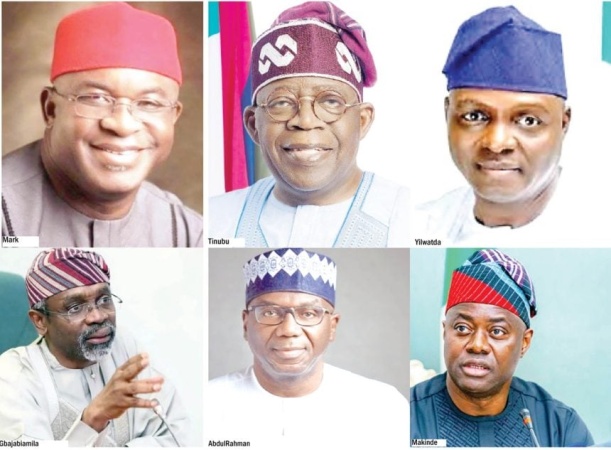
Monday’s defection of the former governor of Kano State and the presidential candidate of the New Nigeria Peoples Party (NNPP) in the 2023 election, Senator Rabiu Musa Kwakwanso, to the opposition Africa Democratic Congress (ADC) immediately triggered talks of a stronger opposition against the ruling All Progressives Congress (APC).
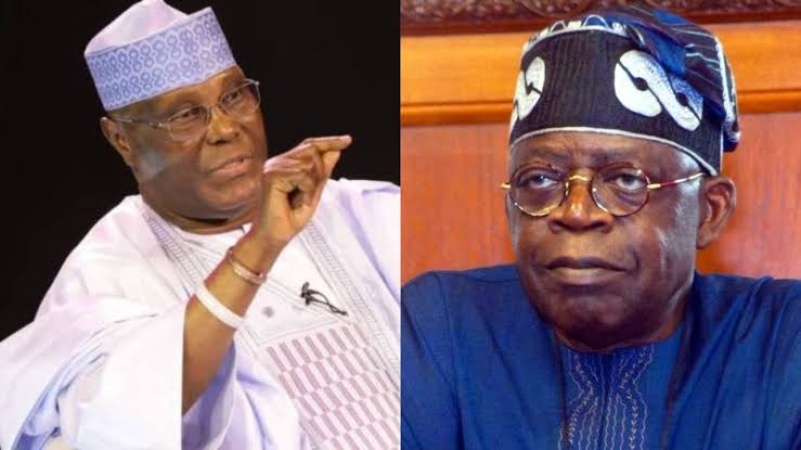
What is more significant, however, is that of the four topmost performers in the 2023 presidential election, three have now converged in the ADC. Aside from Kwankwaso, there is the former Vice President, Atiku Abubakar, who ran the last election on the platform of the Peoples Democratic Party (PDP), and the former Labour Party candidate, Mr. Peter Obi. While Atiku came second in the election, Obi came third, while Kwankwaso came fourth.
Kwankwaso’s hold on Kano politics is regarded as very firm, a situation that saw him defeating the incumbent APC government in the state in 2023, while he also packed a huge punch in the presidential poll, beating all comers in Kano.
A breakdown of the 2023 presidential results shows that President Bola Ahmed Tinubu won with 8,794,726 votes, representing 36.61 percent; PDP candidate, Atiku Abubakar, scored 6,984,520, representing 29.07 percent of the votes cast, LP’s Obi scored 6,101,533 votes, which is 25.40 percent of the votes, while Kwakwanso of the NNPP scored 1,496,687 votes or 6.23 percent.
The result of that election showed that the combined votes of the three opposition leaders amounted to 14,582, 740, which dwarfed Tinubu’s figure of 8,794, 726. It showed that the opposition gathered 65.9 percent of the votes, with 5.79 million votes more than Tinubu’s.
The above was captured while the ruling party has to watch its back closely during the 2027 election process, with analysts suggesting a nail-biting finish to the 2027 election, especially if two of them combined to flag the ADC flag.
There have been talks of the Obi/Kwankwaso ticket, with another camp talking of the Atiku/Obi ticket. Either way, the election promises a tighter process, away from the motley crowd that featured in the 2023 contest. The question to ask is where the votes are and how the ruling party and the upcoming challengers would share the votes across the regions. Our correspondents provide the details across geopolitical zones.
The FCT Abuja scenario
In 2023, Obi’s LP won the FCT, clinching the senatorial and House of Representatives seats. In 2027, the effects of the work of the Minister of the FCT, Nyesom Wike, could warrant a situation where the two parties share the spoils in the capital. The FCT boats of many influential politicians who control a massive followership. Among them are Senator Philip Aduda, who recently defected to the APC, Christopher Maikalangu, the chairman of Abuja Municipal Area Council, Musa Muhammad, Joshua Ishaku, Daniel Nuhu, Mohammed Kasim, Umar Abdullahi Abubakar, Danjuma Shekwolo, and Yahaya Shehu. All are chieftains of the APC. On the side of the ADC is incumbent Senator Ireti Kingibe, who won the seat on the ticket of the LP. She has since teamed up with the ADC. She leads the pack of the votes banks for the ADC, and she is also set to slug it out for the FCT Senate seat with Aduda.
The Plateau vote banks for APC, ADC
The defection of Governor Caleb Mutfwang from the PDP to the APC, alongside his supporters, has tilted the state of things in favour of the APC in this state. The state boasts of the national chairman of the APC, the governor, and many others. Some of the big names include the National Chairman of the APC, Nentawe Yilwatda, the three Senators, all House of Representatives members, local chairmen, and former Governor Joshua Dariye, among others. The ADC is still grappling with recognition with the former minister of youth and sport as its point man.
Ogun State
In the APC in Ogun State, there are so many crowd pullers and vote banks. They include the likes of former governors, Olusegun Osoba, Senators Gbenga Daniel and Ibikunle Amosun. There are structures which have lasted many years and are further backed by the emerging strength of Senator Solomon Adeola, incumbent Governor Dapo Abiodun, Hon. Gboyega Nasir Isiak; the Minister of Communications and Digital Innovation, Dr Bosun Tijani, Minister of State for Health, Dr Iziaq Kunle Salako, among other heavyweights.
In this state, the ADC equally appears to be finding its feet as reports indicate that Mr. Jimi Lawal, from Ijebuland and former aide to the former governor of Kaduna State, Nasir El-Rufai, would also strive to shake the ground during the election process, as the election and other processes progress.
Niger State situation
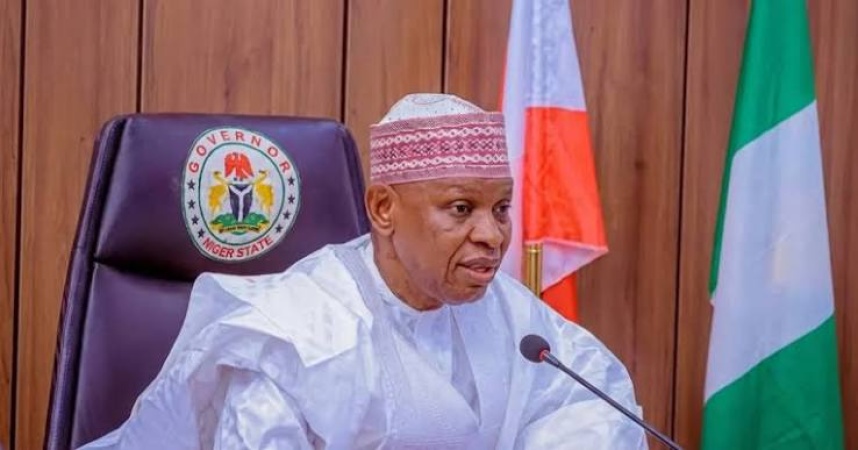
The structure in Niger State appears firmly with the ruling APC, with Governor Umar Bago.
Leading the charge. The ADC appears to still be finding its feet here, but the entry of two politicians into the party recently could tweak things a bit in its favour.
The duo includes Abdullahi Isa Jankara, who defected from the PDP, and Joshua Bawa, who joined the ADC from the LP. The two have since declared their governorship ambition and have been mobilising the people. While neither is currently considered a leading figure in the state’s political hierarchy, they are still expected to mount a competitive challenge against the incumbent. The fact that there are no activities regarding National Assembly seats and other elections may signal a base for the party in the state.
However, as it is the ruling APC stands as the most popular political party in the state, te though, one can never tell what may unfold from now to the time for commencement of political parties’ campaign. Within the ruling All Progressives Congress (APC), there are few signs of internal opposition, as Governor Umaru Bago, who is currently serving his first term and expected to seek re-election, maintains firm control as the party leader in the state.
Oyo State
The APC is gathering all arsenals to battle the 2027 polls in the state. But the uncertainty that pervades the PDP makes it difficult to project into the voting halls. The ADC is, however, building itself as a formidable opposition with the recent defection of Oloye Adegboyega Taofik Adegoke to join Barrister Niyi Aborishade for the gubernatorial contest in the state. The ADC in the state also has Chief Bisi Ilak and a host of former members of the National Assembly. It is believed that the ADC would become a huge force if Governor Seyi Makinde perfects the defection of his supporters into the party. However, the APC, which has settled its internal division, appears to be waxing strong. The party has in its fold Senator Teslim Folarin, Power Minister, Chief Adebayo Adelabu, an enthusiast of the party who is a philanthropist, Chief Dotun Sanusi, Ambassador Florence Ajimobi, Senator Ayo Adeseun, among others. However, the ADC could benefit from the defection of Governor Seyi Makinde if he finds it difficult to swim through the crisis in the PDP. The ADC has started having its share of crises in the state with the emergence of two factions, with one faction being led by the state chairman and another by Bisi Ilaka.
Jigawa example
The APC and the PDP appear on the ground in the state. Despite spending eight years out of power, former Jigawa State governor and ex-Foreign Affairs Minister, Sule Lamido, has continued to demonstrate enduring political relevance. The APC, however, continues to maintain a strong hold on the state, even with Lamido and former deputy governor, Ahmed Gumel, taking charge in the ADC.
Ahmed Mahmud Gu, a former deputy governor, is believed to be leading the charge of the APC in the state. After years within the APC fold, Gumel again switched allegiance—this time to the African Democratic Congress (ADC), a move political observers say reflects a search for renewed relevance amid shifting power blocs.
Meanwhile, the ruling APC under Governor Umar Namadi continues to hold a commanding position across the state. The party currently controls two senatorial seats, nine House of Representatives positions, and a dominant 29 seats in the State House of Assembly, figures that underscore its institutional strength.
The APC would be relying on Governor Umar Namadi, his deputy, Eng. Aminu Usman, as well as well-grounded politicians, including Alh. Muhammad Badaru Abubakar, Sen. Ahmed Abdulhamid Malam Madori, Sen. Babangida Husaini Kazaure,
Speaker of the House Rt. Hon. Haruna Aliyu Dangyatin, Sen. Danladi Sankara
Alh. Isha Gerawa, Amb. Aminu Mohd Dalhatu, Hon. Faruk Adamu Aliyu
Eng. Magaji Da’u Aliyu, Hon. Abubakar Hassan Fulata MH, R and Hon. Abubakar Makki Yalleman.
The ADC on its part has the likes of former deputy governor Ahmed Mahmud Gumel, Hon. Bashir Adamu Jumbo, Hon. Abba Anas Adamu, Alh. Ali Tukur Gantse.
Ondo State
As Ondo State approaches the 2027 elections, the political battlefield is being defined as much by individuals as by party structures.
In a state where grassroots mobilization and personal influence often determine outcomes, the leaders who can pull crowds and deliver votes are emerging as central players.
Across the three major parties of APC, PDP, and ADC, the contest for influence is clear, with each party relying on distinct strategies and personalities to attract supporters.
APC
The All Progressives Congress (APC) currently commands the most robust network of crowd pullers and vote machines in the state.
Governor Lucky Aiyedatiwa
As the state governor and party controller, Aiyedatiwa commands unparalleled influence in Ondo South and across the state through party structures. His presence at rallies draws massive crowds and consolidates loyalty among supporters. Aiyedatiwa’s strength lies in the control of state power and party machinery.
Olayide Adelami
The deputy governor and political powerhouse from Owo (North Senatorial District), Adelam, controls local party structures and activates ward-level votes, ensuring APC retains northern constituencies.
What is regarded as his strength is his firm grip on local structures and loyalty networks.
Lagos State
In Lagos politics, the enduring influence of Bola Tinubu lies less in personality and more in the architecture of power he has painstakingly built over decades from the state level down to wards, polling units, and the grassroots.
At its core, Tinubu’s strength is organisational depth. The APC in Lagos operates with a level of coordination that resembles a permanent campaign structure. He retains decisive control over the party machinery in the state, to the extent that political advancement within the system is largely contingent on his approval.
As the 2027 governorship race gathers momentum under the APC, several politicians have openly declared their interest in contesting for the Lagos governorship seat.
Prominent among them are the current Deputy Governor, Dr. Kadri Obafemi Hamzat; former Governor Akinwunmi Ambode; Dr. Abdul-Azeez Olajide Adediran (Jandor); Chief of Staff to the President, Femi Gbajabiamila; and the President’s Principal Private Secretary, Hakeem Muri-Okunola.
One of the leading contenders is the Deputy Governor, Dr. Kadri Obafemi Hamzat, from Epe in the Lagos East Senatorial District. Widely regarded as an intellectual and seasoned politician, Hamzat is also a key figure in the Justice Forum.
He commands notable grassroots support and enjoys considerable loyalty within party structures. His candidacy is further strengthened by backing from influential party leaders, particularly in Lagos East, as well as support from the Epe monarch, Oba Kamorudeen Animashaun.
The dominance of the Justice Forum within the state’s political leaders, hip including significant representation in the Governance Advisory Council (GAC), the apex political body in Lagos, further enhances its prospects.
Also from Epe, former Governor Akinwunmi Ambode, who served between 2015 and 2019, is reportedly positioning for a political comeback. His exit from office followed unresolved disagreements with party leaders and members of the GAC, culminating in his replacement by Governor Babajide Sanwo-Olu. A return bid would be aimed at completing a second term.
Dr. Abdul-Azeez Adediran, popularly known as Jandor, hails from the Lagos West Senatorial District. He is the convener of the Lagos4Lagos Movement, which has structures across the state’s 20 local government areas and 37 local council development areas. His political strength lies in the breadth of this network. Notably, aside from Bola Tinubu, who governed Lagos between 1999 and 2007, Lagos West, particularly the Awori axis, has not produced another governor.
Other potential contenders include the Chief of Staff to the President, Rt. Hon. Femi Gbajabiami, a Chief of Staff to Governor Babajide Sanwo-Olu, Tayo Ayinde, Minister of Education, Dr. Tunji Alausa, Speaker of the Lagos State House of Assembly, Rt. Hon. Mudashiru Obasa; Senator Tokunbo Abiru; and the President’s Principal Private Secretary, Hakeem Muri-Okunola.
However, for any of these aspirants to secure the APC ticket, the decisive factor remains President Bola Tinubu, widely regarded as the ultimate arbiter of political succession in Lagos.
Historically, Tinubu’s political machinery has rewarded consistency and loyalty, ensuring that key actors, including ward leaders, councillors, and local influencers, remain invested in the system. This has produced a network of political operatives whose relevance is closely tied to the continuity of the structure.
In contrast, the structural challenge confronting the Peoples Democratic Party (PDP) ahead of the 2027 elections is less about visibility and more about coherence. Unlike its main rival, the party lacks a stable and commanding central leadership capable of harmonising factions, enforcing discipline, and sustaining a statewide electoral machinery.
This leadership deficit has resulted in the emergence of rival factions within the party in Lagos, notably those aligned with Nyesom Wike and other competing interests. As of now, apart from Prince Laja Adeboye, who has expressed interest in contesting on the platform of the PDP, no other aspirants have formally declared intentions to contest the Lagos governorship race under the PDP.
The implication for 2027 is clear: unless the party resolves its internal divisions and builds a more grounded grassroots presence, its reliance on urban dissatisfaction and youth-driven momentum will remain supplementary rather than decisive.
However, like the PDP, the party has yet to produce or announce any credible governorship aspirants, raising questions about its readiness to mount a serious challenge in 2027.
Meanwhile, the ADC is gradually positioning itself as an emerging political platform in Lagos, attracting attention largely from disaffected elites and segments of the Lagos youth.
Speaking on the chances of the ADC at the polls, a Chieftain of the ADC, Princess Abiodun Oyefusi, has cast aspersions on the ruling party, saying history will repeat itself in Lagos State and the Party will take over from the ruling party.
Abiodun, who is the daughter of the late Ayangburen, Oba Oyefusi, said the Party will take more seats in the House of Assembly in the state.
She posited that Lagosians are tired of the old order and are demanding a fresh administration.
“100 percent certain. You just wait for it. We are going to shock you, people. We are 100 percent ready. You will be shocked at the number of House of Assembly seats we are going to take.
“All the factors are already working for us. The Lagosians are really tired. They want a different narrative. They don’t have any governance benefit. The average Lagosian is not feeling the benefit,” she said.
“PDP is non-existent in Lagos anymore. Funso Doherty has resigned from PDP. I can’t see PDP making any efforts in Lagos in 2027,” she said, adding that the ADC could just inherit the ashes of the PDP in the state.
Kwara State
APC is the ruling political party in Kwara state. The incumbency status of Governor Abdulrahman Abdulrazaq, coupled with the performance of his administration in the last seven years in office, has galvanized support among members of the party and political watchers.
The leading opposition political parties in the state, such as the Peoples Democratic Party (PDP) and the ADC, through their vigorous campaign and media engagement, have sustained measurable acceptance among the people.
Judged by recent state congresses of the existing political parties in Kwara state, the ruling APC has emerged as the leading crowd puller, followed very closely by the PDP and then the ADC.
The venue of the event, Arca Santa Events Centre, Ilorin, was filled to the brim by APC and PDP supporters, who crowded both inside and outside of the arena, when the state congresses were held on different dates in the year.
The ADC prides itself on operating with less physical structure in party offices, saying they have supporters in all 193 wards in the state. It is the home state of the national publicity Secretary of the party, Mallam Bolaji Abdullahi.
While political watchers say that crowds at political events and activities may not necessarily translate to electoral success at the polls, they argued that many people attend such events out of curiosity, trading, entertainment, and due to the impact of mobilization deployed, rather than party loyalty.
Currently, the incumbency status of the Abdulrazaq administration has given the largest crowd puller to the APC, while political analysts say that the results of party primaries, judged by senatorial district that produced each governorship candidate among the political parties and the personalities of such flag bearers, have a lot to do with what would determine the victory of the 2027 general elections in the state.
Kaduna State APC
In Kaduna state, the APC can rely on key vote banks, including Governor Uba Sani, Senator Shehu Sani, Senator Suleiman Hunkuyi, former governor Ramalan Yero, Bello El-Rufai, member of the House of Representatives, Senator Sunday Marshall, Minister of Defense, Gen Christopher Musa, Chairman of the Northwest Development Commission, Lawal Yakawada, and the Minister of Environment, Balarebe Abbas Lawal.
In the same state, the ADC can rely on the former Governor of Kaduna State, Nasir Elrufai, former governorship candidate Isah Ashiru Kudan, Senator Lawal Adamu, Senator Ibrahim Khalid, and Former Minister of State for Defense, Lawal Batagarawa.
Zamfara State
For the APC, in Zamfara State, there are key chieftains it can rely on, including the former Zamfara state Governor Senator Abdulaziz Yari Abubakar, Former Zamfara state Governor Senator Ahmed Sani Yarima (APC), Former Governor Mamuda Aliyu Shinkafi, Former Governor now Minister of state for defense Hon.(Dr ) Bello Mohammed Mattawale, Hon. Sani Abdullahi Wamban Shinkafi and Former Minister of Communication Senator Ikira Aliyu Bilbis, Senator Sahabi YaU Kaura, Alhaji Salisu Maibuhu Gummi, Hon. Abdulmalik Zubairu Bungudu, Hon. Aminu Sani Jaji, Ambassador Bashir Yuguda and Governor Dauda Lawal, who recently defected to the party.
However, for the ADC, the voting strength would rely on retired Inspector General of Police Mohammed D Abubakar (retd), Hon. Shehu Gulubba, Senator Kabiru Garba Maraf, and Mallam Aminu Jelani.
Adamawa State
In Adamawa, Governor Umaru Fintiri would be leading the charge of the APC, while he would be supported by the National Security Adviser, Nuhu Ribadur. While the ADC would be battling it out with former Vice President Atiku Abubakar, who has been the godfather of Adamawa politics since 1999. He has now been joined by the governorship candidate of the APC in 2023, Mrs Aisha Binani, and former governor Abubakar Bindow, among others.
Sokoto State
The APC has Senator Aliyu Wamakko, Gov Ahmed Aliyu, Minister Muhammad Goronyo, Senator Ibrahim Gobir, Senator Ibrahim Lamido (there is a rumour that he may dump the party anytime soon).
The ADC has former governor and incumbent Senator Aminu Waziri Tambuwal, who is joined by Faruk Umar Yabo, Yusuf Suleiman, and Manir Dan’iya (Former Deputy Governor) and a House of Representatives member, Usman Gorau.
Kano State
The entry of former governor Senator Rabi’u Musa Kwankwaso into the ADC has changed things for the opposition party, and he is to be supported by the Kwansiyya Movement, Alhaji Abdulsalam Gwarzo, former deputy governor, Hon Nasir Gawuna, former governorship candidate of APC, Hon Ibrahim Little, former governorship candidate
The APC has the strength of Governor Abba Yusuf and former governor Abdullah Umar Ga. Other key strengths include Deputy Senate President, Senator Barau Jibrin, Alhaji Murtala Sule Garo, former deputy governorship candidate of APC, Hon Haruna Al Makoda, commissioner of education and sixth-term member of the House of Representatives, Hon Al Hassan Doguwa, and Hon Al Hassan Rurum. (Nigerian Tribune, excluding headline)