ADAD
ADAD
Updating your news feed...
NEWS EXPRESS is Nigeria’s leading online newspaper. Published by Africa’s international award-winning journalist, Mr. Isaac Umunna, NEWS EXPRESS is Nigeria’s first truly professional online daily newspaper. It is published from Lagos, Nigeria’s economic and media hub, and has a provision for occasional special print editions. Thanks to our vast network of sources and dedicated team of professional journalists and contributors spread across Nigeria and overseas, NEWS EXPRESS has become synonymous with newsbreaks and exclusive stories from around the world.




Loading banners
Loading banners...

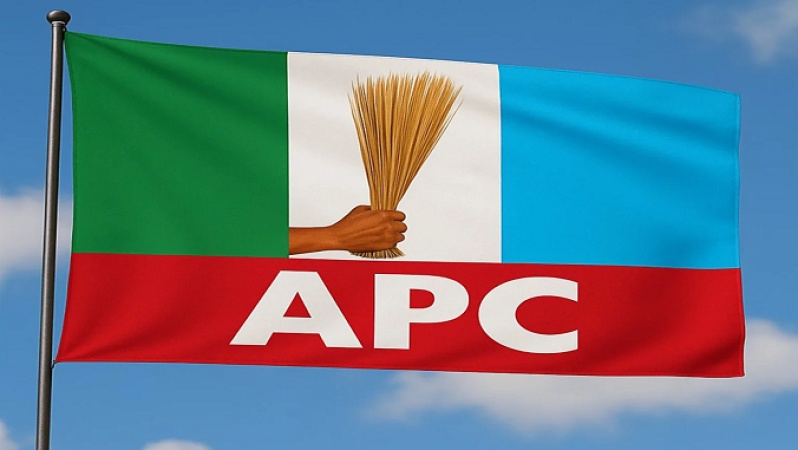
APC LOGO
The APC state congresses held on Tuesday, March 3, 2026, have left a trail of fresh internal crises across several states. While some chapters reached a consensus, others have split into parallel factions, each claiming legitimacy.
Benue State is currently the epicentre of the party’s internal friction leading to the emergence of two distinct state executives from the recently held congresses. While the Governor Alia faction held their congress at the IBB Square in Makurdi, electing Benjamin Omale as State Chairman, the Akume faction, led by supporters of the Secretary to the Government of the Federation (SGF), George Akume, held a parallel exercise and reaffirmed Austin Agada as Chairman. Both sides claim their process was the only one attended by INEC and national observers. This creates a massive legal headache for the National Convention coming up later this month.
Despite all entreaties from the party leadership, the rift between Governor Hyacinth Alia and Senator George Akume, has effectively split the state party into two. Just recently, precisely on February 26, 2026, Vice President Kashim Shettima personally appealed to both men to settle their differences for the sake of the 2027 polls. Up till date, the state congresses remain a flashpoint for who will control the party structure.
In Delta, the crisis isn’t about two chairmen, but about the legitimacy of the process itself. When a mainstream list was announced during the state congress held on Tuesday, the foundation members reportedly rejected it. They alleged that the congress was a private affair held in a hotel rather than the party secretariat, effectively locking out local stakeholders. Hundreds of petitions have been allegedly prepared for submission to the Appeal Committee in Asaba.
Though Rivers did not hold a full state congress, as their executive tenure is on-going, they held congresses to elect National Convention Delegates. The Nyesom Wike-aligned faction of the APC reportedly swept the delegate slots. In response, the Rotimi Amaechi-aligned loyalists have labelled the exercise a sham, claiming no voting occurred in over 15 Local Government Areas. They are now threatening to go to court to stop these delegates from being recognised at the National Convention scheduled to hold on March 27.
In Kano, the congress was used as a tool to solidify former National Chairman, Abdullahi Ganduje’s grip on the state. While the exercise was said to be relatively peaceful on the surface, a silent faction of the party has criticised the move to integrate recent defectors from the NNPP into the state executive. Consequently, fears of hijacking have led to several petitions, with some elders complaining that the new structure ignores those who remained loyal during the party’s 2023 losses.
While Osun was exempt from the general state congresses due to its off-cycle status, the recent affirmation of Bola Oyebamiji as the 2026 governorship candidate has resulted in a cold war. The Aregbesola faction, The Omoluabi Tendency, completely boycotted the state’s recent consultative meetings. Their absence from the party’s unity indicates that the internal rift is far from over.
In the Ondo scenario, a faction of the party loyal to Governor Aiyedatiwa defied an order of the Federal High Court in Akure and conducted the state congress leading to the emergence of a new chairman by consensus. The legal implication of defying the interim order is that the congress and its outcome are likely to be considered null and void. The court had specifically restrained the APC from conducting the state congress, and proceeding with it despite the order could be seen as contempt of court.
The APC National Secretariat has stated that the party is law-abiding and had reportedly directed its congress committee to halt the process pending the court’s decision. The faction’s actions may lead to prolonged litigation, factional divisions, and political instability within the party.
The legitimacy of the new chairman and the congress outcome, therefore, remains questionable, and the matter is likely to be resolved in court. The court’s decision to maintain the status quo before the disputed congresses suggests that the party should revert to the pre-congress state, and any actions taken during the congress may be considered invalid.
In Bayelsa, the scars of the 2023 governorship loss still run deep. There is finger-pointing regarding anti-party activities. Some factions believe the national leadership favoured certain candidates over others, leading to a lack of cohesion. The reconciliation committee will need to convince aggrieved members that the 2027 strategy will be different. Without a clear path to power in the state, many members are susceptible to poaching by the coalition forces.
Appeal Window
The party has a strict seven-day window for the appeal committee to sit and resolve these disputes. According to the schedule of activities, appeal committees will sit between March 4 and 11 in each state capital to receive petitions. The March 21 zonal congresses will be the final test for internal cohesion within the party.
Already, reconciliation efforts in states like Delta, Bayelsa, and Osun have been uphill battles. These challenges remain pivotal as the party prepares for its National Convention scheduled for March 27–28, 2026 and the 2027 general elections. The core issue is that these aren’t just misunderstandings, they are deeply entrenched factional wars involving high-stakes leadership battles.
In Delta, the crisis is survival clash between the old guard and newer heavyweights who defected from the PDP. Efforts to integrate defectors are perceived to have marginalised the foundation members who stayed through the party’s lean years. Stakeholders have called for direct intervention of President Tinubu, citing allegations of neglect and unfair reward systems for those who worked for the party in the 2023 cycle.
Osun remains one of the most visible broken chapters. Despite numerous committees, the rift between former Governor Rauf Aregbesola’s faction and the mainstream party loyal to Gboyega Oyetola persists. Reconciliation here is often viewed as optical rather than structural, with both sides maintaining separate secretaries and political machinery.
Threat to national convention
Nentawe Yilwatda’s leadership is currently being tested by these specific state congresses, as he has promised a bottom-up reconciliation approach to prevent the party from splintering before 2027. However, the internal crises stemming from the recent congresses are primary hurdles for the party’s National Convention scheduled for March 25–28, 2026. Because the convention relies on a bottom-up selection of delegates, the disputes at the ward, local government, and state levels directly threaten the legal and political stability of the national event.
Where two factions in a state hold separate congresses and elect different leaders, both groups will possibly send their sets of delegates to the National Convention. Under the present circumstance, the National Convention Committee chaired by Governor Hope Uzodimma faces the challenge of deciding which faction to recognise. Excluding one faction will likely lead to immediate litigation. If a court later rules that the wrong delegates voted at the convention, the entire election of national officers could be nullified.
As the party heads into the planned National Convention, the stakes have shifted from peace-making to position-seeking. Currently, state factions are fighting for control of the delegate lists. If a reconciliation committee favours one faction, the other loses its voice at the National Convention.
Apart from that, aggrieved members who feel sidelined during the ward and state congresses can seek court injunctions to stop the National Convention from proceeding. This can lead to last-minute postponements, creating a sense of instability within the ruling party and increasing the cost of logistics as venues and security are repeatedly rescheduled.
In another scenario, if any crisis-prone state presents two chairmen by this date, the National Secretariat may be forced to disqualify both from voting to avoid legal nullification of the entire process.
Above all, discord at the congress level makes it harder for the party to reach a consensus candidate for national offices, potentially turning the convention into a chaotic electoral battle rather than a unified coronation. To mitigate these crises, the APC relies on its National Reconciliation Committee. Even at that, any unresolved state crisis will spill over to the National Convention. A successful reconciliation in these states will require more than a committee but political patronage and clear guarantees on ticket-sharing for the 2027 cycle. While the congresses focus on local leadership, they serve as a proxy war for the national zoning arrangement. The crises reflect a struggle between those wanting to maintain the status quo and those pushing for a reshuffle of power ahead of the 2027 general elections.
With the convention only weeks away from the conclusion of state appeals (March 11), there is a very narrow window to settle hundreds of petitions. If reconciliation fails, the convention becomes a platform for public walkouts and protests, similar to those seen in previous North-East zonal meetings.
Stalemate
The APC has established a specialised, high-powered body to address these specific crises ahead of the 2027 elections and the upcoming National Convention. In December 2025, President Bola Tinubu inaugurated the National Committee on Strategy, Conflict Resolution and Mobilisation. This committee is tasked specifically with mending fences in the volatile chapters.The committee is chaired by Mai Mala Buni, Governor of Yobe State and former APC Caretaker Chairman. However, stalemate persists in several states.
While the 92-member National Convention Committee led by Governor Hope Uzodimma handles the logistics of the March 27–28 convention, the Buni-led Reconciliation Committee is focusing on managing the friction among warring factions. Its immediate concern is Osun State where governorship election is just barely five months away. Effort is currently on-going to resolve the seemingly irreconcilable political differences between the Oyetola loyalists and Aregbesola’s Omoluabi faction to prevent a repeat of the 2022 loss.
Already, party elders have taken decisive steps to contain internal divisions that threatened its chances of victory in the August 15 governorship election. In a bid to restore harmony, the APC elder caucus recently visited Senator Iyiola Omisore at his Ile Ife residence to broker peace ahead of the formal commencement of campaign activities on March 11. Omisore confirmed the visit and said the talks focused on strengthening unity, cohesion and the continued progress of the APC in Osun.
“Today, I received the Osun APC Elders’ Caucus (Igbimo Agba) in my Ile Ife home. Our discussions were centred on strengthening the unity, cohesion, and continued progress of our great party, the All Progressives Congress,” he stated.
The move by party elders underscores efforts to present a united front as the campaign season begins and to minimise defections and internal disputes that could affect the APC’s performance In the poll. However, the outcome of the effort is yet to be seen.
Beyond Osun State, Akwa Ibom, Rivers, Benue, Delta and Kano are currently presenting major headaches for the APC National Reconciliation Committee as the March 2026 National Convention approaches. The crises in these states revolve around the challenge of integrating new defectors with the party’s founding members.
Among crisis-prone states, Rivers remains a complex hybrid crisis. While Nyesom Wike is a PDP member serving in an APC cabinet as FCT Minister, his influence has created a massive rift within the Rivers APC. The pro-Wike faction of the APC is at odds with the original APC leadership formerly loyal to Rotimi Amaechi.
Following the recent by-elections in February 2026, Governor Fubara has signalled his readiness to work with APC lawmakers, but the internal APC leadership remains fractured over whether to fully embrace Wike’s structure or resist it.
The prolonged stalemate that culminated in the recent peace accord between Governor Fubara and Wike is already a familiar story. According to Sunday Sun investigation, the APC faction aligned with Wike is currently controlling the executive, legislature and the third tier (local) of government. Yet, with the raging controversy surrounding delegate slots, it is difficult to predict if the two competing factions are ready to submit to a reconciliation committee. Some observers admit that legal actions typically escalate tensions and can further destabilise the political party.
The threat by the Amaechi-aligned loyalists to institute legal action further makes the possibility of an amicable peace resolution looks rather impossible. According to Obinna Ebogidi, Convener, Rivers Peace Initiative (RPI), the faction recognised by the national leadership has advantage to attend the convention. He said: “Looking at it practically, the faction that has the backing of the national leadership already has a clear advantage going into the convention.
“In party politics, once the national structure recognises a delegate list, it is usually difficult to overturn that at the convention stage. So realistically, whatever happens in court may not significantly change what plays out in Abuja on March 27.”
The RPI convener observed that while legal action might be seen by one faction as a way to assert its rights or challenge perceived injustices, it often comes at a significant cost to the party’s unity, stability, and public image.
“The bigger issue is within the Rivers chapter itself. When one group says no voting took place and is threatening legal action, it shows there are internal disagreements that haven’t been fully resolved,” he said.
He added that even If the convention goes ahead as planned, those disagreements can affect unity and future mobilisation in the state.
In Kogi, the transition from Yahaya Bello to Governor Ahmed Usman Ododo hasn’t been entirely smooth behind the scenes. Reports indicate the presence of a cabal within the administration that has caused internal friction. The recent defection of former Governor Idris Wada from the PDP to the APC in November 2025 has created a crowded room at the top, with various interest groups vying for influence ahead of the 2027 cycle.
In Ondo State, despite the interim order of the Federal High Court sitting in Akure, Governor Lucky Aiyedatiwa’s faction of the party went ahead to conduct the state congress leading to the emergence of Hon Kolawole Babatunde as the new chairman of the party. While legitimacy of the congress is being contested, the Aiyedatiwa’s faction claimed that the decision to go ahead with the state congress despite the judgment of the Federal High Court was in line with the directive of the national secretariat of the party. The party’s Director of Publicity, Mr Steve Otaloro, while reacting to the party’s decision, said the congress was conducted by officials from the national secretariat of the party and not the state. He said: “The state leadership of the party has nothing to do with the congress held in the state because officials that conducted the state congress came from the national secretariat of the party in Abuja.
“As loyal party members, we are duty bound to comply with the directive from the national secretariat of the party. It is only the national secretariat of the party that can explain why the state congress was conducted,” Otaloro stressed.
There is a legal trap lying right before the state chapter of the party ahead of its National Convention.
It is only in Akwa Ibom State that APC stakeholders have agreed to move forward despite hitches that characterised the congress from ward, local government to the state level.
Last week, protesters comprising ward and chapter executives of APC gathered at the Mkpat Enin Local Government Secretariat to register their grievances over alleged plans to impose new lists of ward and chapter officers to replace the current leadership of APC at ward level. However, at a recent meeting, stakeholders resolved to give positions to PDP defectors and core members of APC to allow sleeping dog lie.
Reliable sources told Sunday Sun that Pastor Umo Eno and Senate President Godswill Akpabio had a closed-door meeting where a major decision to share available positions was reached. Accordingly, Eno and Akpabio have applauded the peaceful and successful conduct of the state congress, describing it as historic, unprecedented and rejuvenating.
In his remark at the congress held in Uyo Township Stadium, Governor Eno said it was heart-warming to have all the leaders and stakeholders sit together as family and friends under the APC, stressing that Akwa Ibom was truly a one united family. He emphasised the need for peace and level playing field for all, urging those who could not return as State Executive Council members of the party not to be deterred, as everyone would be accommodated in the scheme of things.
The governor appreciated everyone, especially Senator Akpabio, Chairman of the Congress Implementation Committee, representative of the Independent National Electoral Commission, INEC, and all stakeholders for their cooperation and support to make the Congress successful.
He also appreciated President Bola Ahmed Tinubu for his leadership, which, he noted, has placed the party on the path of victory, and reassured of the support of Akwa Ibom State for his re-election in 2027.
On his part, Senator Akpabio described the peaceful conduct of the exercise as unprecedented and worthy of celebration. He recalled his previous experiences of party congresses in the state, and attributed the peace and seamless exercise to the quality leadership provided by Governor Eno, especially given his calling as a pastor.
Senator Akpabio who sang different songs of praises to God in appreciation of the peaceful conduct, said, “This is uncommon, this is unprecedented, and will go down in history, as the most peaceful in the history of the state.”
He said that the amendment of the electoral act by the National Assembly and the subsequent signing into law by President Tinubu was significant to the peace, and given impetus to the consensus option adopted by the party.
The Senate President appreciated Governor Umo Eno, members of the Congress Implementation Committee, and other stakeholders for their contributions to making the Congress successful, adding that President Tinubu was interested in the State especially for its unprecedented peace and unity.
However, in Benue State, the national leadership is currently in a dilemma as to which of the two rival factions in supremacy contest to be recognised. The simultaneous conduct of two parallel congresses has deepened an already festering crisis in the party. For the Chairman of the Congress Committee of the Alia faction of the party, Usman Musa, the process was orderly, hitch-free and devoid of violence. The committee dismissed the allegations of parallel exercises outright, insisting it was the only body duly mandated by the NWC to conduct the congresses in the state.
Governor Alia described the congresses in Benue as seamless, peaceful, credible and transparent, assuring supporters that his administration would not relent until “good governance gets back to the state full-fledged.”
The Akume-aligned faction, which affirmed Comrade Austin Agada as the State Chairman, on the other hand, described the process as unanimous and a milestone in reinforcing party cohesion.
Chairman of the committee, Ambassador Professor Iorwuese Hagher, applauded the event as a moment of “restoration” after years of internal tremors. He warned against turning the party Into a personal enterprise and paid glowing tribute to Senator Akume, describing him as a foundational pillar whose political structure had nurtured many current office holders in the state. “We will no longer allow distraction to weaken our mission nor permit internal ambition to override collective progress. We will move forward, stronger, wiser, and more focused.
“Political parties survive not because of individuals, but because of institutions. When institutions are respected, democracy thrives. When they are undermined, instability follows. Today, we choose stability, unity. Today, we choose the future,”he stated.
He ended with a call on all delegates to go home as ambassadors of unity.“Speak the language of reconciliation, defend the legitimacy of structures, reject rumours, reject division, reject manipulation. Let it be known that from Makurdi, a stronger APC rises,” he stated.
The Publicity Secretary of the Agada-led APC, Mr Daniel Ihomun boasted that the NWC sent people to monitor the congresses while the Independent National Electoral Commission (INEC) also monitored the processes.
There is no peace in sight as the Akume faction is reportedly said to be planning to challenge the validity of the congress at the Zonal level on March 21.
In Bayelsa State, though ward congresses were said to be peaceful, the party is still grappling with disquiet arising from insinuation of anti-party activities trailing the 2023 elections. Some members of the party are aggrieved over what played out in the last governorship election. As such, many are waiting to see if those identified as betrayers will vie for election so that they can be paid back in their own coin.
The new leadership of Warman Ogoriba has yet to settle down. However, in his post- victory remarks, Ogoriba has promised to further unify the party. After initial complaints of discriminations by some old APC members in Sagbama, Yenagoa and Southern Ijaw, it is said that peace now prevails in the party.
Kano State chapter of the party has also not been spared of its own share of the congress controversy and power tussle. While Umar Haruna Dogowa-led Executive emerged through consensus arrangement, there are some internal dissensions. Sunday Sun gathered that Baurau’s faction felt gravely short-changed by the process. His supporters are unhappy that Deputy Senate President, Senator Jubril Barau who sacrificed his governorship ambition for the automatic ticket offered by the party to Governor Yusuf, is being rewarded with nothing tangible.
The Ganduje faction, representing over sixty per cent of the party faithful in the state is equally uncomfortable that they have been dislodged from their prime political positions for the second best. The likes of Abdullahi Abbas, the former Chairman and gubernatorial hopeful saw his dreams cut shot. The same thing applies to the 2023 APC Governorship candidate, Nasiru Gawuna, who woke up to realise that the defection arrangement had ended his dream within the APC. There are several others. No fewer than five state chairmanship aspirants who have been working to succeed the incumbent state party chairman have had an aborted dream. Speculation is rife that some aggrieved members are already considering defecting to other political parties in the state.
In the face of these challenges, the Buni-led Reconciliation Committee and the Nentawe Yilwatda leadership are currently in crisis mode. The danger is that If these grievances are not handled transparently, the aggrieved factions in the affected states may seek court injunctions to stop the National Convention entirely. (The Sun)