

















Loading banners


NEWS EXPRESS is Nigeria’s leading online newspaper. Published by Africa’s international award-winning journalist, Mr. Isaac Umunna, NEWS EXPRESS is Nigeria’s first truly professional online daily newspaper. It is published from Lagos, Nigeria’s economic and media hub, and has a provision for occasional special print editions. Thanks to our vast network of sources and dedicated team of professional journalists and contributors spread across Nigeria and overseas, NEWS EXPRESS has become synonymous with newsbreaks and exclusive stories from around the world.
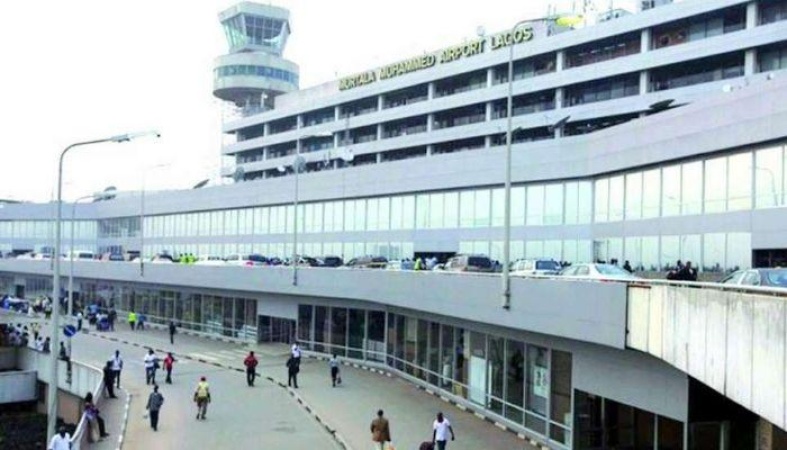
Murtala Mohammed International Airport
Across the country, state governments have spent billions of naira constructing airports, hoping to boost regional connectivity, attract investors, and open up local economies. While major hubs such as Lagos and Abuja continue to handle the bulk of the country’s air traffic, many state-owned airports remain largely idle. Some boast modern terminals but no regular flights, while others are completed yet generate little or no revenue despite massive expenditure on construction and maintenance.
MOYOSORE SALAMI writes on the establishment of non-viable airports across the country, examining why many of these projects fail to attract airlines or passengers despite heavy investment.
On a Thursday morning in July, the departure hall of Kaduna International Airport was unusually quiet. The ticket counters were open, but there were no passengers waiting to board, no baggage being weighed and no boarding announcements.
For Sani Musa, who had hoped to fly to Lagos for training, the silence was unsettling. According to him, the airline later informed passengers that the flight would not operate owing to “low passenger turnout,” a situation he said had become common on the route.
“We were already at the airport when they told us the flight would not fly. They said there were not enough passengers,” he said.
With no alternative flight scheduled for the day or even the week, Musa said he was forced to abandon the journey and travel by road to Abuja.
He said the experience raised questions about the viability of the airport, despite the public funds invested in its construction and maintenance.
“If an airport cannot guarantee flights, people will stop planning their journeys around it,” he said.
He told The Guardian that the challenge extends beyond Lagos-bound travellers, as passengers heading to destinations such as Yola are also compelled to route their journeys through Abuja.
Despite having a functional runway and terminal, Niger International Airport remains largely underutilised, with limited flight options forcing travellers to seek alternatives outside the state.
A Niger resident, Ibrahim Isa, said air travel from the state has become increasingly unreliable. He said the airport doesn’t operate regularly often leaving passengers with few options.
Earlier this year, Isa said he was unable to secure a flight from Niger to Abuja for a business meeting, despite repeated attempts to book a ticket. With no alternative routes available, he was forced to travel by road to Abuja.
While Kaduna struggles with limited operations, some state-owned airports continue to record steadier activity.
In Gombe, Idris Mohammed said the airport currently hosts three airlines, Air Peace, Overland Airways and Rano Air operating scheduled flights, particularly on the Abuja route.
According to him, Rano Air flies on Sundays, Mondays, Wednesdays and Fridays; Overland operates on Mondays, Wednesdays and Fridays; while Air Peace services the route on Thursdays and Saturdays.
He noted that the airport records about two flights daily on most days, except Thursdays and Saturdays when operations are lighter.
"Gombe Airport is working. There are three airlines operating currently,” adding that regular schedules have helped sustain passenger traffic.
Beyond flight availability, access infrastructure is also shaping how passengers assess the viability of airports.
For years, Asaba International Airport served as a major gateway for travellers heading into parts of Anambra State, especially Obosi and Onitsha. Its relevance grew further with the completion of the Second Niger Bridge.
But that relevance is now waning.
Former Minister of Aviation, Osita Chidoka, recently announced his decision on X to stop using Asaba Airport, citing the deteriorating condition of the Asaba–Onitsha expressway, a key access route to the facility.
On May 7, 2025, Chidoka said the state of the road had turned travel through Asaba into a “harrowing” experience, discouraging continued use of the airport despite its compliance with aviation safety standards. For 14 years, Asaba Airport had been my preferred gateway to Obosi, not anymore.”
He said he now uses the Anambra International Cargo and Passenger Airport instead and plans to engage airlines to increase flight frequencies there.
“It’s time we reward functional infrastructure and hold neglect accountable,” Chidoka said.
Yet these limited services do not erase the broader picture: billions have been sunk into terminal buildings, runways and infrastructure that rarely attract enough traffic to justify their running costs. In Ebonyi State, for example, the government has budgeted N2 billion to re-roof a terminal, bringing the state’s total airport bill to more than N55 billion and the airport remains effectively idle, producing no revenue for the state.
The human toll is not only an inconvenience, it is lost productivity, higher travel costs and, in some cases, missed medical appointments and business opportunities. For communities that were promised jobs and growth, an underused airport can be a bitter symbol of misplaced priorities.
An operation officer at the airport, Tobi Bamgbose, said that low passenger turnout remains one of the biggest operational challenges facing Nigeria’s underutilised airports, warning that the situation has far-reaching implications for airline sustainability, staff welfare and aviation safety.
Breaking down the issue, Bamgbose said passenger numbers at an airport are largely driven by affordability, noting that the sharp rise in airfares over the past two to three years has significantly reduced demand.
Chuba Okadigbo International Airport
According to him, a return ticket on the Lagos–Abuja route, which sold for about N100,000 or less a few years ago, now costs over N400,000 during peak periods representing nearly a 400 per cent increase.
“In a situation where passengers are paying double or triple what they used to pay, traffic will definitely be affected,” he said, explaining that reduced patronage directly impacts airline operations.
Bamgbose likened airports to houses without tenants, noting that airlines are the real drivers of airport activity. “The airport is just like a house without a tenant. The tenants are the airlines,” he said.
He explained that low passenger turnout limits airline revenue while operational costs remain largely fixed. Using a typical narrow-body aircraft with a capacity of about 145 passengers, Bamgbose said airlines often operate flights with fewer than 70 passengers, barely half capacity.
“Fuel consumption and maintenance costs remain the same whether the aircraft carries 50 passengers or 145,” adding that aircraft maintenance schedules are sacrosanct and cannot be adjusted to match revenue performance.
As a result, he said airlines facing prolonged low patronage are forced to operate with restricted budgets, affecting future planning, staff training and route expansion.
According to him, when airlines are unable to sustain losses, they respond by cutting flight frequencies, a decision that further reduces airport activity and worsens underutilisation.
“If an airline flies four times daily on a route and it is not profitable, it reduces to two flights or even one,” he said, noting that such cuts also affect airline staff development.
He explained that aviation regulations require regular refresher training for airline personnel, often every three months, but poor revenue makes it difficult for operators to meet these obligations. “Training is critical to safety, but when revenue drops, training suffers. And when training suffers, safety becomes shaky,” he said.
Bamgbose warned that staff shortages at low-traffic airports further compound safety concerns, as airlines are forced to assign multiple roles to fewer workers.
“In aviation, some tasks are not meant to be multitasked. Fatigue leads to oversight, and any mistake in this industry is either life-threatening or financially catastrophic.”
He added that limited staffing affects overall preparedness, as workers often resume duties already overwhelmed by workload demands.
Beyond airline operations, he said low passenger volumes also affect airport-side businesses, including lounges, restaurants and other concessionaires, whose viability depends on steady foot traffic.
Bamgbose noted that ageing airport infrastructure such as faulty air bridges, inadequate lighting systems and poor wildlife control further discourages airline operations, as safety concerns prompt operators to avoid certain airports altogether.
“If a runway is not smooth or the lighting system is poor, it raises safety alarms for pilots,” adding that such conditions fall short of international standards set by bodies such as the International Civil Aviation Organisation (ICAO) and the International Air Transport Association (IATA).
Bamgbose also cited poor coordination between airport authorities, ground handlers and airlines as another challenge, warning that weak operational synergy can delay flights and frustrate passengers.
According to him, wildlife hazards such as bird strikes remain a major concern at poorly maintained airports, often resulting in delays, cancellations and long-term reputational damage for airlines. “When passengers experience repeated delays or safety scares, they lose confidence and avoid the airline in future,” he said.
He added that unless low passenger turnout, infrastructure decay and staffing challenges are addressed together, many state-owned airports will continue to struggle with efficiency and safety.
Airports Exist But Remain Underused
A report obtained from the Exclusive Traffic Summary Report 2023, Murtala Muhammed International Airport (MMIA), Lagos, and Nnamdi Azikiwe International Airport (NAIA), Abuja, together accounted for 62 per cent of all aircraft movements in and out of Nigeria last year.
In contrast, dozens of other airports including Kaduna, Calabar, Sokoto, Yola, Ibadan, Katsina, and Birnin Kebbi registered between 1 and 0 per cent of national traffic. Movements reported include scheduled, non-scheduled, and private operations.
At Lagos MMIA, the domestic terminal recorded 67,670 movements (23.7 per cent), while the international terminal logged 25,753 movements (9.025 per cent), combining for 33 per cent of national aircraft traffic.
Abuja’s NAIA reported 75,608 domestic movements (26.49%) and 8,852 international movements (3.10%), making a total of 29.5 per cent.
By contrast, Port Harcourt accounted for just five per cent, Kano four per cent, Maiduguri three per cent, and Enugu two per cent. Several smaller airports including Ibadan, Akure, Jos, Yola, Finima Airstrip, and Anambra International recorded just 1 per cent or less, while some, such as Makurdi, Eket, and Minna, registered zero movements in 2023.
The report highlights that despite significant government investment, many airports remain effectively dormant. Even airports with modern terminals, such as Ebonyi, have seen minimal usage. Scheduled flights are concentrated in Lagos, Abuja, and Kano, which together handled over 70 per cent of all scheduled flights, while several other airports reported fewer than 100 monthly departures.
Government Response, Concessions
Speaking at a recent X space hosted by the National Orientation Agency (NOA), Minister of Aviation and Aerospace Development, Festus Keyamo, acknowledged the gap between revenue-generating airports and non-viable one.
“While Lagos, Abuja, and Kano airports generate significant revenue, many other airports operate at a loss. That’s why we are now pursuing concession agreements, such as those for Port Harcourt International Airport, which are in the final stage. These agreements will attract private sector investment and improve efficiency.”
Keyamo emphasised that the government’s approach seeks to reward functional infrastructure while reducing financial burdens on states operating unprofitable airports.
“Our goal is to ensure that citizens have access to safe, reliable, and efficient air travel. It’s no longer enough to build airports; they must be viable, well-managed, and capable of generating revenue. Concessions are one of the tools we are using to achieve that objective,” he added.
Recently, the Managing Director of the Federal Airports Authority of Nigeria, Olubunmi Kuku, stated that only three out of 22 airports under its management are profitable and contribute largely to the growth of the aviation sector.
Kuku said that 19 of the nation’s airports under FAAN were being subsidised as they do not get passenger traffic commensurate with their operational cost.
She further said that the majority of the 22 airports managed by FAAN require maintenance and upgrades in critical infrastructure like the terminal areas, the landside, as well as the airside.
The four airports, which include Nnamdi Azikiwe International Airport, Muritala Mohammed Airport, Kano and Port Harcourt, contributed a sum of N529.68bn in total exports and N5.05tn in imports between January 2020 and March 2024.
These statistics indicate that most airports are not economically viable to support foreign trade despite plans by various state governments to commence construction of airports purportedly to attract trade.
The FAAN MD mentioned that the authority plans to provide cross-subsidies to certain new airports under development.
“I started by saying that we have 22 airports which we own and manage. We also have about six or seven airports that are either owned by state governments or private individuals or entities, which we also support with either aviation security or fire and rescue services. We have several states in the north as well as in the southwest that are coming up with new airports. I would say that based on the stats today, only three of the 22 airports are actually profitable and contribute largely to the sustenance of the airport companies that we run.
“I would also say that we are cross-subsidising the other 19 airports today, and in most instances, we will substitute or cross-subsidise for some of the airports that are coming on board as well,” she added.
Kuku mentioned that FAAN allocates 50 per cent of its revenue to the Federal Government, posing a significant challenge adding that the authority was engaging in discussions with different branches of government to explore potential relief measures.
According to the FAAN boss, passenger traffic correlates more strongly with gross domestic product growth and economic activities rather than the construction of new airports.
Kuku emphasised the importance of prioritising activities like trade, manufacturing, and tourism to boost airport traffic.
She also mentioned that FAAN was working closely with international organisations such as the International Air Transport Association and the Federal Ministry of Aviation to enhance domestic and international route expansions.
Kuku also noted that there were ongoing initiatives aimed at developing Nigeria and transforming specific airports within the country into transit hubs. “What that means is that we start to build a network of airports where we can push our feeders to some of the other states or some of the other locations and start to utilise our airports,” she said.
The FAAN boss also mentioned that close to four million passengers currently travel internationally from Nigeria, emphasising the critical importance of efficient infrastructure utilisation to sustain and upkeep the facilities.
Politics, Poor Planning And Missing Markets
Aviation experts fault a mixture of political decision-making, poor planning and a failure to align airport projects with economic realities
A Group Captain, John Ojikutu (rtd), warned that the country’s domestic airlines face serious challenges due to prohibitive operational costs and the rising prices of air tickets, which he said have left many routes unviable.
Ojikutu said passengers fall into two main categories: those whose trips are funded by government and corporate organisations, and those who pay for their travel themselves. Both, he added, are increasingly priced out of flying.
“There are no passengers from the two divide lines: first are those in the administration of the government and corporate organisations whose trips are funded by government and private companies because there is no more funds to fund most of their irregular trips.
For those on the other side who fund their trips themselves, the cost of air tickets is prohibitive in their pockets,” he said.
Ojikutu stressed that airlines should not be allowed to operate on all routes indiscriminately, and that only select routes should be designated for international airports with full service charges, while other airports should have scaled charges depending on capacity.
“The two divide lines are those whose trips are sponsored by the government and corporate organisations and I can tell you that there are as much as 60 to 70 percent of these on each flight. How many trips of these categories of air travellers can still be sponsored when fares have tripled and the dollar rate has also increased?” he asked.
He also raised concerns about passenger projections, noting that figures have stagnated since the COVID-19 pandemic. “We projected passenger figures for 2020 to be 20 million, but since 2019, it has remained around 19 million due to increased fuel prices and dollar rates,” he said, urging government intervention to reduce operational costs.
Ojikutu said airlines must clearly demonstrate capacity and capability in their business plans to operate at specific airports, rather than attempting to operate indiscriminately across all locations. He also called for structured interlining arrangements between domestic and foreign carriers to ensure cost-effective international travel.
“Whatever applies to airlines also applies to airports. Airports cannot decide which airlines operate into them; airlines must convince the regulatory authority they have the capacity to operate efficiently,” he added.
General Secretary of the Aviation Safety Round Table Initiative (ART), Olumide Ohunayo, said many of Nigeria’s state-owned airports are underutilised because they were built primarily as social services rather than profit-making ventures.
Ohunayo explained that airports were intended to provide critical transportation links between state capitals and other regions, and in some cases, to serve company executives for quick travel. “Airports are just meant to provide a means of quick transportation, the fast mode, rather than be isolated and attract investors,” he said.
He noted that profitability typically emerges only after traffic volume increases over time. “Airlines didn’t start on day one and make profits. They spent time building schedules and fleets before they began to talk about profitability,” contrasting this with large concessioned terminals that generate revenue in densely populated areas.
According to him, many state governments prioritise the scale and cost of airport projects over practical use, often building the largest terminals or longest runways without considering actual traffic. “You can acquire acres of land for airport projects, but you don’t know how to use it. You build small, then create space for expansion as traffic grows. Unfortunately, here everybody wants to expand, and when there is no traffic to maintain it becomes a problem,” adding that this is why some airports are handed over to the federal government for management.
Ohunayo also discussed efforts by some state governments to keep airports operational, including investing directly in airlines. “Ogun State did something like that; Akwa Ibom and Enugu are proposing the same. They are investing in airlines so they can operate from their airports,” he said.
He urged governments to explore alternative airport activities to reduce operational burdens, such as cargo terminals and other aviation-related services, rather than focusing solely on passenger flights. “All our airports just focus on scheduled flights. Nothing is being done to encourage cargo. Why do you call it a cargo airport when the roads from other parts of the state or neighbouring states are not good?” Ohunayo asked.
While he supported the development of airports where needed, such as Bonny or areas in Cross River State, Ohunayo emphasised that these should be planned realistically, starting small and expanding as traffic grows. “You build small, from the runway to the terminal building. As the airport begins to expand, then you extend your runway and terminal building. That reduces your cost of maintenance and your cost of running the airport,” he said.
He added that the vision for state airports should prioritise social service and long-term development, rather than immediate profitability. “The aim should not be to get money out of the coffers, but to provide value. That is the vision states should have for their airports.”
An aviation analyst, Shadrach Swanteh Kambai, said that the country’s growing list of non-viable airports reflects political priorities taking precedence over commercial and operational realities.
Kambai explained that many recently established airports, particularly in Bayelsa, Ebonyi, and Ogun States, were conceived for political visibility rather than economic justification.
“In Ogun State, a large percentage of its air-traveling population already reside in, or maintain dual residency with, Lagos. Passengers naturally prefer the well-connected Lagos airport, making scheduled passenger operations in Ogun commercially uncompetitive,” Kambai said.
He added that if positioned as a cargo-focused airport, Ogun could attract major carriers such as Qatar Airways, Ethiopian Airlines, FedEx, and DHL. These operators could use the airport for cargo drops, as the location is accessible to both transporters and freight forwarders. This shows that the issue is often not the airport location, but the misaligned purpose
The analyst noted that many state-owned airports lack commercial sustainability due to low passenger traffic, no long-term airline commitments, and weak revenue streams from aeronautical and non-aeronautical sources. “As a result, the airports become financial liabilities, draining funds that could have delivered real economic development in those states. An airport that cannot pay for its running costs becomes a permanent subsidy project often for political prestige rather than economic impact.”
Kambai also highlighted that in northern Nigeria, some non-viable airports serve as avenues for patronage, kickbacks, and resource laundering. “Several non-viable northern airport projects exist primarily as avenues for siphoning public funds earmarked for development, awarding contracts to incompetent or even non-existent (‘ghost’) consultants, consultants charging inflated fees and returning kickbacks to government officials, submission of false or exaggerated feasibility studies to justify already-decided political projects,” he said.
“Beyond the financial manipulation, some airports in remote areas also raise security concerns. Allegations include use of these facilities to facilitate illegal mining activities, movement of unauthorized goods, substances, and weapons, providing cover for activities that worsen insecurity in the region,” he added.
He noted that Nigeria’s problem is not the number of airports but why they are built. He called for a national policy to align projects with economic and operational realities, emphasizing cargo, maintenance, and training facilities where passenger demand is low.
“Nigeria does not necessarily have too many airports, the real issue is too many airports built for the wrong reasons. When airports are driven by political motives, inflated contracts, or covert economic interests rather than genuine aviation, cargo potential, or regional connectivity, they inevitably fail,” he said.
“The country urgently needs a national airport development policy that aligns airport projects with economic and operational data, eliminates political interference, ensures feasibility studies are transparent and independently verified, prioritises cargo, maintenance, or training facilities where passenger demand is weak. Only then can Nigeria move from building ‘white-elephant airports’ to establishing strategic aviation infrastructure that actually drives economic growth and enhances national security,” he added. (The Guardian)