ADAD
ADAD
Updating your news feed...
NEWS EXPRESS is Nigeria’s leading online newspaper. Published by Africa’s international award-winning journalist, Mr. Isaac Umunna, NEWS EXPRESS is Nigeria’s first truly professional online daily newspaper. It is published from Lagos, Nigeria’s economic and media hub, and has a provision for occasional special print editions. Thanks to our vast network of sources and dedicated team of professional journalists and contributors spread across Nigeria and overseas, NEWS EXPRESS has become synonymous with newsbreaks and exclusive stories from around the world.










Loading banners
Loading banners...

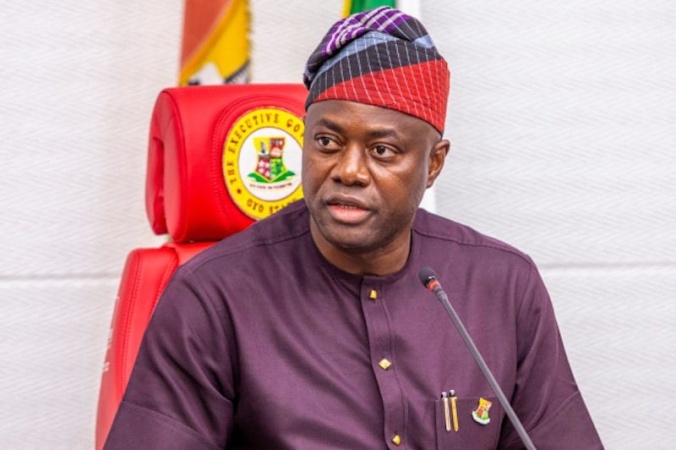
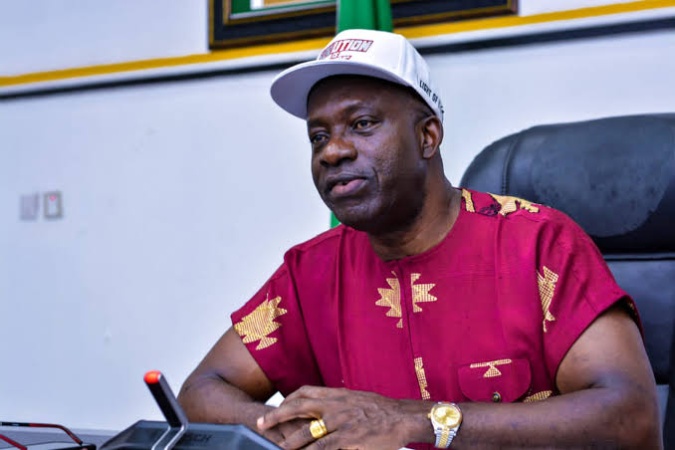
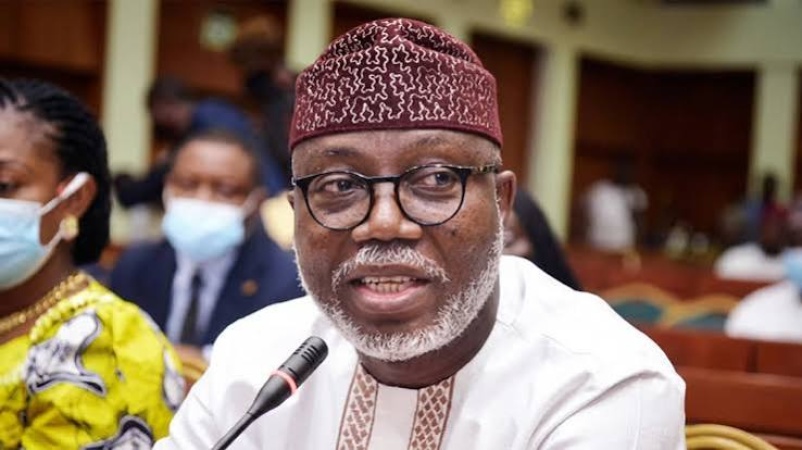
Oyo State Governor, Makinde
Oyo State Governor, Seyi Makinde, says the newly signed Electoral Act by President Bola Tinubu is not available to the public.
“I haven’t seen it. That is the reality,” Makinde said on Friday in Ikenne-Remo, Ogun State, during the Obafemi Awolowo Lecture 2026.
The well-attended lecture titled “Politics as Future-Making: Awolowo and Leadership as Theory of Action” marked the 117th posthumous birthday of the late sage, Obafemi Awolowo.
Addressing the gathering, Makinde expressed concern that the new Electoral Act that will guide the conduct of the next election is not yet available to the public.
Daily Trust reports that the Act has been greeted with controversy as opposition figures in the country rejected the legal framework.
Opposition leaders, including former Vice President Atiku Abubakar, recently rejected the 2026 Electoral Act passed by the National Assembly and signed into law by President Tinubu.
At a press briefing in Abuja themed “Urgent Call to Save Nigeria’s Democracy,” opposition leaders — among them former Senate President David Mark, former Osun State governor Rauf Aregbesola, former Rivers State governor Rotimi Amaechi, and former Anambra State governor Peter Obi — described portions of the amended law as “anti-democratic” and called for fresh amendments.
Speaking at the Awo Lecture, Makinde said as a governor he has not seen a copy of the new Electoral Act.
“As a governor of a state in Nigeria, I’ve been asking, please give me the Electoral Act signed by Mr. President so that we will know which hymn book we’re singing from.
“I haven’t seen it. That is the reality. I haven’t seen it,” he told the gathering.
Facing the senator representing Ogun East, Otunba Gbenga Daniel, who was seated at the event, the governor said: “Well, there’s a senator of the Federal Republic here. If you have it, please, I would like to have it.”
However, Daniel responded to Makinde’s position while answering questions from newsmen, insisting that the new Act has been gazetted and is available to the public.
“I can tell you, as a distinguished senator of the Federal Republic, that the Electoral Act has been gazetted.
“Even if I stand here, on my phone I can give you the gazette of that Electoral Act.
“I think that the governor didn’t have, maybe, updated information. And I’ve promised him that I was going to send it to him,” Daniel said.
Earlier, Makinde eulogised Awolowo’s contributions to the educational, socio-economic, and political development of Nigeria, especially the South-West.
The governor also applauded the sage for standing for a multi-party system.
He called on politicians to emulate Awolowo by always thinking about the next generation and not the next election.
“Yes, I agree, true federalism is the way to go, but you need elite consensus. Yes, we all need to come together. We should stop thinking about the next election.
“Let us think about the next generation,” Makinde said.
On his part, Daniel noted that Awolowo, during his lifetime, was convinced that political freedom without structural clarity would collapse under the weight of its own contradictions.
“For him, the future could not be organised if it wasn’t first imagined with a great sense of responsibility. He understood quite early that leadership must think in decades, not just in election cycles,” the former governor said.
He added: “So, as we reflect today, I urge our younger ones and emerging leaders to engage Awolowo not as an icon beyond critique, but as a thinker in conversation with us.
“Read him. Argue with him. Stretch his ideas. Every generation must reinterpret its inheritance within the context of its peculiar experiences, while retaining and guarding its enduring values.”
(Daily Trust)