ADAD
ADAD
Updating your news feed...
NEWS EXPRESS is Nigeria’s leading online newspaper. Published by Africa’s international award-winning journalist, Mr. Isaac Umunna, NEWS EXPRESS is Nigeria’s first truly professional online daily newspaper. It is published from Lagos, Nigeria’s economic and media hub, and has a provision for occasional special print editions. Thanks to our vast network of sources and dedicated team of professional journalists and contributors spread across Nigeria and overseas, NEWS EXPRESS has become synonymous with newsbreaks and exclusive stories from around the world.











Loading banners
Loading banners...

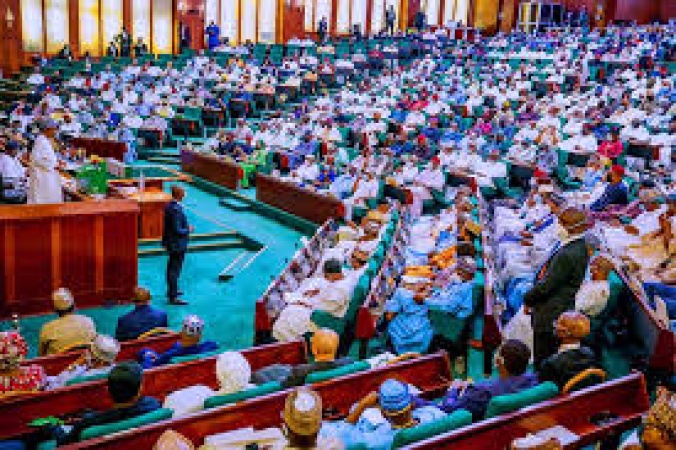
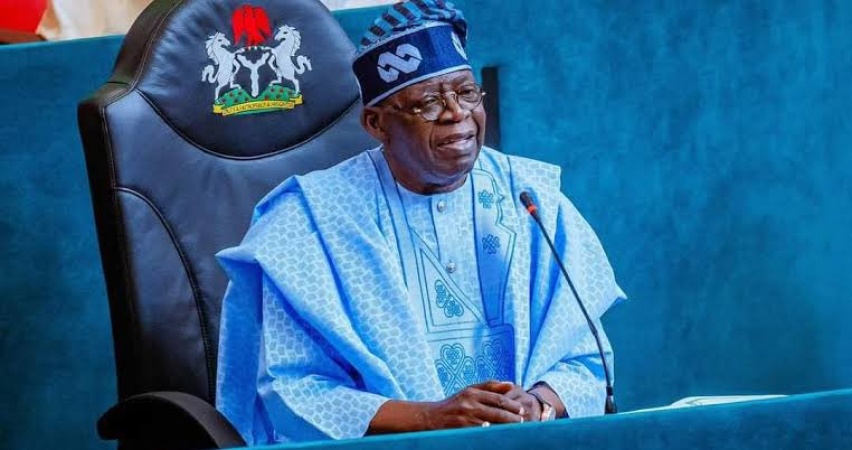
House of Reps during plenary
The House of Representatives Ad-hoc Committee investigating the Pre-Shipment Inspection of Exports and the Non-Remittance of Crude Oil Proceeds has queried the Nigeria Customs Service (NCS) and the Nigerian Ports Authority (NPA) over their roles in pre-shipment inspection.
The panel, which also queried the Central Bank of Nigeria (CBN) and the Nigerian Association of Chambers of Commerce, Industry, Mines and Agriculture (NACCIMA), directed all the affected agencies to submit all relevant documents, in respect to their role in the pre-shipment of oil and non-oil goods and commodities at export terminals.
Chairman of the Committee, Seyi Sowunmi, gave the directive after representatives of the agencies made presentation to the panel at its resumed hearing yesterday.
The Comptroller General of Customs (CGC), Bashir Adewale, represented by the Deputy Comptroller General (DCG) Caroline Diagwan, told the lawmakers that the role of the service in the pre-shipment is to ensure that documents presented is in sync with what is being exported.
“Our role as regards export of food is to get what we call NXP and then certificate of inspection, as well as export permit. We now make sure that those documents tally with what has been exported at the point of export. So, we do examinations as well as physicalization of food.
“That is the role we play. We make sure that what is being exported tallies with the documents sent to us by the CBN, that’s the NXP, and then the export permit from NUPRC. We are there at the point of inspection. After inspection, that’s when they do the exportation. Customs are there with other government agencies.
“We don’t collect export duties, actually. And we don’t really know how much money they are paying to the government, because that’s not within our purview. So, as long as the documents they issue to us clearly tallies with what is there physically, they are good to go.
“The export takes place at export terminals under oil and gas command in Port Harcourt, as well as other commands in Edo and Delta. So, the controllers of these commands send monthly returns to the headquarters on all the activities, which include all exports and imports.”
The CBN Governor, Yemi Cardoso, who spoke through a director in the apex bank, Musa Nakurji, said the bank acts as a rallying point for all the other agencies involved in pre-shipment.
“Regarding the issue of pre-shipment inspection, by the Act of 1992, the Central Bank is actually saddled with the responsibility of the administrative side of it. So, let me first of all start by making a bit of a correction. If you look at the pre-inspection act, the Central Bank does not appoint the pre-inspection agent.
“Then, the second thing again, in terms of the form NXP, we don’t send anything manually to Customs. The process is automated and Customs latch on to that to get their report.
“So, in the Central Bank, we have the trade monetary system. This happens on the trade monetary system and the SVP. So, from the bank, the commercial bank of the exporter, they opened the form NXP.
“And now, there is what is being referred to as a clean certificate of inspection. So anything that is going out, the pre-inspection agent will have to inspect that in terms of the quantity, the quality and the value. If they do that and they’re satisfied with what they have, they now issue a CCI,” Cardoso said.
Meanwhile, the Committee has threatened to issue an arrest warrant on the Managing Director of the Bank of Industry (BOI), Dr Olasupo Olusi, following his failure to appear before it to account for performance of funds in the bank.
The committee, which is investigating the operations, funding sources and performance of Development Finance Institutions (DFIs) at a public hearing yesterday in Abuja, threatened to invoke its constitutional powers to compel the managing director’s appearance.
Chairman of the Committee, Mark Obetta (LP-Enugu), said the hearing was to scrutinise programmes, funding frameworks, intervention strategies and performance records of relevant agencies from 2018 till date.
According to him, the exercise forms part of the broader oversight responsibility to assess how development finance interventions have been implemented and to determine their measurable impacts on key sectors of the Nigerian economy.
He, however, frowned at the absence of BIO managing director at the hearing, saying that disrespect for the parliament would not be tolerated.
Obetta said that the bank did not only fail to appear, it also failed to submit the required documentation to the committee despite multiple communications and formal invitations.
“It is the resolve of this committee to issue a firm directive compelling the bank to urgently submit the requested documents and appear at the next hearing.
“Continued non-compliance could result in the issuance of a warrant of arrest to enforce attendance, in line with the constitutional oversight powers of the House of Representatives,” he said.
The institutions represented at the hearing included National Agricultural Development Fund (NADF), Nigerian Credit Guarantee Company (NCGC) and Nigeria Incentive-Based Risk Sharing System for Agricultural Lending (NIRSAL).
The lawmakers requested for comprehensive details of loans and interventions extended to farmers affected by the ginger blight disease outbreak, which significantly disrupted ginger production in parts of the country.
The panel also asked NCGC to provide a more detailed documentation outlining its statutory mandate, governance structure, operational model, funding sources and emerging programmes.
Similarly, the lawmakers directed NIRSAL to make fresh and more detailed submissions covering its interventions within the period under review, including beneficiaries’ data, funding volumes and performance metrics. (The Sun)