 ADAD
ADAD
Updating your news feed...
NEWS EXPRESS is Nigeria’s leading online newspaper. Published by Africa’s international award-winning journalist, Mr. Isaac Umunna, NEWS EXPRESS is Nigeria’s first truly professional online daily newspaper. It is published from Lagos, Nigeria’s economic and media hub, and has a provision for occasional special print editions. Thanks to our vast network of sources and dedicated team of professional journalists and contributors spread across Nigeria and overseas, NEWS EXPRESS has become synonymous with newsbreaks and exclusive stories from around the world.











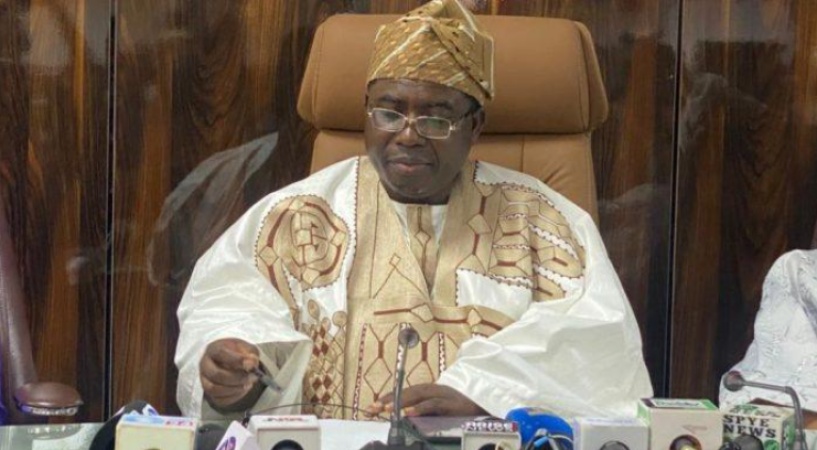
The Chairman of the Independent National Electoral Commission (INEC), Professor Joash Amupitan, has said that the turnout of the just concluded Federal Capital Territory (FCT) Area Council elections was distressingly low.
He noted that voter apathy was a systemic threat to participatory democracy in the country.
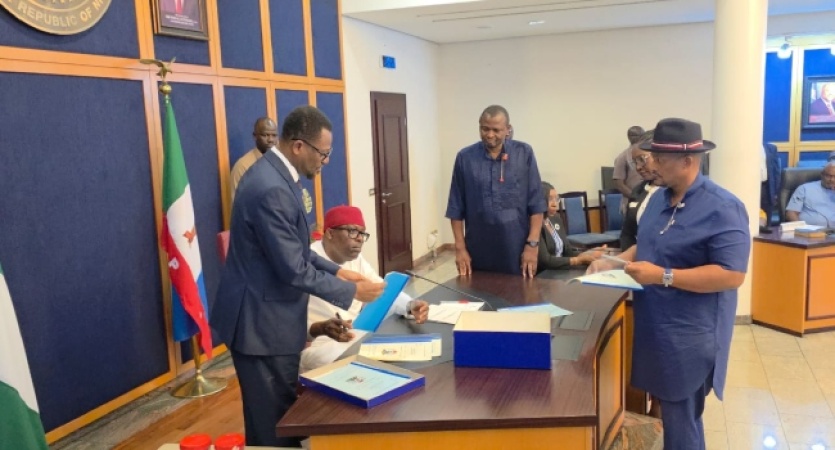
Amupitan gave the verdict during a meeting of the National Peace Committee (NPC) with election stakeholders in Abuja.
Amupitan, a Senior Advocate of Nigeria, explained that although absolute turnout rose from roughly 148,000 in 2022 to over 239,000 this year, the percentage remained distressingly low.
He noted that the meeting was particularly timely, coming immediately after the FCT Area Council elections held on Saturday, February 21.
He also said that while the exercise was relatively peaceful, it has provided INEC with fresh data and critical lessons that must inform its trajectory toward 2027.
He commended INEC officials in the FCT for their resilience and determination, adding that INEC noticed some challenges which are being addressed.
“By 2:00pm on Sunday, over 93 percent of polling unit results were already live on the INEC Result Viewing (IReV) Portal. However, we must confront a sobering reality: although absolute turnout rose from roughly 148,000 in 2022 to over 239,000 this year, the percentage remains distressingly low. Voter apathy is a systemic threat to participatory democracy, and it is a challenge that INEC cannot solve in isolation,” he said.
The INEC chairman further said INEC noted the recurring voter migration narrative in the country.
“Let me clarify for the record: no voter was migrated in 2026. What the public observed was the effect of our 2022 initiative which created over 56,000 additional polling units to decongest the system. In the FCT, we deployed split polling units for locations with over 1,250 voters. These are not new registration centres in different communities; they are merely additional voting points a few meters apart within the same premises to improve the voter experience. The fact that some citizens still struggled to locate their points, despite our SMS and email blasts, proves that noble intentions are not enough. We must find more aggressive, grassroots-oriented ways to communicate these technical adjustments,” he also said.
He further said the commission had released a revised timetable and schedule of activities for the 2027 general election pursuant to the new Electoral Act that was assented to on February 18, 2026.
He explained that the development was necessitated by the enactment of the Electoral Act, 2026, which has recalibrated the statutory windows.
“Presidential and National Assembly elections are now set for Saturday, January 16, 2027, while Governorship and State Assembly elections follow on Saturday, February 6, 2027. Furthermore, the Osun State Governorship election has been adjusted to August 15, 2026. With party primaries now scheduled to run from April 23 to May 30, the political clock is ticking faster than many realise. We listened to some complaints by political parties. The time frame in the new Act necessitated the adjustment made,” he stated.
He further said that also of concern is the quality of party primaries. “As we move towards the window for party primaries for the 2027 general election, it is important to stress the need for a level playing field for all aspirants. The quality of party primaries has a bearing on the secondary election conducted by INEC. If unpopular candidates are forced on the people, then there is bound to be voter apathy.
“Our experience in the FCT also highlighted the logistics monster that continues to haunt our elections. While all units were open by 10am, only 45 percent met the 8:30am target. We cannot afford this in 2027,” he added.
On the political front, Amupitan said the Peace Committee’s role in the upcoming Osun and Ekiti off-cycle elections is pivotal.
“We saw a disturbing trend in the FCT, where despite our warnings, party agents were apprehended with cash allegedly meant for vote-buying. This poisoning of the electoral will is done by party members, not strangers. We urge the NPC to engage party leadership more forcefully. A peace accord is a covenant, not a mere photo opportunity. It must translate into a total rejection of vote-buying and thuggery on the field.
“As the 2027 electioneering season takes off, we look to our security agencies for a paradigm shift. Administrative readiness is futile without a secure environment. We need strict enforcement of the law against thuggery and a professional, non-partisan approach to security at the polling units.
“The 2027 elections will be a test of our collective resolve. INEC is ready to play its part, but we require the National Peace Committee to continue its role as the moral compass of our electoral process,” he said.
Earlier, the Chairman of the NPC, General Abdusalami Abubakar, said the stability of the nation’s democracy depended not only on strong institutions, but also on the collective commitment of stakeholders to act with restraint, responsibility and foresight.
Abubakar, who was represented by the Convener of the NPC, Most Revd Matthew Hassan Kukah, also said recent electoral experiences have highlighted both progress made and challenges that remained.
“Issues of political tension, misinformation and security concerns continue to pose risks to electoral integrity and public confidence.
“These realities reinforce the urgent need for early engagement, coordinated action and sustained collaboration among all stakeholders.
“Since 2015, the National Peace Committee has worked to provide a neutral and trusted platform for dialogue, mediation and confidence-building. The Peace Accord has served as an important instrument for promoting accountability, reducing tensions and encouraging peaceful conduct. The Annotated Peace Accord, which will be presented today, further strengthens this framework by providing clarity, context and guidance to support compliance and preventive engagement.
“This meeting provides an opportunity to reflect collectively on the current electoral environment, to hear directly from key institutions and to identify practical areas where the Committee can provide strategic support. Your insights, institutional perspectives and continued cooperation are essential to preventing conflict and ensuring peaceful and credible elections.
“The responsibility of safeguarding our democracy rests with all of us. Through collaboration, mutual trust and sustained engagement, we can strengthen public confidence and ensure that future elections reflect the will of the Nigerian people. The National Peace Committee remains fully committed to working with all stakeholders in advancing peace, stability and democratic consolidation in Nigeria,” Abubakar said. (The Sun)




