ADAD
ADAD
Updating your news feed...
NEWS EXPRESS is Nigeria’s leading online newspaper. Published by Africa’s international award-winning journalist, Mr. Isaac Umunna, NEWS EXPRESS is Nigeria’s first truly professional online daily newspaper. It is published from Lagos, Nigeria’s economic and media hub, and has a provision for occasional special print editions. Thanks to our vast network of sources and dedicated team of professional journalists and contributors spread across Nigeria and overseas, NEWS EXPRESS has become synonymous with newsbreaks and exclusive stories from around the world.





Loading banners
Loading banners...

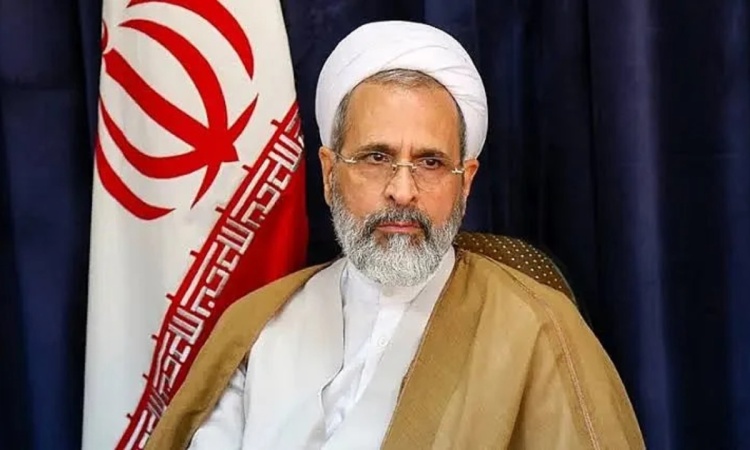
Irans acting Supreme Leader, Ayatollah Alireza Arafi
Following the demise of Ayatollah Ali Khamenei in a joint attack by the U.S. and Israel on Iran,the country has announced the appointment of Ayatollah Alireza Arafi as its interim Supreme Leader.
Tribune Online reports that the 67-year-old was named on Saturday as one of a three-member leadership council tasked with temporarily overseeing the country’s highest office.
The interim arrangement, formed in Tehran, brings together Arafi, President Masoud Pezeshkian and Chief Justice Gholam-Hossein Mohseni-Eje’i, with powers split among them until the Assembly of Experts selects a permanent Supreme Leader.
While the council shares authority, Arafi is the cleric many are watching closely. Here are few things to know about him:
Background and Education
Born in 1959 in Meybod, a small town in Iran’s Yazd province, Arafi grew up in a religious household.
His father was reportedly close to Ayatollah Ruhollah Khomeini, the founder of the Islamic Republic.
At 11, Arafi was sent to Qom, the country’s leading center of Shia scholarship, where he underwent formal religious training.
By the age of 33, he had earned the trust of the highest levels of the establishment.
Late Ali Khamenei appointed him as a Friday prayer leader, a role often reserved for clerics considered loyal to the core of the system.
His Rise Within Iran’s Power Structure
Over the years, Arafi built influence across key institutions. He served as head of Iran’s seminary system, overseeing religious education nationwide.
He was also a member of the Guardian Council, the powerful body that vets legislation and screens candidates for public office.
At the same time, he sat on the Assembly of Experts, the clerical body responsible for appointing and supervising the Supreme Leader.
This means the man now temporarily exercising the authority of the Supreme Leader was already part of the body that chooses who holds the role.
Arafi however is widely seen as a loyal figure within the Islamic Republic’s structure.
Reuters described him as a “completely trusted loyalist” of the regime, and analysts say the Islamic Revolutionary Guard Corps (IRGC) views him as a safe pair of hands during a sensitive transition.
Unlike some clerics of his generation, Arafi is known for engaging beyond Iran’s borders.
The new Iran’s interim Supreme Leader speaks fluent English and Arabic and has been active in interfaith outreach. In 2022, he met Pope Francis at the Vatican, highlighting his role in religious diplomacy.
He has also publicly advocated for the use of artificial intelligence to expand Iran’s global messaging, arguing that modern tools can strengthen the country’s cultural and ideological outreach.
What Happens Next?
For years, some political observers had placed Arafi on informal shortlists as a potential successor to Khamenei.
His long-standing roles in the seminary system, the Guardian Council and the Assembly of Experts gave him both clerical and institutional credibility.
Now, as part of the temporary leadership council alongside Pezeshkian and Mohseni-Eje’i, he is effectively filling the role, at least in part, while the Assembly of Experts deliberates on a permanent appointment.
However, it remains unclear whether the Assembly will formalise Arafi’s position or choose another figure to lead the Islamic Republic. (Nigerian Tribune)