 ADAD
ADAD
Updating your news feed...
NEWS EXPRESS is Nigeria’s leading online newspaper. Published by Africa’s international award-winning journalist, Mr. Isaac Umunna, NEWS EXPRESS is Nigeria’s first truly professional online daily newspaper. It is published from Lagos, Nigeria’s economic and media hub, and has a provision for occasional special print editions. Thanks to our vast network of sources and dedicated team of professional journalists and contributors spread across Nigeria and overseas, NEWS EXPRESS has become synonymous with newsbreaks and exclusive stories from around the world.























Loading banners
Loading banners...

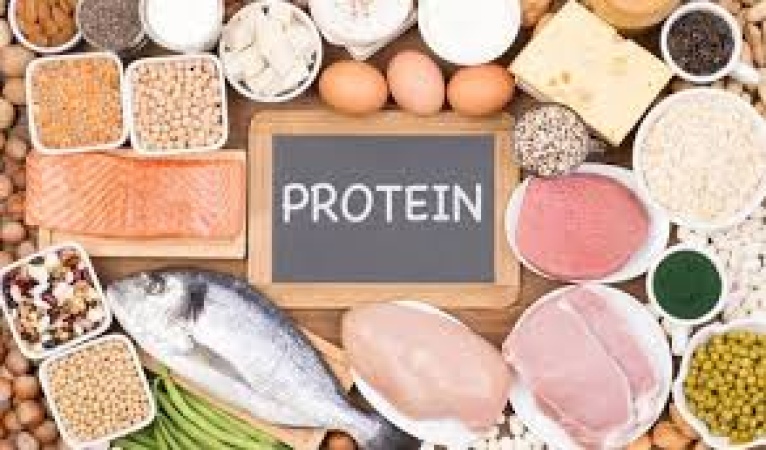
Nigeria risks protein deficit as population surges
Nigeria may be heading towards a protein deficit as rapid population growth, climate stress and rising costs of animal protein strain the country’s food system, vice-chancellors have warned.
The concern was raised at a two-day national summit on “Building Nigeria’s Sustainable Protein Future: Ecosystem Alignment and Next-Gen Food Innovation“, held at the Raw Materials Research and Development Council (RMRDC) in Abuja.
Stakeholders at the summit explored innovative solutions to ensure sustainable protein supply, with emphasis on alternative and technology-driven approaches.
Speaking, Vice-Chancellor of Modibbo Adama University, Yola, Prof. Ibrahim Umar, stated that with Nigeria having a population of about 220 million, over 60 percent of whom are under 24 years old, is putting tremendous pressure on the country’s food system.
The VC represented by Prof. Kalep Filli noted that the average daily protein intake among Nigerians is well below the Food and Agriculture Organization and World Health Organization recommended 64 grams, adding the high cost of conventional animal proteins as a major barrier to access for the majority of the population.
He explained that the high cost of producing conventional protein sources, such as poultry and beef, combined with climate-related challenges and security concerns in rural areas where most food is produced, is creating a significant gap between supply and demand.
“While alternative protein has gained popularity in other parts of the world for its potential to address the aforementioned challenges, weak capacity for research and innovation is still largely limited in Nigeria and sub–Saharan Africa, despite its benefits in terms of food security, climate resilience and economic opportunities”, he said.
According to him, without adopting innovative and cost-effective alternatives, Nigeria may struggle to meet its population’s nutritional needs in the coming decades.
The don urged the government to explore alternative protein sources to address the growing gap between supply and demand.
He stated that plant-based proteins, lab-grown cultured meat, microalgae, and fungi-based proteins as practical and environmentally friendly options that could complement conventional animal proteins.
Umar argued that these alternatives not only reduce pressure on traditional livestock but also offer the potential to enhance food security and nutritional access for Nigeria’s rapidly growing population.
The don recommended the adoption of modern technologies such as biotechnology and extrusion processes in the production of protein-rich foods.
Biotechnology, he noted, allows for cleaner and more efficient methods of producing protein by manipulating cells, while extrusion technology can transform plant proteins into fibrous, meat-like textures, improving digestibility and functionality.
He stressed that integrating these technologies into Nigeria’s food system is crucial to maintaining sustainability, protecting biodiversity, and aligning with global climate commitments, especially in light of the high costs and environmental impact of conventional animal agriculture.
On his part, Vice-Chancellor of Adamawa State University, Mubi, Augustine Clement,
stressed that rising temperatures, droughts, and drying pastures are affecting livestock nutrition, while unpredictable crop yields further limit protein availability.
“If you look at it, it is not only Nigeria that is facing a protein crisis, even in Africa, there is inadequate protein supply for our population. And some of the reasons are also attributed to the issue of climate change.
“Look at the high cost of producing conventional protein, you can imagine what it cost to raise a poultry to produce eggs. So these are factors that are causing the shortage in protein supply.”
The VC called for greater utilisation of alternative protein sources that are affordable, environmentally friendly, and require minimal space, such as plant-based proteins, lab-grown cultured meat, microalgae, and fungi-based proteins.
He stated that embracing these technologies would relieve pressure on traditional protein sources and help address global challenges like climate change and food insecurity. (The Guardian)



