ADAD
ADADUpdating your news feed...

NEWS EXPRESS is Nigeria’s leading online newspaper. Published by Africa’s international award-winning journalist, Mr. Isaac Umunna, NEWS EXPRESS is Nigeria’s first truly professional online daily newspaper. It is published from Lagos, Nigeria’s economic and media hub, and has a provision for occasional special print editions. Thanks to our vast network of sources and dedicated team of professional journalists and contributors spread across Nigeria and overseas, NEWS EXPRESS has become synonymous with newsbreaks and exclusive stories from around the world.



Loading banners
Loading banners...

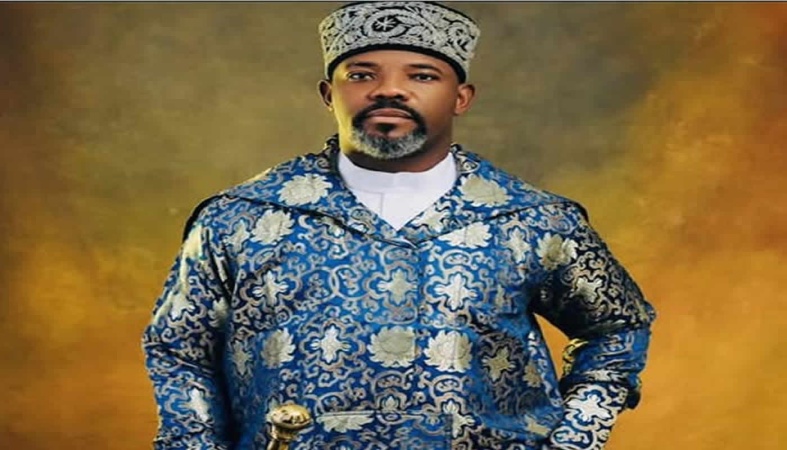
Comedian Okey Bakassi
Actor, comedian and traditional ruler of the Umuihuocha Autonomous Community in Imo State, Okechukwu Onyegbule, popularly known as Okey Bakassi, speaks to NAOMI CHIMA about how he is balancing his career with his role as a traditional ruler
You have spent over three decades in the comedy industry. At what point did you realise that comedy was no longer a hobby, but your life’s calling?
Comedy is just one aspect of what I do. I prefer to describe myself as an entertainer. My work is a blend of acting, stand-up comedy and public speaking; all wrapped into one package.
It began as a hobby during my university days. But when I moved to Lagos for my youth service, I had to confront a defining question: what next? Do I get a paid job or pursue my interest in entertainment? Initially, I wanted to do it part-time because it came naturally to me and brought me joy.
However, I soon realized that entertainment is not something you dabble in. The industry wasn’t as structured as it is today. Roles weren’t waiting for you; you had to chase them relentlessly. It demanded the same level of commitment and energy as any full-time profession.
Toward the end of my service year, after deep reflection, I decided to pursue entertainment fully before considering paid employment. I was driven purely by passion. It gave me happiness and felt effortless. I told myself that if I could also make a living from it, then this was what I was meant to do.
Growing up, did you ever envision that you were a funny person destined for entertainment?
Not at all. I grew up in a close-knit family where we gathered in the living room to gist. My mother was an excellent storyteller. My father, though a military man, had a cheerful side when he wanted to. From a young age, we were encouraged to express ourselves freely, speak our minds and joke around. That environment shaped me.
As a child, I actually wanted to be a military doctor. I eventually studied engineering and somehow ended up in show business. Life has an interesting way of unfolding. At some point, I simply looked at life and said, “Let me do this first.”
Growing up as the eldest in a disciplined military home, how did that shape your humour and work ethic?
Life in the barracks influenced me tremendously. Any “barracks pikin” will tell you it’s a mini Nigeria; a melting pot of tribes, languages and cultures. You grow up with friends from everywhere. That exposure gives you stories, accents, behavioural patterns and perspectives you won’t easily find elsewhere.
Everything was around me — drama, diversity and humour. It all became material without me even realising it.
You’ve spoken about arriving in Lagos with nothing and even experiencing homelessness. What kept you going?
When I left Port Harcourt (Rivers State capital), my family was going through financial difficulties. I’m the first of five children, and I had never even been to Lagos before youth service.
What kept me going was understanding how tough things were back home. I had to choose my own version of “tough”: stay home with a false sense of security while still struggling, or face the obvious hardship in Lagos and fight to survive. I chose to survive in Lagos rather than add to my parents’ burden.
The comedy show, “Night of a Thousand Laughs”, was pivotal in your career. What stands out about its birth?
I was instrumental in creating Night of a Thousand Laughs. When I arrived in Lagos, I realised there was no defined comedy industry. There were travelling theatre groups and actors who did comedy within drama, but no structured platform for stand-up comedy.
Seeing comedians in Lagos who were as funny — or even funnier — than my friends in Port Harcourt made me realise talent was scattered across the country.
The question became: how do we bring them together?
At the time, I worked as Opa Williams’ production manager, alongside Reginald Ebere. We conceptualised a nationwide comedy reality platform to discover talent and bring them to Lagos to compete. Opa Williams embraced the idea. Reginald and I drafted the original concept, and it ultimately contributed significantly to the growth of stand-up comedy in Nigeria.
After acting opportunities slowed down, you reinvented yourself through stand-up. How crucial was that reinvention?
Reinvention was everything. Financial experts talk about multiple streams of income, but at that time, everyone focused on acting because stand-up wasn’t yet an industry.
After my first movie, I experienced what I’d call deliberate isolation from the acting space, and I didn’t understand why. It was a wake-up call. If one door closes, another must open.
I decided to take stand-up seriously, refine my craft and make it versatile. Eventually, I began earning more from stand-up than acting.
Which platform stretches your creativity the most?
Stand-up comedy. Acting and music are collaborative efforts. Radio is unique because you speak to people who can’t see you. But stand-up is just you, the audience and a microphone. There’s no safety net.
It requires presence of mind, sharp mental alertness and the ability to deliver a compelling and funny story in real time. Every audience is different. Their mood changes everything.
It’s intense. In my opinion, it’s the toughest art form.
You were recently crowned the Okwe II of Umuihuocha Obohia. How do you see yourself evolving with this role?
Life evolves in stages. You begin as a bachelor finding direction, then become a husband, a father, and now, in my case, a community leader.
When a community asks you to represent them, it means they see something in you. I see this role as an opportunity, not retirement. We’ve wrongly framed traditional leadership as something for people who are tired. It shouldn’t be.
While you’re strong and connected, you can leverage those connections to uplift vulnerable people and put your community on the map.
When I first “Googled” Umuihuocha, nothing came up. It felt like we didn’t exist. Today, there’s presence and visibility. By the time of the official coronation, the structures will be firmly in place.
How will you balance comedy with the restraints of royalty?
Every stage of life comes with restraints. Marriage brings restraint. Fatherhood brings more. Public office demands another level of responsibility.
I have adapted through each stage. This is simply another phase. Change is constant. There’s nothing frightening about it.
Having spoken about the dangers of intolerance in leadership, how do you assess Nigeria’s present political climate, and what advice would you give both leaders and citizens?
Power reveals character. Give someone power or money, and you’ll see who they truly are.
Leadership should teach humility. History shows that many rise and fade quickly. The people who celebrate you today can withdraw their support tomorrow.
If you’re in leadership, your security matters, but the welfare of the people matters more. Don’t assume a God-like status. You’re not God.
Why do you think your people chose you to lead them?
Years in the public eye without scandal speak volumes. I have carried myself responsibly. I hold a degree in Agricultural Engineering, a diploma in Public Relations, and I’m committed to self-development.
I turn 57 this year. Life has prepared me. I have maintained a stable family life and remained grounded. People recognise consistency.
What role should government policies play in empowering entertainment?
Entertainment is one of the largest employers of youth. One creative person can support hundreds.
Government must create an enabling environment — stable power supply, security and grants for creatives. Without electricity, content cannot be consumed. Without security, creators can’t travel or research safely.
Partnerships can boost tourism, foreign exchange and cultural exports.
You have been married for over 25 years. What’s the secret of your enduring union?
Intentionality. I approached my career with focus and did the same with marriage. My wife is my childhood sweetheart. Early years were turbulent, but grace and intentionality built synergy.
Poverty puts immense strain on families, so working hard to provide is crucial. Respect, faith and shared vision matter.
As a husband, you must paint a future your partner believes in. Consistent progress keeps people together.
As a father, what are you intentional about passing down to your children?
Family values. Without values, a family collapses. We raise our children with the fear of God and a strong sense of identity.
They must understand that their achievements reflect on generations before and after them.
My wife and I operate as a team. The children see that unity and understand its seriousness.
You’ve spoken about polygamy. Would you consider it as a traditional ruler?
I believe polygamy is a valid African system of marriage. Every system has challenges; monogamy included. Divorce rates prove that.
Many modern arrangements are already functionally polygamous; we just don’t label them as such.
The key is responsibility. Marriage systems should protect families and children. The conversation should be honest, not emotional.
Has fatherhood changed you?
Completely. “Daddy” is the highest title a man can hold.
Fatherhood makes you accountable. A traditional African father is wired to protect and provide, sometimes at the expense of emotional closeness. That’s something men must be careful about.
Can you compare parenting across generations?
Technology has changed everything. I won’t say this generation is worse, because every generation says that about the next.
But today’s children face higher exposure to trauma and digital overload. Less outdoor interaction reduces empathy and connection.
That worries me. The world is different, and we must adapt wisely.
Beyond entertainment and a royal title, what legacy matters most to you?
My greatest legacy is the example I set for my children. My primary responsibility before God is to raise people who will become blessings to society, not curses. Every terrorist or criminal out there is someone’s child who was poorly raised and eventually became a scourge to society.
You cannot fail at home as a father and claim success as a leader. Charity begins at home. If you cannot manage your household, how can you lead a community?
At the end of the day, my personal mantra is the pursuit of happiness. I want to be remembered as a man who came, who saw and who was happy.
As a veteran, what is your advice on competition and rivalry in the entertainment industry?
Competition and rivalry are natural in any industry. The important thing is to keep it healthy. Someone else’s failure should not be the foundation of your success.
Rivalry can be intense, but there is no need to harm or sabotage anyone to move forward. Focus on improving your craft. Let your growth speak for you.
You recently served as master of ceremonies at an event in Imo State. How do you respond to those who question a traditional ruler continuing to work as an MC?
Nigerians are still learning to appreciate the dignity of labour. We tend to rank professions unnecessarily; looking down on some and placing others on a pedestal.
In other societies, janitors and fast-food workers are respected because they are earning an honest living and contributing to society. Anyone who works legitimately to serve humanity deserves respect and can aspire to any position.
That mindset is something I hope to challenge. Becoming a king does not mean retiring from meaningful work. As long as I can balance both roles effectively, I will continue. The only time I would reconsider is if one responsibility becomes so demanding that I need to scale back.
Besides, kings are public speakers, and that’s what I do professionally. So I’m well within my lane.
What’s your favourite food and sport?
Football, and I still play to this day. As for food, I enjoy swallow with any good soup.
How do you relax?
I relax by watching sports or movies and by reading. I set a goal to read at least three books a year. (PUNCH)