 ADAD
ADAD
Updating your news feed...
NEWS EXPRESS is Nigeria’s leading online newspaper. Published by Africa’s international award-winning journalist, Mr. Isaac Umunna, NEWS EXPRESS is Nigeria’s first truly professional online daily newspaper. It is published from Lagos, Nigeria’s economic and media hub, and has a provision for occasional special print editions. Thanks to our vast network of sources and dedicated team of professional journalists and contributors spread across Nigeria and overseas, NEWS EXPRESS has become synonymous with newsbreaks and exclusive stories from around the world.











.webp)



.webp)







Loading banners
Loading banners...

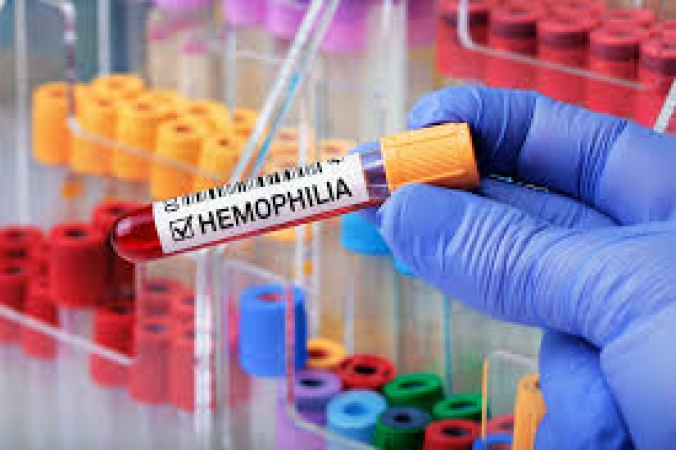
Illustrative image of blood testing amid concerns over haemophilia under-diagnosis in Nigeria
By FOLASADE AKPAN
Haematology experts have identified under-diagnosis and poor recognition of haemophilia as major challenges affecting management of the disorder in Nigeria.
They spoke on Wednesday in Abuja at the Nigeria Inherited Blood Disorders Leadership Forum.
The forum, with the theme ‘Strengthening Blood Disorder Care through Collaboration, Partnership and Sustainable Investment’, seeks concrete action to improve care for inherited blood disorders nationwide.
It was organised by the Nigeria Society for Haematology and Blood Transfusion, with support from the Novo Nordisk Haemophilia and Haemoglobinopathies Foundation and Novo Nordisk Foundation.
Haemophilia is an inherited bleeding disorder in which blood fails to clot properly due to clotting factor deficiency, causing prolonged bleeding after injuries, surgery or spontaneously.
Prof. Sulaimon Akanmu said that with Nigeria’s population exceeding 200 million, about 18,000 people were expected to be living with haemophilia.
Akanmu is of the Department of Haematology and Blood Transfusion, College of Medicine, University of Lagos.
He, however, noted that records showed only 941 identified patients, describing the figure as “grossly below the expected number”.
Prof. Titilope Adeyemo, Director, Lagos University Teaching Hospital Haemophilia Treatment Centre, said haemophilia’s impact extended beyond patients to families and communities.
She said only six per cent of estimated cases were diagnosed in Nigeria, compared with 81 per cent in developed countries.
Adeyemo said diagnostic capacity was limited, with few facilities offering factor assays and confirmatory tests, mostly in urban centres.
She added that diagnosis was costly and largely out-of-pocket, while clotting factor concentrates were unaffordable for minimum wage earners.
“The irregular supply of donated concentrates leaves many patients without consistent treatment,” she said.
Chairman of the forum, Prof. Wuraola Shokunbi, urged the Federal Government to commit dedicated funding to haemophilia care.
“Many countries have specific budgets for managing the disorder,” she said.
Shokunbi advocated home therapy and training for patients and caregivers to administer infusions safely.
She urged younger professionals to sustain advocacy, saying Nigeria still had “a long way to go”.
Dr Alayo Sopekan said haemophilia had been incorporated into the national non-communicable diseases policy and strategic action plan.
The News Agency of Nigeria (NAN) reports that Sopekan is the Director and National Coordinator, Non-Communicable Diseases (NCDs), Ministry of Health and Social Welfare,
“A national guideline has been developed to help healthcare workers identify and refer cases appropriately,” he said.
He said the guideline would be finalised in 2026, after which nationwide capacity building for primary healthcare workers would begin.
Sopekan said efforts were underway to ensure availability of factor concentrates and integrate treatment into the NHIA benefits package.
“Nigeria must reduce dependence on donated concentrates, as foreign support may not last indefinitely,” he warned.
He added that awareness remained low among the public and health workers, though community sensitisation had commenced.
On data, Sopekan said Nigeria lacked a national haemophilia registry.
“Existing figures reflect only cases seen by clinicians and do not represent the true national burden,” he said.
He said haemophilia would be included in the next national health survey to generate accurate data.
Sopekan advised parents to watch for prolonged umbilical bleeding, persistent bruising, or joint swelling in children.
He urged parents to report such symptoms promptly at the nearest primary healthcare centre. (NAN)



