ADAD
ADADUpdating your news feed...

NEWS EXPRESS is Nigeria’s leading online newspaper. Published by Africa’s international award-winning journalist, Mr. Isaac Umunna, NEWS EXPRESS is Nigeria’s first truly professional online daily newspaper. It is published from Lagos, Nigeria’s economic and media hub, and has a provision for occasional special print editions. Thanks to our vast network of sources and dedicated team of professional journalists and contributors spread across Nigeria and overseas, NEWS EXPRESS has become synonymous with newsbreaks and exclusive stories from around the world.





.webp)














Loading banners
Loading banners...

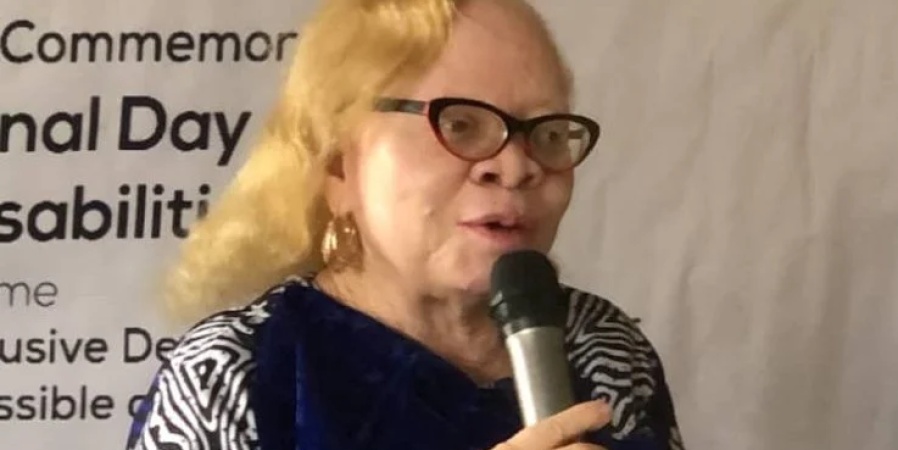
AAN National President, Dr Bisi Bamishe
By OLUWAFUNKE ISHOLA
The Albinism Association of Nigeria (AAN) has appealed to the Federal and State Governments to institutionalise the provision of free UV-protective umbrellas, sunscreen, and wide-brimmed hats for persons with albinism.
Its National President, Dr Bisi Bamishe, noted the move would form part of a comprehensive prevention strategy against skin cancer.
Bamishe made the appeal on Wednesday in a statement to commemorate World Cancer Day, celebrated annually on Feb. 4.
“These are not luxury items. They are basic survival tools that protect lives and reduce long-term health risks for persons with albinism.”
She called for urgent, inclusive, and sustained action to address the disproportionate burden of skin cancer among persons with albinism (PWAs) in Nigeria.
“For persons with albinism, skin cancer is a daily and life-threatening reality.
“Due to the absence of melanin, their skin is highly sensitive to ultraviolet (UV) radiation, placing them at extreme risk of UV-induced skin cancer.
“While skin cancer can affect anyone at any age and on any part of the body its impact on persons with albinism is particularly severe and often fatal when access to care is delayed.”
She lamented that across Nigeria and many other countries, the challenge is not the absence of prevention or early-detection knowledge, but the lack of access.
“Many persons with albinism have never seen a dermatologist, and far too many cases are detected late, when treatment becomes more complex, expensive, and less effective.
“This should no longer be the norm.”
Bamishe acknowledged and commended ongoing government efforts, especially the planned inauguration of free skin cancer screening centres for persons with albinism.
She emphasised that early detection was a critical step toward reducing cancer-related deaths within communities.
However, she stressed that screening without access to treatment was inadequate.
“Early detection saves lives, but screening alone is not enough,
“The high cost of skin cancer treatment remains a major barrier.”
Bamishe also called on the government, development partners, civil society organisations, media, and the public to stand in solidarity with persons affected by cancer.
The support, she said, should include research, advocating for inclusive and accessible healthcare, and strengthening policies that protect vulnerable populations.
“Together, we can build a world where cancer is preventable, manageable, and curable and where persons with albinism are no longer left behind.”
World Cancer Day is a global initiative aimed at raising awareness, strengthening prevention efforts, promoting early detection, and mobilising collective action against cancer.
The theme “United by Unique” recognises that while every cancer experience is different, unity and equity remain central to effective response and care.
According to the World Health Organisation (WHO), cancer is no longer a silent crisis globally, noting that it constitutes a growing public health emergency that demands urgent, equitable and sustained action.
Data from WHO Africa showed that cancer was becoming one of the leading causes of premature death.
The agency revealed that over a million new cases are diagnosed yearly, resulting in nearly a million deaths in the African Region. (NAN)