 ADAD
ADAD
Updating your news feed...
NEWS EXPRESS is Nigeria’s leading online newspaper. Published by Africa’s international award-winning journalist, Mr. Isaac Umunna, NEWS EXPRESS is Nigeria’s first truly professional online daily newspaper. It is published from Lagos, Nigeria’s economic and media hub, and has a provision for occasional special print editions. Thanks to our vast network of sources and dedicated team of professional journalists and contributors spread across Nigeria and overseas, NEWS EXPRESS has become synonymous with newsbreaks and exclusive stories from around the world.





.webp)



.webp)







.webp)

Loading banners
Loading banners...


REA CEO, Abba Aliyu
Abba Aliyu says Nigeria is expanding solar panel production to compete internationally and reduce import dependence.
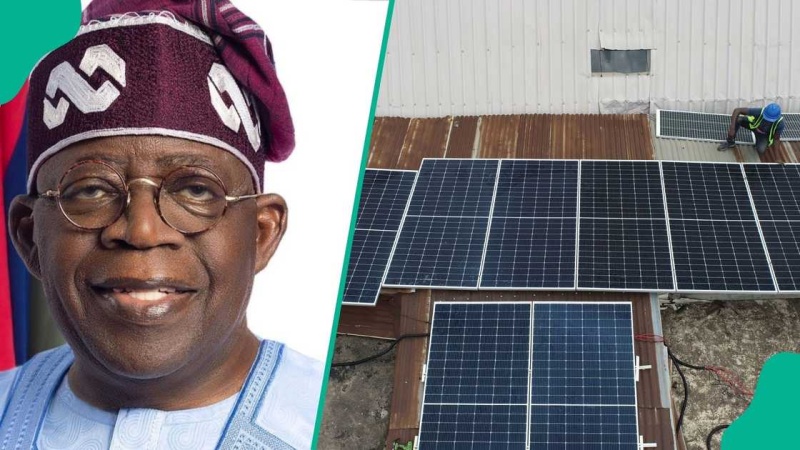
Abba Aliyu, Managing Director and CEO of the Rural Electrification Agency (REA), has announced that Nigeria’s renewable energy sector is undergoing a major transformation with the local production of solar panels. From a modest 120 megawatt manufacturing capacity before the current administration, Nigeria is set to reach 2.5 gigawatts by year-end.
Speaking during an interview on ARISE News on Saturday, Abba Aliyu emphasized the significance of domestic solar panel production for Nigeria’s energy future. He said, “Nigerian manufacturing of PV panels, it’s here to stay. It will come up and we will compete internationally.”
According to Aliyu, this expansion will reduce the country’s reliance on imported photovoltaic (PV) panels, create jobs, boost local industries, and position Nigeria as a key player in Africa’s growing renewable energy market.
He explained that before the current administration, the country’s total PV panel production capacity was only 120 megawatts. “What we have before the end of the year, we are looking at 2.5 gigawatt capacity, manufacturing capacity in the country,” he revealed.
“During that programme, Rail Electrification Agency catalysed about $450 million of investment that has already started,” he added, highlighting the scale of financial backing and strategic planning.
Aliyu provided insights into the operational manufacturing sites across the country. “We have three manufacturers outfitting in Lagos, Shagamu, Aziz, Tricel, Africel, and Trenos, and others in Uyo, Kano, and Abuja. Nigeria is now producing PV panels and exporting them to Ghana under a company called Levin,” he said.
This demonstrates that Nigeria is not just producing for domestic consumption but also becoming a regional supplier.
He also elaborated on the economic benefits of local manufacturing. “Rather than importing the entire manufactured PV panels, why shouldn’t we import the wafers and come here, assemble the wafers, do the frame? We have aluminium companies. We have frames from plastic companies. We catalyse that,” Aliyu explained. This approach ensures a greater portion of the financial investment stays in the country, benefiting multiple sectors of the economy.
The REA CEO also addressed concerns about competing internationally. He dismissed doubts that Nigerian products could not match foreign quality standards: “It’s just a cliché that people are saying. The Levin panels get the highest certification of PV panels. That is the same for all others. Nigerian manufacturing of PV panels will compete internationally.”
He further highlighted how the REA is bridging Nigeria’s electricity access gap through solar solutions. “Solar is the least cost, most efficient way of providing electricity to sparsely populated communities. Rather than extending transmission lines, we deploy solar panels, create solar farms, and do distribution networks to power communities,” Aliyu said. He explained that this strategy also supports innovations and private sector participation in renewable energy through state-level roundtables and financing frameworks.
Abba Aliyu concluded that Nigeria’s push to produce solar panels locally is historic and transformative. He reiterated, “Nigerian-made solar panels are here to stay and will compete globally,” underscoring the country’s commitment to renewable energy, local industry development, and economic growth. With the REA’s strategic projects, including mini-grids, solar home systems, and university electrification programs, millions of Nigerians stand to benefit from increased energy access and sustainable solutions. (AriseNews TV, excluding headline)



