ADAD
ADAD
Updating your news feed...
NEWS EXPRESS is Nigeria’s leading online newspaper. Published by Africa’s international award-winning journalist, Mr. Isaac Umunna, NEWS EXPRESS is Nigeria’s first truly professional online daily newspaper. It is published from Lagos, Nigeria’s economic and media hub, and has a provision for occasional special print editions. Thanks to our vast network of sources and dedicated team of professional journalists and contributors spread across Nigeria and overseas, NEWS EXPRESS has become synonymous with newsbreaks and exclusive stories from around the world.
















Loading banners
Loading banners...

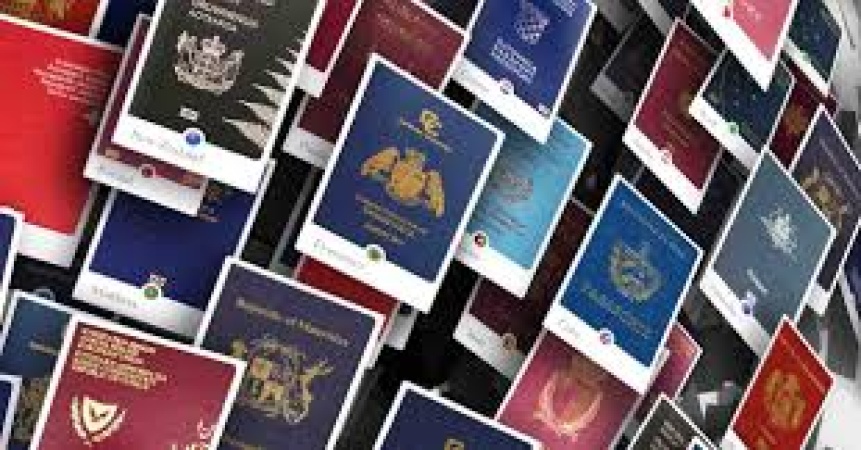
With globalization, the world is turning into a global village. However, globalization impacts people differently.
Apparently, the world is more global, more open, and more accessible to certain nationalities than to others. At the top is an elite tier of passports that grant visa-free access to most of the world with no restrictions.
At the bottom are certain unfortunate passports that offer no such perks. Rather, carrying these passports is a burden; it hinders your ability to move freely between countries, even if you have the financial means to do so.
And contrary to popular perception, economic and military might do not always translate into a stronger passport. Nor does size.
The United States boasts the world’s strongest military and the world’s largest economy.
However, according to the Henley Passport Index, the US passport ranked 10th in 2026. In fact, as many as 37 countries’ passports rank above the US, including its northern neighbor, Canada, and second-tier powers like Malaysia, the UAE, and Malta.
And the top three spots are all held by small Asian countries. But what makes a passport ‘powerful’?
At the most fundamental level, a passport’s rank is defined by the number of countries that allow the passport holder to enter without a visa.
The more countries that allow visa-free entry, the stronger that passport is. On the other hand, the fewer countries that allow visa-free entry, the weaker that passport is.
In the latest quarterly rankings, the Singapore passport is ranked the world’s most powerful.
The Singapore passport allows you to travel visa-free to 192 destinations worldwide out of a list of 227 countries and territories tracked by the index.
Best vacation packages
South Korea and Japan share second place, allowing visa-free travel to 188 countries.
So, at the top are three small Asian countries. In fact, Singapore and Japan are islands.
Their rankings at the top clearly establish that conventional military strength does not always translate into a stronger passport.
Five countries hold the third spot, all European: Denmark, Luxembourg, Spain, Sweden, and Switzerland. Passports from these countries allow visa-free access to 186 countries.
Ten European countries hold the fourth spot: Austria, Belgium, Finland, France, Germany, Greece, Ireland, Italy, the Netherlands, and Norway. Passports from these European countries allow visa-free access to 185 countries and territories.
In comparison, U.S. passport holders can travel visa-free to 179 countries.
The US passport is even ranked behind countries like Canada, the UK, the UAE, Australia, Malta, and Malaysia, underlining the steep, sudden fall from grace of the US passport, which was ranked the world’s most powerful passport only a decade ago, in 2014.
At the fag end, the Afghan passport is ranked the least powerful, allowing visa-free travel to just 24 places.
Above Afghanistan is Syria, followed by Iraq, Pakistan, and Yemen.
The Indian passport ranks 80th, granting visa-free access to 55 destinations.
The Chinese passport ranks 59th, enjoying visa-free access to 81 destinations.
As mentioned above, in 2014, the US passport was ranked the most powerful in the world. So what changed in the last decade?
Apparently, a series of policy changes—from Brazil to China—affected the US passport rankings, and the Trump administration’s tariff policy and trade wars played a role.
In April last year, Brazil withdrew visa-free access for citizens from the US, Canada, and Australia due to a lack of reciprocity.
At the same time, China is adopting a more liberalised visa exemption policy, granting visa-free access to dozens of European countries, including Germany and France.
However, the US hasn’t made the cut, most likely due to the ongoing trade war between Beijing and Washington.
Papua New Guinea and Myanmar have also tweaked their entry policies, boosting the rankings of other passports while further eroding the US’s.
In its August policy, Vietnam also granted visa-free access to 12 countries, including the UK, Germany, Japan, South Korea, Russia, and Denmark. However, once again, the US was missing from the list, further affecting its passport ranking.
In 2026, US citizens enjoy visa-free access to 179 countries. Last year, they could travel visa-free to 186 countries.
Best vacation packages
“The declining strength of the US passport over the past decade is more than just a reshuffle in rankings — it signals a fundamental shift in global mobility and soft power dynamics,” said Christian H. Kaelin, chair of Henley & Partners, in a statement.
“Nations that embrace openness and cooperation are surging ahead, while those resting on past privilege are being left behind,” he added.
Similarly, the UK passport has slipped to seventh position, despite once holding the top spot (in 2015).
The US, 10th in the new 2026 table, with the UK in seventh, has suffered the third-largest decline in ranking over the past decade, after Venezuela (No. 45, down from No. 32 in 2016) and Vanuatu (No. 53, down from No. 46 in 2016).
On the other hand, the United Arab Emirates has added 149 visa-free destinations for its passport holders since 2006, recording the strongest growth performance on the index in the past two decades. The country has climbed 57 places and is now ranked No. 5.
Misha Glenny, Rector of the Institute for Human Sciences in Vienna, said volatile domestic politics in the US also played a role in the weakening of the US passport.
“Passport power ultimately reflects political stability, diplomatic credibility, and the ability to shape international rules. As transatlantic relations strain and domestic politics grow more volatile, the erosion of mobility rights for countries like the U.S. and UK is less a technical anomaly than a signal of deeper geopolitical recalibration,” Glenny said.
At the same time, passport strength is not just about visa-free access for travel.
“Today, passport privilege plays a decisive role in shaping opportunity, security, and economic participation, with rising average access masking a reality in which mobility advantages are increasingly concentrated among the world’s most economically powerful and politically stable nations,” Christian H. Kaelin said in a statement.
While American passport holders can currently access 179 destinations visa-free, the US itself allows only 46 other nationalities to enter visa-free.
This places it at 78th position on the Henley Openness Index, which ranks all 199 countries and territories worldwide by the number of nationalities they permit entry to without a prior visa.
This disparity between visa-free access and openness is one of the widest globally.
Interestingly, all five nations with the biggest gaps between the travel freedom they enjoy and the openness they offer have either stagnated or declined in their passport power ranking over the past decade.
Best vacation packages
Annie Pforzheimer, Senior Associate at the Center for Strategic and International Studies in Washington, notes that America’s retreat is rooted in politics.
“Even before a second Trump presidency, US policy had turned inward. That isolationist mindset is now being reflected in America’s loss of passport power.”
The Henley report notes that President Trump has suspended visa issuance to travelers from 12 nations across Africa, the Middle East, and Southeast Asia, imposed heavy restrictions on an additional seven, and threatened to impose bans on up to 36 more, the majority of them in Africa.
A visa bond of USD 5,000 to 15,000 now applies to seven African nations, refundable only upon departure. Plans are also underway to introduce a blanket USD 250 ‘visa integrity fee’ for most non-immigrant visa applications.
At the same time, the cost of the Electronic System for Travel Authorization (ESTA) nearly doubled on September 30, from USD 21 to USD 40.
Ironically, as the US adopts a more isolationist policy, China, a historically closed society, is opening its borders, granting visa exemptions and introducing new visa categories, such as the recent K visa, to welcome talented young people from science backgrounds.
This change is also reflected in the steep rise in the strength of the Chinese passport.
China has been among the biggest climbers on the Henley Passport Index over the past decade, leaping from 94th place in 2015 to 59th in 2026, with its visa-free access score increasing by 37 destinations.
On the Henley Openness Index, China has also risen dramatically, granting visa-free access to an additional 30 countries in the past year alone. It now sits in 62nd position, providing entry to 77 nations — 31 more than the US.
These relaxed visa rules are leading to a significant increase in foreign arrivals in China.
According to the National Immigration Administration, foreign nationals made a total of 38.05 million trips to or from China in the first six months of 2025, an increase of 30.2 percent year on year. Of these trips, 13.64 million involved visa-free entries, which was an increase of 53.9 percent over the same period last year.
Dr. Tim Klatte, Partner at Grant Thornton China, highlights the geopolitical implications. “Trump’s return to power has brought fresh trade conflicts that weaken America’s mobility, while China’s strategic openness boosts its global influence. These diverging paths will reshape economic and travel dynamics worldwide.”
Best vacation packages
However, it must be noted that despite the apparent decline in strength, the US passport remains highly desirable, as evidenced by the strong response to Trump’s US$1 million “gold card” scheme.
Under this scheme, wealthy foreigners can get US residency after paying a US$1 million fee. (Eurasian Times)