
Updating your news feed...
NEWS EXPRESS is Nigeria’s leading online newspaper. Published by Africa’s international award-winning journalist, Mr. Isaac Umunna, NEWS EXPRESS is Nigeria’s first truly professional online daily newspaper. It is published from Lagos, Nigeria’s economic and media hub, and has a provision for occasional special print editions. Thanks to our vast network of sources and dedicated team of professional journalists and contributors spread across Nigeria and overseas, NEWS EXPRESS has become synonymous with newsbreaks and exclusive stories from around the world.




Loading banners
Loading banners...

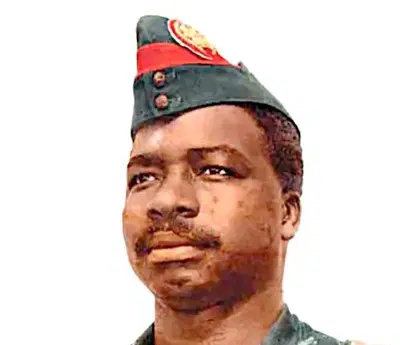
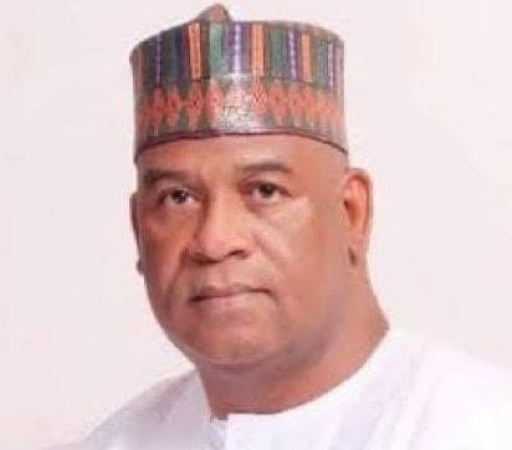
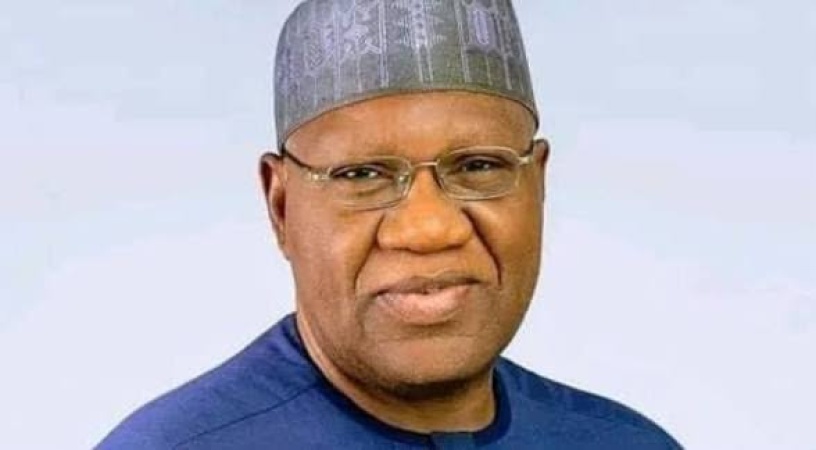
Then: Major-General Ibrahim Bata Malgwi Haruna
Major-General Ibrahim Bata Malgwi Haruna (Retd) was a one-time Federal Commissioner for Information and Culture (1975 – 1977), and was former Chairman, Arewa Consultative Forum, ACF (2009 – 2012). In this explosive interview conducted by Vanguard’s Regional Editor, North, Soni Daniel, General Haruna brings a dynamic perspective to the issue of the January 15, 1966 coup led by Major Chukwuma Kaduna Nzeogwu. Sixty years after, General Haruna reveals that the contemporary realities of that era made it inevitable for a coup of any sort to happen.
He delves into the history and histrionics that have continued to drive narratives which are at once disruptive and divisive. When a call was placed to him for the interview centred around the sixtieth anniversary of the January 15, 1966 coup, he obliged. But the interview went beyond that brief, stringing together historical perspectives on how Nigeria got to where it is today. Coming from an Army General of Northern extraction, his analysis and conclusion that the January coup of 1966 was inevitable brings another insight into the long-held but obtuse notion that the coup was meant to foist Igbo domination on Nigeria, without prejudice to the fact that those who carried out that coup were majorly Army Majors of Igbo extraction – By Jide Ajani, General Editor
Excerpts:
The Nigerian Civil war from 1967-1970 was a progression of the coup of 1966. It was the height of our political activities and national discord and was managed through the search for independence in 1960, with Nigeria being a nation forged out of the embryo of colonialism by the United Kingdom.
After independence, we had our partial sovereignty because England still retained some powers in managing the country.
However, we ended the independence with the identity of regions. The three regions that emerged were unequal in size and population with different resources and they were struggling to put them together for the purpose of raising revenue to run the country and struggling to exercise powers as political administrative units. Noticeably, there was the imbalance of the sizes and populations of three main regions – North, East and West and Lagos territory as central for the government. We were given independence on the basis of a federation. But we operated as if we were between a confederation and a federation. It was not clearly spelt. Therefore, it brought conflicts among the unequal regions.
These issues flowing from that made the economic and political relationship among the regions a bit heated. Therefore, the political unity was not there. Political interest took the shape and pattern of ethnic warfare and struggles in large, diverse and unequal regions in terms of population, resources and the powers exercisable by the various regions. The struggle took the shape of tribal competition with the north largely enjoying most of the land and population. Then, there were Western and Eastern regions.
Those conflicts became heated after independence.
What came to the forefront of our political development appeared as an ethnic struggle with the great number of tribal varieties and identities. In some cases, the dichotomy presented itself as Christians versus Muslims or minority versus dominant majority. It didn’t augur well for peaceful political and economic evolution.
The military had its strength of about 10,000 soldiers at the time. The armaments of the police and the army seemed to be shared in a way that the military and the police felt they were competing for power to impress the politicians who then saw them as mere security. There were times the army and the police felt they were competing. While the development had so much internal conflict generated, in some cases, fear of political dominance, desire for equality on the size of their population, it did not augur well for a developing country.
In the Military, the young officers encouraged by the politicking of the politicians tried to outdo the constitution of a democratic government. The military felt they could do it better by uniting the country, fighting corruption and abuse of power by the politicians.
Unfortunately, these are problems that have subsisted since then till today.
The 1966 coup brought into focus the issues of tribalism, bribery and corruption, imbalance of political power and appointment of civil servants. Some people felt that those who carried out the coup were favourable to a certain region. As of the time, I had been a commissioned officer in 1961. I was then at the rank of major. I was then commanding the Ordinance Depot, Yaba.
The majors who were at the forefront of the coup were my contemporaries either at Ghana, Regular Officer Special Training School. We had contemporaries who were commissioned after the training institution in Ghana.
By 1966, when the coup erupted, most of the leaders of the coup were officers who had been commissioned just before independence or after independence and had got into the commanding heights of units.
The ratio of the military, the police and other security services to the population and to the demand was disproportionate. There were divisions between the service personnel. You find that recruitment was a follow-up and consequence of the world wars, which made the police and army low-level employees. They were predominantly from certain parts of the country. And then their leadership was also predominantly from certain parts of the country – the eastern part of the country.
So, whatever was done in the command structure of the military bred its own heat of discrimination.
As I said, all the officers who led were mostly independence officers, and most of the leadership were majors. I was also a major.
My contemporaries were in the coup. Nzeogwu was just one or two years ahead of me at Sandhurst. But my contemporaries were there. For example, Anuforo.
Stories have been told about the imbalance of those who conspired to manage the coup in 1966. It took place after the political leaders were killed. It was thought that there was an imbalance in the removal of political power holders. Yes, it brought forth conflict between the various ethnic groups or service members. So much has been written from different points of view and perspectives. The conflicts have lived with us politically and security wise. The issues are always the same. Imbalances, power distribution of tanks, recruitment, bias in posting, etc.
I wouldn’t say it is sound because Nigeria was not progressing anyway. Before then, they patched up an agreement for constitutional independence. But underneath, there were strong torrents of ethnicity and political disagreements. We had, for example, the Igbo State Union that metamorphosed into Ohanaeze Ndigbo. In the West, we had the Action Group that is known today as Afenifere.
They are all ethnic-based social and political organisations. Of course, when Zik an Igbo man, won election on the platform of the NCNC and was about to become the premier of Western region, the Yoruba took to ethnicity and made sure he never did. He cross-carpeted from the Western region. That became the drive that pushed Zik to the East. We had the Aburi conference. We had a civil war. We have had subsequent national conferences. We have tasted military dictatorship under the various military leaders from Gowon to Muritala.
As long as we were constituted the way we were, it was inevitable because this was what it generated. It was almost inevitable because if it did not happen, we probably would not be the way we are today. Our present constitutional setup and sovereignty are the intent of struggle and expression of disagreement. We are still negotiating, but in a different form.
With different power blocs in the system. We have political parties sustaining democracy. But we also have internal rebellion in the form of terrorism.
Whenever the military takes over, there are civilian collaborators – civilians, civil servants, top public officers. Why would they not refuse to work with them so that military coups would stop?
I think that if the military comes, top bureaucrats will say no, we can’t work with you.
That presumes there’s unity among the top technocrats. But often, it is technocrats who sustain the politicians and the politicians sustain them.
They are appointed by the politicians. In fact, they don’t exist without being appointed. And most of the technocrats owe their positions and appointments to the politicians. So, when the political structure changes, they are changed, even the security apparatus. They owe their positions to the politicians.
How can it die? There is a father, there is a mother. Correct? They procreate. They breed children. What are you saying? That the children can excise themselves from their parents? Or, they can choose their own character, their integrity, and so on? But the notion of a family has become part of our civilization. So even if this family is Christian, this family has religion and so on, they are still a family.
Something connects them. We are all connected. And the fact that there are ethnic homelands in Nigeria, which may hold and expand or diminish, they are still there. The Igbo, the Hausa, the Fulani, even if they were conquered and had war, there are indigenous people there who have a claim to the land. It is difficult for the dichotomy to die. I think it is the challenge of governance, security and stability and organising an economic civil society.
A lot, because if you go on the trajectory of coups, you will have counter-coups. You have perpetuity of dictatorship. But we have been able to reverse that to the desire and notion to bring about a democratic government through credible elections. So, we are growing because we believe that the path of democracy and credible elections is the best for us. It doesn’t mean that we will not have insecurity or conflicts. The fact is that we are prepared to concede to one another a degree of liberty and freedom to be able to assert a democratic civilization. But the world has never been in a perfect stable existence.
Emperors come and leave their seats and they go. Right now, we are experiencing a change of empire and power and perhaps the death of American dominance in world civilization.
But it has come through bipolarization of the world. The dominance and power of the United States, both in strategic military terms and economic power, is waning. It is being challenged. China is rising. The five economic powers are rising. The power economy of the dollar is being challenged. President Donald Trump is the chaplain of the world stage. Hausa has a word for it, which translates to when somebody is ashamed, when a person is ashamed, he dances as a cover up because you have caught him and he is ashamed that you now know he is wrong. I think Trump is realizing the dollar is falling apart. NATO is threatening him. This is the earliest signal of the death of an empire of power.
It’s part of it. So, what is the strategic gain? It’s only an investment of power so that they will be able to come and loot our strategic resources. It’s an investment for future power and economic exploitation. It is never free. To them, it is an investment. But what are we getting out of it? What is really the consequence? Even if many people have been killed, what percentage or impact does it make in our security and peace? Not even in that local area. We have seen their records.
They went and fought with the Russians and failed. In Afghanistan, they ran away. Which war has America really won? They have the power. They have the resources. But now the world is awakened to economic power. They are rearranging their currencies, their banking system and the system of international payments.
My answer to that is that we have never really been secure. The nature of insecurity has changed. But there is no specific time or period we can say that we have been safe and secure. Insecurity has always persisted. What has changed significantly is the means of communication, which has enhanced fast reportage of events as they occur unlike in the past when such security incidents were never captured for years. But today, due to the system of communication, a single security incident is reported and known all over the world at the same time as it occurs. It is the consequences of the communication system and the reportage. It is not the consequence that these things were non-existent. They were existent. We had the Yoruba warfare, civil war, not up to a century ago.
There were wars in Yorubaland. There were wars in Hausaland. But there was no terrorism. That’s what you choose to call it. If these were not terrorism, what were they? There were tribal wars. You call them tribal wars. But how did the tribal wars grow? They evolved through conflicts and terrorism. But who was terrorising who at that time? Conflicting tribes! So the colonialists themselves, how did they get their presumed authority to govern? Was it not through war? The war was not preceded by terrorism.
The reason why it is alarming is that the system of communication and knowledge of occurrences now are not like before where it may take three or four years, but you will only hear about the conflict as a historical note. What were the purposes? What are the existing purposes for generating terrorism and war? At one time, it was to get slaves to go and work in plantations. Another way now is to get diplomatic entry and economic power as an investment for future economic exploitation. So, they are all weaved into social and economic rearrangement.
Well, to put the question another way around, is Nigeria capable of sustaining its sovereignty? Is it sovereign when you are inviting somebody else to come and help you bring discipline and order to a group of terrorists? Who are these terrorists? How many are they? Where are they coming from? What are their resources? When you look at all this, they are part and parcel of your creation. We had an election and we were told some migrants were brought in in order to corrupt the election. And at the end of the day, the objective was won and the mercenaries were paid off. Some refused to go. They chose to remain and they are not being paid. Now you call them militants, bandits and terrorists? It’s your creation. As a nation, you created them. If you can’t fight them, you have a reason not to fight them.
And instead, you find policies to absorb them. And if you don’t absorb them, they are jobless. They have no security. They have no future. They have children who cannot go to school and get employed. What do they become? The state is being created by our own policies, which we have no power to respond to.
And somebody takes advantage of it and says; I will help you. Alright, I’ll help you bomb them. And what is the result? How many people did you kill? What terrorists have you stopped? Have you stopped the terrorist conflict? You haven’t. But in the books, you have done something great. And there is a charge of dollars waiting to be paid one way or the other. Now or in the future either by oil or by strategic minerals.
Well, I have a disclaimer. I’m not a politician. I don’t look into the horoscope of a politician. But it is our aspiration. It is our hope that we will have an election. And it will be credible, democratic and acceptable. And we will have a president. That is our hope.
The only advice I think is worth giving the president is to ensure that the atmosphere is maintained, sustained and encouraged so that we can build on the small democratic gains we think we have built.
He should make sure at least that the atmosphere is fit for election and the electoral bodies are credible and empowered. They can be effective. And they are supported. The government should ensure that security threats do not disempower the capacity for us to conduct elections that are acceptable. (Vanguard)




