ADAD
ADAD
Updating your news feed...
NEWS EXPRESS is Nigeria’s leading online newspaper. Published by Africa’s international award-winning journalist, Mr. Isaac Umunna, NEWS EXPRESS is Nigeria’s first truly professional online daily newspaper. It is published from Lagos, Nigeria’s economic and media hub, and has a provision for occasional special print editions. Thanks to our vast network of sources and dedicated team of professional journalists and contributors spread across Nigeria and overseas, NEWS EXPRESS has become synonymous with newsbreaks and exclusive stories from around the world.





















Loading banners
Loading banners...


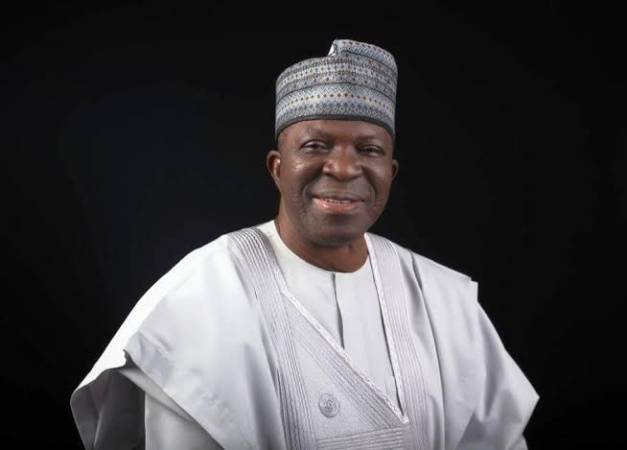
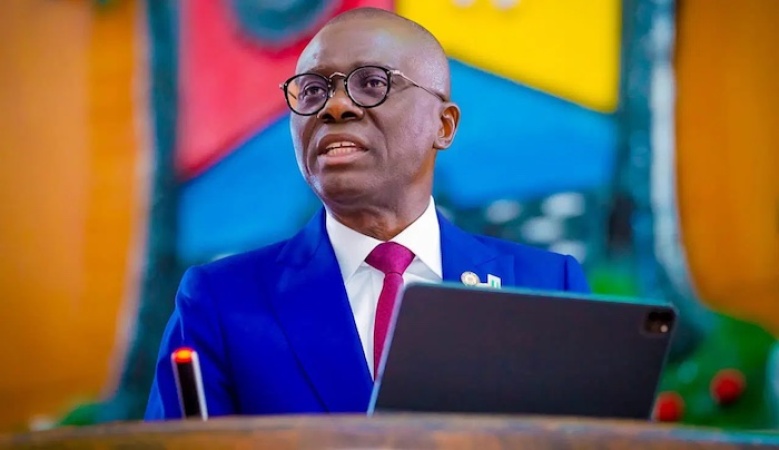
Akintunde Sawyerr, NELFUND Director-General
Mr. Akintunde Sawyerr is the Managing Director and Chief Executive of the Nigerian Education Loan Fund (NELFUND). He met with journalists recently and provided an insight into the activities of the Fund, including challenges and progress recorded so far, among others. TUNBOSUN OGUNDARE brings the excerpt.
Could you give a brief background to your operations?
We came on board in April 2024 which is less than two years. After the repeal of original law expunging the need for a guarantor, household income limitation and insertion of monthly stipend to give way to the current law, NELFUND launched a portal, www.nelf.gov.ng in May 2024 for full operations and since then we have been meeting the need of Nigerian students.
What is the rationale behind making your engagements with loans beneficiaries and their schools strictly digital?
NELFUND does not need to know who the applicants are and where they come from. What matters to us is the assurance that they are Nigerians and bona fide students in any of the public tertiary institutions in the country. Once they are, they only need to apply based on the guidelines provided. Their institutions may either be owned by the federal or state governments. These tertiary institutions comprise universities, polytechnics, colleges of education, a couple of technical colleges, schools of nursing and other related institutions. The students must have applied and must have been admitted into any of those government-owned institutions.
To us, it’s not just about giving people loans; it’s about ensuring that what the result they come out with at the end of the day does not disqualify them from seeking or gaining employment anywhere globally. Of course we need to get the funds back because it’s a loan, albeit interest-free.
Another key aspect of the guidelines is that the students must have a National Identity Number (NIN), one that is provided by the NIMC. The law clearly states that this loan is only available to Nigerian citizens and this implies that the applicants must have NIN. Another requirement is that they must have matriculation numbers. The matriculation number confirms that they have been properly integrated into the institution. This becomes imperative because we will check with their institutions before disbursing the money.
However, for those who are newly admitted and are yet to get matriculation numbers, they can apply for the loan using their JAMB registration numbers only in the first year. The next criterion for all the applicants is that they must have an active bank account as NELFUND won’t disburse cash to anyone or institution; we disburse through the bank accounts. Majorly, we do two types of disbursements. One is to the institution on behalf of the individual. And the other is to individuals as their monthly stipends. The institutional fees are the ones that the schools or the institutions charge with the accommodation fee.
Once they have provided us with all this necessary information, including their Bank Verification Numbers (BVNs) and we confirmed them to be genuine, matching them with their names, dates of birth and other details supplied earlier while applying, we disburse N20, 000 monthly upkeep allowance to them through their bank accounts and the institutional fees directly to their schools on their behalf as loans. So, this is essentially how this loan scheme is accessed.
It appears many students and their parents are still skeptical about the loans, how are you addressing that?
Truly, we have had to deal with these issues of skepticism, which has a lot to do with lack of trust in Nigeria’s system. This is something that has been with us for over 60 years.
This is due to the kind of system of government that we are running. Sometimes administrations don’t implement their plans, let alone fulfill their promises. The old, failed projects approach has left many citizens dissatisfied and not happy about whatever the government is promising. In this case, we have tried very hard to be transparent with the public. When we encounter problems, we admit it and we are making headway, we make a lot of noise to say the scheme is working very well. However, to get these done, we have to travel round the country extensively.
By so doing, we have directly touched in a region a total of 305,000 students across Nigerian institutions. We have also been to the grassroots with traditional rulers organizing enlightenment programmes for us.
We’ve also been to many other key stakeholders regardless of their political parties or religious affiliations. President Bola Tinubu has made it very clear that NELFUND’s loan scheme is not a party project but a national project meant for all Nigerians. The only thing is that he backs it up with strong political will. He wants it to be very successful.
We are accountable to the public and we have taken it upon ourselves to make our operations transparent. We publish our activities, especially as regards applications and the successful ones as well as the amount of loans already disbursed and to how many institutions, among others on our social media handles. We update these almost on a daily basis. We also publish the figures of institutions that have acknowledged that they have received payments from us.
We are working assiduously to ensure our operations are going on smoothly. If there is any discrepancy, either from the institutions or students, we come in and show proof of disbursement with detailed information.
We have a complete electronic footnote that shows and details everything we do with our disbursements, and we share this publicly so that if anyone has any question, he or she can enquire and cross-check. We do this because we recognize that the effort is about giving loans and you know when people take the loan, though this is interest-free, they don’t have to pay back until after two years of NYSC if at all they have a job. I make bold again that the President is committed to ensuring access to education is made available to all Nigerian children at all levels. Our task at NELFUND is to make sure that his commitment works at the tertiary level.
Why did you exclude hostel accommodation from the loan scheme?
It is true that accommodation is a big issue for students in tertiary institutions, especially those who come from far places but it will be difficult to fix certain amount to take care of such need because the students school in different part of the country, among other things. We don’t want to create any problem around that, it is a complex thing to do at least for now. Parents will have to bother about accommodation once the school fees and stipends for their children are off their necks. So, for now, we cannot accommodate accommodation charges.
Many, especially private school owners, want the scheme to be extended to their students too, how will you respond to that?
Really, the president also believes in that position. In fact, he has made it known that the scheme must also someday cover the private school students. He told me specifically that the scheme should be for all Nigerian students. However, the issue is that, as of today, private school students are yet to be incorporated into the scheme and we cannot really say when that will be. The scheme as of today is for only students in government schools based on the current available resources.
We have witnessed many schools increasing their fees and other levies every now and then just because of NELFUND loans is available for students to access even if they don’t have the money to pay on their own, what is you take on that?
NELFUND has observed this, especially among the state-owned institutions where tuition fees are paid because federally-owned institutions do not pay tuitions but charges. We have let them know that we are not in agreement to indiscriminate hike in school fees and levies. We have let them know that it is not acceptable to us. This is unfair on the part of the students because at the end of the day, they will be the ones to bear the burden. Though, institutions may genuinely have a reason to hike their charges, it shouldn’t be every now and then. We have warned culpable institutions that we won’t treat the applications of their students once we discover that their charges have jumped up unnecessarily. We know what each school was charging before and what we started with when we came on board.
Did you set a limit to what schools can charge?
We are not the one to do that but at the same time, we can’t tolerate them increasing their fees and levies anyhow just because NELFUND loans are there to claim.
How many students have accessed the loans so far?
These number moves up almost every day. We have received up to 1,265,509 applications as of today (day of the interview) while only about 788,947 students have benefitted from a total of N154, 373,357, 379, 370 that we have disbursed so far. These two figures are increasing by the day. It is important for me to draw your attention to the difference between the applications and the beneficiaries. There are two reasons why those numbers are different. One is that we record applications as they come in on a daily basis but we don’t process applications the same they come in. The application numbers always exceed that of the beneficiaries. We take them through a proper checking process, including checking with the institutions, which sometimes caused delay for disbursement.
The other thing is that we sometimes double count applications. For example, if a student applied last year and again this year, that makes it two different applications to us, and we must be careful not to treat one applicant as two. So, the gap will always be there. (Nigerian Tribune)