
Updating your news feed...
NEWS EXPRESS is Nigeria’s leading online newspaper. Published by Africa’s international award-winning journalist, Mr. Isaac Umunna, NEWS EXPRESS is Nigeria’s first truly professional online daily newspaper. It is published from Lagos, Nigeria’s economic and media hub, and has a provision for occasional special print editions. Thanks to our vast network of sources and dedicated team of professional journalists and contributors spread across Nigeria and overseas, NEWS EXPRESS has become synonymous with newsbreaks and exclusive stories from around the world.





















Loading banners
Loading banners...

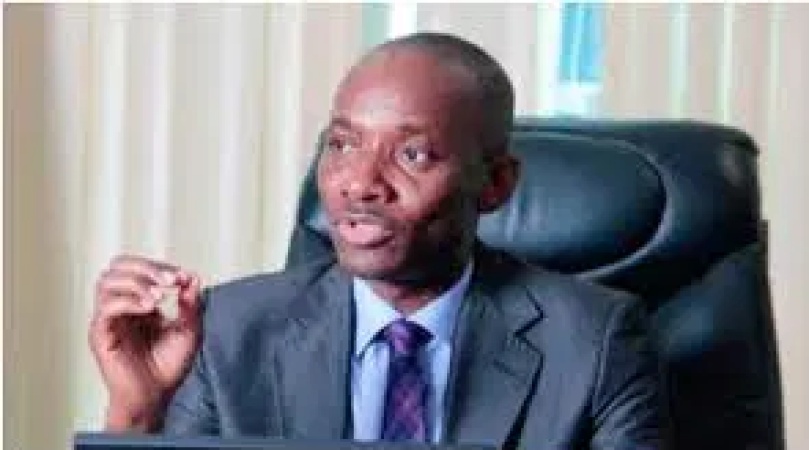
Dr Sam Amadi, Director, Abuja School of Social and Political Thoughts
Director of the Abuja School of Social and Political Thoughts, Dr. Sam Amadi, has said rising cases of alleged medical negligence in Nigeria point to a deeper systemic failure rooted in culture, professionalism and accountability, rather than isolated errors by healthcare workers.
Speaking in an interview with ARISE News on Sunday, Amadi argued that the reported death of the son of writer Chimamanda Ngozi Adichie, and similar incidents, reflect what he described as “greater than epidemic proportions” of negligence across Nigeria’s health sector, including private hospitals.
“I think it’s greater than epidemic proportion, because if you look at social media stories, this is not just an isolated case. It’s several cases — high profile and low profile,” he said.
Amadi explained that the crisis could be understood through what he termed a “public policy triad”.
“It’s a triad — culture, professionalism, and accountability,” he said. “If you look at the cultural aspect, there is a generalized inefficiency and negligence in the way Nigerians do things, which arises from a deeply rooted national ethos of ‘anyhow’.”
He noted that negligence often stems from presumptive attitudes and a lack of basic planning, even in routine medical procedures.
Procedural failures are common. These are not complex cases. They are failures to follow elementary due process,” Amadi said, recounting a personal experience involving his daughter.
“The expert doctor did his work, but the anaesthetist overloaded the anaesthesia and did not time it properly. The operation finished, but my daughter did not wake up for 30 minutes. That is managerial failure — not timing the operation.”
On professionalism, Amadi said many Nigerian hospitals fail to adopt basic safety systems, such as checklists, which are standard in advanced healthcare systems.
“There is a book by Atul Gawande called The Checklist Manifesto. Whether it is flying or medicine, checklists work,” he said.
“You sedate a child, you must monitor the child. You do not carry the child on your shoulder. These are basic checklists.”
He revealed that a young Nigerian doctor trained abroad once approached him for support to introduce simple visual checklists in hospitals.
“She told me doctors forget basic steps, and people die. She wanted to place simple cardboard checklists in strategic areas. That’s how basic the problem is,” Amadi said.
According to him, the absence of accountability worsens the situation.
“People don’t get punished. That’s the problem,” he said. “If investigations result in hospitals being sealed permanently, people will sit up. But today, you just hear ‘we are sorry’.”
Amadi criticized Nigeria’s medical liability framework, saying weak enforcement allows practitioners to escape responsibility.
“Doctors escape liability for two reasons: difficulty of proof, and unwillingness of other professionals to testify,” he said.
“Elsewhere, doctors volunteer to testify against erring colleagues. Here, there is silence.”
He stressed that many deaths result from basic failures rather than medical complexity.
“They didn’t switch something off. Oxygen expired in ICU. These are gross inefficiencies,” he said. “People should be jailed, licences withdrawn, and hospitals fined heavily.”
Amadi also blamed poor hospital management, noting that medical expertise does not automatically translate into managerial competence.
“In top hospitals abroad, doctors are managed by professional managers,” he said. “Being a good doctor does not make you a good manager.”
Turning to government responsibility, Amadi said Nigeria’s political leadership lacks incentive to reform the health sector because most leaders do not depend on local healthcare.
“Government doesn’t care much about Nigerian healthcare because they have no skin in the game,” he said.
“Leaders go abroad for medical treatment. They don’t use primary, secondary or tertiary healthcare here, so why would they invest in monitoring it?”
He linked the same problem to education, describing healthcare and schooling as politically un-incentivized sectors.
“That’s why health care never features in our political discourse. Nigerians are treated more like subjects than citizens,” Amadi said.
On solutions, he urged Lagos State to set a precedent through decisive action.
“Lagos can set the example with thorough investigations and severe punishment, including public closure of hospitals,” he said.
“This is not rocket science. It’s about diligence — did you monitor the patient, did you follow procedure?”
Amadi warned that without harsh penalties, negligence would persist.
“How many times have you heard of compensation? How often do judges slam hospitals with damages that force them to change behaviour?” he asked.
“Once hospitals face massive damages, owners will enforce internal monitoring. That’s how diligence is internalized.”
He concluded by reiterating the framework he believes must guide reform.
“The solution is the triad of culture, professionalism and accountability,” Amadi said. “The absence of these is the problem.” (AriseNews TV)




