ADAD
ADAD
Updating your news feed...
NEWS EXPRESS is Nigeria’s leading online newspaper. Published by Africa’s international award-winning journalist, Mr. Isaac Umunna, NEWS EXPRESS is Nigeria’s first truly professional online daily newspaper. It is published from Lagos, Nigeria’s economic and media hub, and has a provision for occasional special print editions. Thanks to our vast network of sources and dedicated team of professional journalists and contributors spread across Nigeria and overseas, NEWS EXPRESS has become synonymous with newsbreaks and exclusive stories from around the world.


Loading banners
Loading banners...

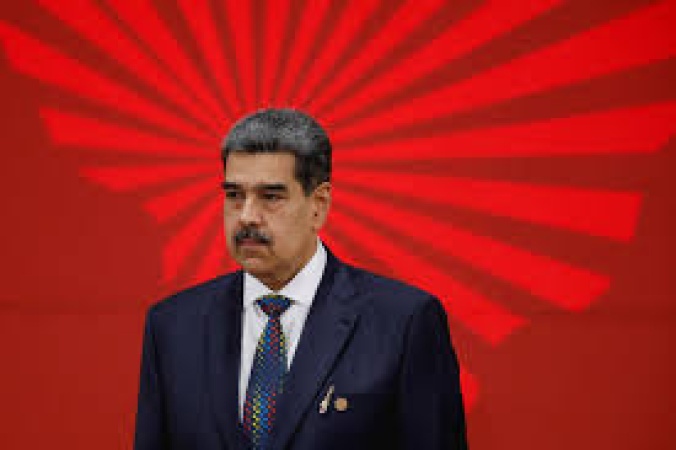
Venezuela President Nicols Maduro
By TAOFEEK OYEDOKUN
When the United States (US) forces swept into Venezuela last week and captured Nicolás Maduro and his wife, ending a strongman’s rule that had survived mass protests, military mutinies, sanctions and diplomatic isolation, the world did not merely witness the fall of a dictator. It watched the revival of an old and deeply unsettling question: can the use of raw power by a superpower ever be justified as a tool to discipline authoritarian regimes, or does it ultimately corrode the very international order it claims to defend?
For supporters of the intervention, the Venezuela operation represents a long-overdue reckoning. They argue that Maduro presided over an authoritarian system that hollowed out democratic institutions, crushed dissent and reduced one of Latin America’s richest countries to economic ruin.
Oil wealth flowed upward to a narrow circle of loyalists while ordinary Venezuelans queued for food, medicine and fuel. Even within the regime, frustration festered. Trusted aides, military commanders and political allies reportedly turned against Maduro at critical moments, unwilling to continue bearing the costs of loyalty to a collapsing state. To this camp, the US action merely accelerated an implosion that was already underway.
“The UK has long supported a transition of power in Venezuela. We regarded Maduro as an illegitimate President, and we shed no tears about the end of his regime,” UK Prime Minister Keir Starmer said in reaction to US unilateral action.
“I reiterated my support for international law this morning. The UK government will discuss the evolving situation with US counterparts in the days ahead as we seek a safe and peaceful transition to a legitimate government that reflects the will of the Venezuelan people.”
From this perspective, the intervention sends a powerful signal far beyond Caracas. In Africa, Latin America and parts of Asia, where leaders routinely manipulate constitutions, rig elections, and weaponise security forces to cling to power, the spectacle of a once-untouchable strongman being seized and flown out of his palace is meant to resonate.
The message is clear: sovereignty cannot be a permanent shield for repression, criminality and impunity. Supporters concede that the operation may sit uneasily with international law, but they argue that strict legalism has failed populations trapped under authoritarian rule. In a world where global institutions move slowly, and vetoes paralyse action, they contend that decisive force may be the only language entrenched autocrats understand.
Donald Trump himself has embraced this logic with characteristic bluntness. He framed the operation not just as justice for alleged narco-terrorism, but as a warning shot to other regimes. His comments about US oil companies moving into Venezuela and Washington overseeing the country’s economic transition underline his belief that power, not process, reshapes outcomes. To Trump and his allies, the end, the removal of a dictator and the opening of a broken system, justifies the means.
Yet this argument collapses under the weight of its own contradictions. Critics counter that the United States is neither legally nor morally appointed as the world’s police, and that unilateral military action against a sovereign state sets a precedent far more dangerous than any one authoritarian ruler. International law, flawed as it may be, exists precisely to restrain the strong from imposing their will on the weak. Once that restraint is abandoned, the global system slides toward a jungle where might determines right.
“It is our commitment to international law and the United Nations Charter that informs our deep concern and action of the United States in Venezuela, which has undermined the territorial integrity and sovereignty of a UN member state. We reject utterly the actions that the United States has embarked upon and stand with the people of Venezuela,” South African President Cyril Ramaphosa said at a press conference last week.
“And we demand the release of President Maduro and his wife as well. We reiterate our call for decisive action by the United Nations Security Council to fulfil its mandate and advance peace and security.”
For many countries in the Global South, the Venezuela operation has stirred old fears. If Washington can decide that Maduro’s rule justified invasion and arrest, what stops another powerful state from making similar claims elsewhere? China could cloak an assault on Taiwan in the language of “counter-terrorism” or “anti-separatism”; Russia already frames its war in Ukraine as a defensive or moral necessity; regional powers could settle scores under the guise of moral intervention. Once such actions are normalised, the erosion of international norms does not remain an American exception; it spreads, legitimising force as policy and turning precedent into permission.
“To allow this is to put the international community at great risk and undermine the sovereignty of every country,” the Ghanaian government said in a statement condemning the US action.
There is also the uncomfortable question of motive. While human rights abuses and alleged criminal networks under Maduro are real, Trump’s open talk of oil deals, US corporate access and control over Venezuelan revenues has reinforced suspicions that strategic and economic interests, not humanitarian concern, sit at the heart of the operation. For critics, this confirms a long-held belief in many developing countries: that interventions dressed in the language of justice often mask resource extraction and geopolitical advantage. When oil contracts follow airstrikes, the moral argument rings hollow.
Moreover, history offers little reassurance. Regime change by force has rarely produced stable, democratic outcomes. From Iraq to Libya, the removal of a dictator without a legitimate, internationally backed transition has often unleashed chaos, militias and prolonged instability. Venezuela’s future remains uncertain, and the presence of US power hovering over its political and economic decisions risks delegitimising any interim authority in the eyes of its own people. An authoritarian may be gone, but sovereignty bruised can quickly turn public relief into nationalist resentment.
For Africa and other regions watching closely, the lesson may not be liberation but vulnerability. Many states already operate in a precarious international environment where power asymmetries are stark. If global order is reshaped into one where the strongest actor enforces its preferences through force, smaller countries may feel compelled to seek protection from rival powers, deepening global polarisation and proxy conflicts.
In the end, the Venezuela intervention exposes a fundamental tension of our time. The world is rightly impatient with authoritarianism, corruption and mass suffering. But impatience does not confer legitimacy. The removal of a dictator by foreign force may satisfy a desire for swift justice, yet it risks normalising a system where power trumps law. If the United States claims the authority to decide which leaders stay and which fall, it invites others to do the same, with consequences far beyond Caracas.
The fall of Maduro may be remembered as a turning point. Whether it becomes a warning to tyrants or a wound to the international order will depend not only on what happens in Venezuela, but on whether the world chooses rules over force, and principle over power. (BusinessDay)