
Updating your news feed...
NEWS EXPRESS is Nigeria’s leading online newspaper. Published by Africa’s international award-winning journalist, Mr. Isaac Umunna, NEWS EXPRESS is Nigeria’s first truly professional online daily newspaper. It is published from Lagos, Nigeria’s economic and media hub, and has a provision for occasional special print editions. Thanks to our vast network of sources and dedicated team of professional journalists and contributors spread across Nigeria and overseas, NEWS EXPRESS has become synonymous with newsbreaks and exclusive stories from around the world.

















Loading banners
Loading banners...

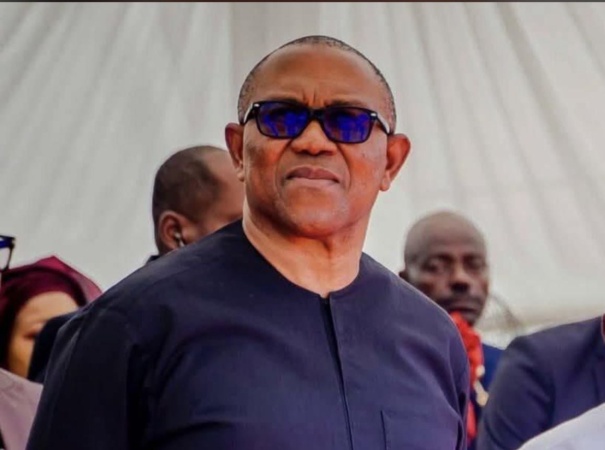
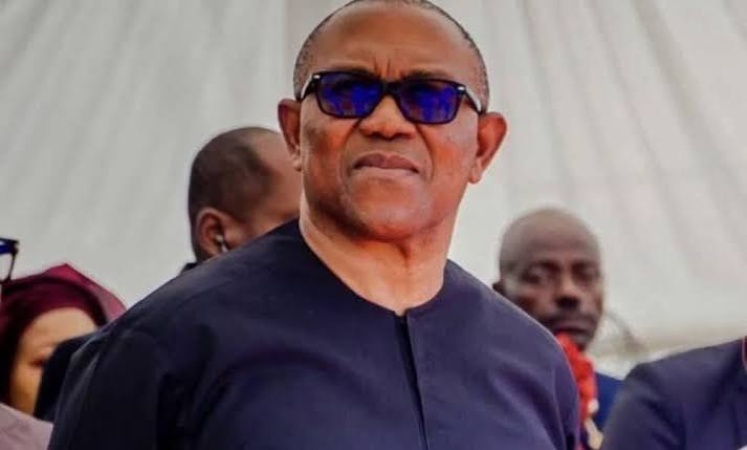
Peter Obi
By BONIFACE AKARAH
Former Labour Party presidential candidate, and Anambra State Governor, Peter Obi, has warned that political infighting and power struggles are deepening Nigeria’s poverty crisis, as new projections show that about 141 million Nigerians, representing 62 per cent of the population, could be living in poverty by 2026.
In a post shared on X on Thursday morning, Obi lamented that while politicians jostle for positions and control of party structures, poverty continues to expand at an alarming rate across the country.
“While we politicians scramble for positions and vie for control of party structures, a harsh truth confronts our nation: a staggering 62 per cent of Nigerians are ensnared in poverty,” Obi said.
Citing World Bank data, Obi noted that the number of Nigerians living in poverty rose from 81 million in 2019 to about 139 million in 2025, with an increase of 14 million people between 2023 and 2024 alone. He added that projections indicate the figure could reach 141 million by 2026, amounting to an additional 26 million people pushed into poverty within three years.
Referencing the Nigeria Economic Outlook 2026 report titled “Turning Macroeconomic Stability into Sustainable Growth,” Obi said weak income growth and persistently high living costs are expected to continue worsening poverty levels despite recent stabilization efforts.
“Most Nigerians will not experience income growth sufficient to counter escalating costs,” he stated, adding that low-income households remain particularly vulnerable as food accounts for up to 70 per cent of their total spending.
Obi warned that rising poverty erodes purchasing power, weakens demand, and places severe pressure on micro, small, and medium-sized enterprises dependent on local consumers.
“A sustained increase in poverty could unravel public finances, erode human capital, and impede economic recovery unless there is robust job creation, productivity growth, and effective social protection,” he said.
He contrasted Nigeria’s trajectory with countries such as India and Indonesia, noting that India reduced extreme poverty from about 35–40 per cent in 2000 to 5.3 per cent, while Indonesia cut poverty from roughly 30 per cent to about 8 per cent through sustained investment in education, health, and social protection.
According to Obi, Nigeria’s poverty rate has instead risen from about 40 per cent in 2000 to 62 per cent today, while the country’s Human Development Index has remained in the low category over the past 25 years.
“The fact that 141 million Nigerians are living in poverty is not merely a national failure; it is a threat to our future,” Obi said, calling for urgent structural reforms, including large-scale job creation, investment in agriculture, education, health, and improved productivity.




