Updating your news feed...
NEWS EXPRESS is Nigeria’s leading online newspaper. Published by Africa’s international award-winning journalist, Mr. Isaac Umunna, NEWS EXPRESS is Nigeria’s first truly professional online daily newspaper. It is published from Lagos, Nigeria’s economic and media hub, and has a provision for occasional special print editions. Thanks to our vast network of sources and dedicated team of professional journalists and contributors spread across Nigeria and overseas, NEWS EXPRESS has become synonymous with newsbreaks and exclusive stories from around the world.



Loading banners
Loading banners...

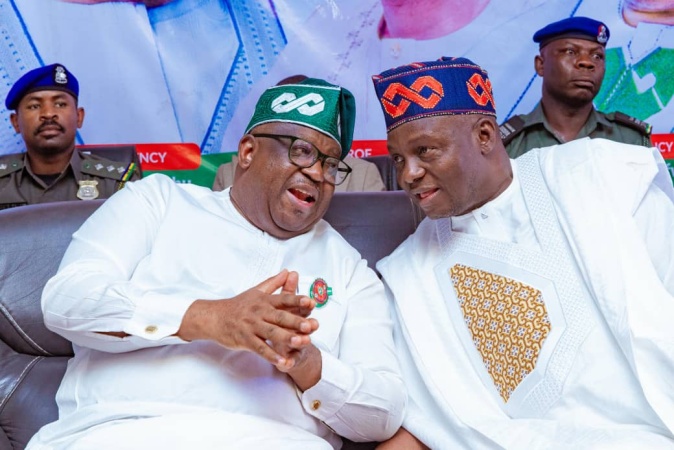
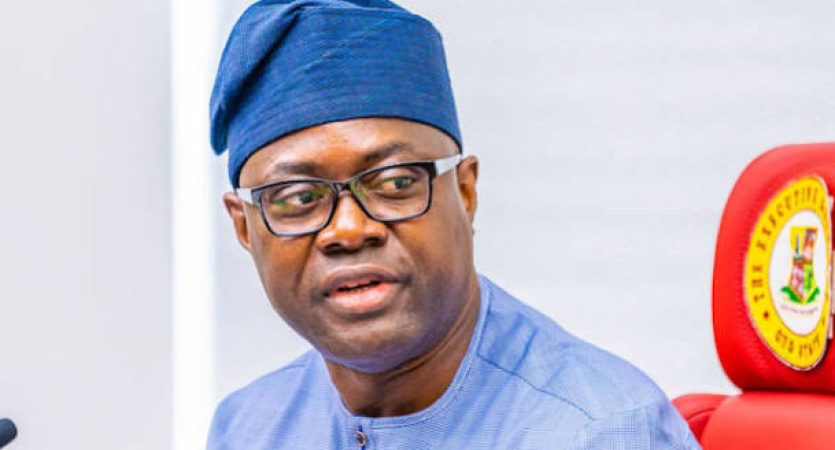
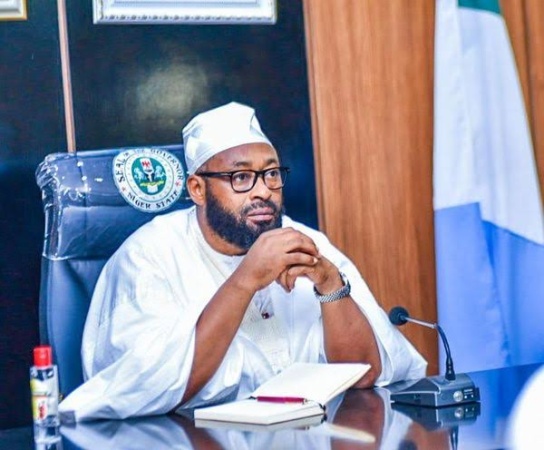
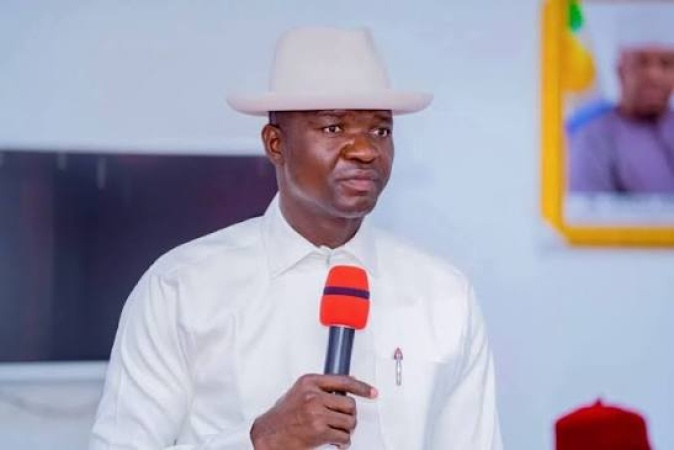
Gov Mutfwang and Prof Yilwatda
By CHRISTOPHER ISHAKU
The public embrace between Plateau State Governor, Caleb Mutfwang, and the National Chairman of the All Progressives Congress (APC), Prof. Nentawe Yilwatda Goshwe, marks more than a symbolic end to a bruising 2023 contest. It signals a major political realignment that could redefine Plateau’s power structure, bargaining strength, and trajectory ahead of the 2027 general elections.
For months after the governorship race, Plateau politics was shaped by quiet mistrust and open rivalry between camps loyal to both men. That tension reflected not just a personal contest, but a deeper struggle over control of party machinery, grassroots networks, and access to federal influence. Their decision to now walk together under the banner of the APC effectively redraws the state’s political map.
From Fragmentation to Consolidation
Plateau has historically suffered from elite fragmentation, where rival political blocs neutralised one another, weakening the state’s collective negotiating power at the national level. The coming together of Mutfwang and Nentawe represents a move toward consolidation — bringing together two major political constituencies that once competed for supremacy.
This unity reduces the likelihood of parallel power centres that often breed instability, defections, and prolonged intra-party warfare. Instead, it creates a single dominant axis around which Plateau’s political interests may now revolve.
Stronger Federal Leverage
With Prof. Nentawe occupying the influential position of APC National Chairman and Mutfwang now aligned with the ruling party at the centre, Plateau’s access to federal power structures has been significantly enhanced.
Historically, states that enjoy synergy between their governors and the ruling party’s national leadership often command greater attention in federal project allocation, political appointments, and strategic policymaking. Plateau’s new configuration potentially places it in a stronger position to attract infrastructure, security support, agricultural investment, and social intervention programmes.
In a federation where political proximity often shapes development outcomes, this alignment could translate into tangible dividends — if managed with cohesion and discipline.
Impact on Security and Social Stability
Plateau’s politics cannot be divorced from its security challenges. Years of communal tensions and criminal infiltration have made political unity a governance necessity rather than a luxury.
A unified elite front reduces the risk of political actors exploiting insecurity for leverage. It also improves coordination between state leadership, federal institutions, and local structures. The Mutfwang–Nentawe partnership, if sustained, may provide a more coherent political environment for implementing long-term peace and security strategies.
Reconfiguring 2027 Calculations
The convergence also sends an early message ahead of 2027: Plateau’s ruling structure is positioning itself to enter the next election cycle from a point of unity rather than fragmentation.
By collapsing old rival camps into one dominant bloc, the alliance potentially limits the space for insurgent candidacies and weakens opposition strategies built on exploiting internal divisions.
It also shifts the battleground from personality contests to performance politics — placing greater responsibility on governance outcomes, service delivery, and security improvements.
Risks Beneath the Unity
However, political convergence carries its own risks. Merging rival structures demands careful power balancing, inclusive appointments, and visible benefits to grassroots supporters on both sides. Failure to manage expectations could trigger internal discontent, quiet sabotage, or new splinter groups.
There is also the challenge of perception. Plateau’s diverse electorate will judge this unity not by rhetoric, but by whether it improves livelihoods, security, and inclusion.
A Defining Moment
Ultimately, the Mutfwang–Nentawe realignment presents Plateau with a rare political opening — the chance to move from perennial elite rivalry to coordinated state advocacy.
If translated into cooperative governance, strategic lobbying, and credible service delivery, the alliance could reset Plateau’s standing within Nigeria’s political economy.
If mishandled, it risks becoming another short-lived elite pact.
For now, it stands as one of the most consequential political developments in Plateau State since 2023 — and one that will shape the contours of power, policy, and elections in the years ahead.
• Ishaku is the chairman of Plateau Vanguard for Democracy (PVD).