ADVERTISEMENT

ADVERTISEMENT

.webp&w=256&q=75)
.webp&w=256&q=75)


Loading banners


NEWS EXPRESS is Nigeria’s leading online newspaper. Published by Africa’s international award-winning journalist, Mr. Isaac Umunna, NEWS EXPRESS is Nigeria’s first truly professional online daily newspaper. It is published from Lagos, Nigeria’s economic and media hub, and has a provision for occasional special print editions. Thanks to our vast network of sources and dedicated team of professional journalists and contributors spread across Nigeria and overseas, NEWS EXPRESS has become synonymous with newsbreaks and exclusive stories from around the world.
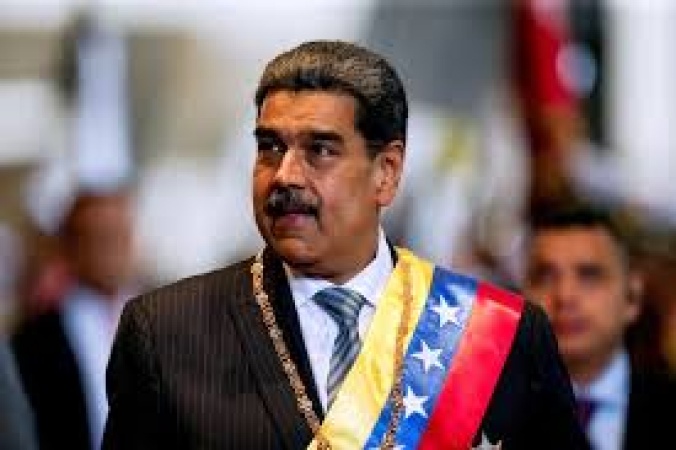
Captured Venezuelan President Nicols Maduro
The capture of Venezuelan President Nicolás Maduro and his wife in a U.S. special operations raid has sent shockwaves far beyond Latin America. What unfolded in the early hours of Saturday under Operation Absolute Resolve was not merely a regime-change operation; it was a demonstration of how modern power is exercised in the 21st century. For African leaders, especially those governing fragile states, conflict-affected regions, or countries entangled in great-power competition, the implications are profound and uncomfortable.
This was not an invasion. It was not a prolonged campaign. It was a surgical decapitation strike, executed with overwhelming intelligence superiority, air dominance, and political resolve.
Anatomy of a modern capture operation
According to U.S. officials, the operation was the culmination of months of planning, rehearsal, and force positioning. Elite U.S. units, including Delta Force and the 160th Special Operations Aviation Regiment, conducted a helicopter-borne insertion into Caracas under the cover of night.
More than 150 aircraft from 20 bases and ships supported the raid. Fighter jets, bombers, and electronic warfare platforms suppressed Venezuelan air defences. Low-flying helicopters crossed the Caribbean at terrain-hugging altitudes before striking directly at the heart of the capital. When ground defences engaged, they were neutralised within minutes. One helicopter was damaged—but the mission continued.
Within hours, Maduro and his wife were in U.S. custody, transferred to a U.S. Navy vessel in the Caribbean. Not a single American fatality was reported.
This was power projection without occupation. Precision without apology.
Lesson one: Sovereignty is conditional in practice
African leaders often speak of sovereignty as an absolute shield. The Maduro operation demonstrates the opposite. Sovereignty today is conditional on relevance, alignment, and control.
Venezuela possessed armed forces, air defences, and a functioning state. None of it mattered once Washington concluded that Maduro represented a strategic liability rather than a deterrent. When intelligence dominance, air supremacy, and political authorisation align, borders become porous.
For African states, the lesson is stark: sovereignty is not guaranteed by flags, speeches, or legal arguments. It is guaranteed by credible control of territory, institutions, and alliances.
Lesson two: Intelligence is the new decisive weapon
No African military, indeed, few militaries globally, can match the intelligence architecture that enabled Operation Absolute Resolve. The United States demonstrated seamless integration of:
· space-based surveillance
· signals intelligence
· human intelligence networks
· cyber and electronic warfare
· real-time command and control
Maduro was not captured because of overwhelming troop numbers. He was captured because his location, movement patterns, security arrangements, and decision-making cycles were fully mapped.
African leaders must understand this reality: the side that owns the data owns the battlefield. Armies without integrated intelligence systems are strategically naked, regardless of manpower.
Lesson three: Elites are more vulnerable than states
Perhaps the most sobering lesson is psychological. The operation did not target Venezuela’s army, cities, or infrastructure. It targeted the leadership itself.
This reflects a shift in modern warfare: from destroying states to neutralising decision-makers. Precision raids, sanctions, cyber operations, and legal instruments increasingly converge on individuals rather than regimes.
For African leaders, this changes risk calculus dramatically. Personal security, digital hygiene, information exposure, and elite cohesion now matter as much as conventional defence spending.
Power is no longer challenged only at borders—it is challenged in bedrooms.
Lesson four: External dependence is a strategic trap
Venezuela’s long-standing reliance on external partners for economic and security support proved insufficient. When the decisive moment came, no ally could deter or block U.S. action.
African states that outsource core security functions—intelligence, air defence, cyber protection, or elite protection—to foreign partners should take note. External patrons may provide support, but they rarely provide guarantees.
Strategic autonomy does not mean isolation; it means maintaining enough internal capacity to avoid total dependence.
Lesson five: Speed collapses political response
One of the most striking features of Operation Absolute Resolve was its tempo. By the time Venezuela declared a state of emergency, the operation was effectively over.
Speed is now a weapon. Rapid execution denies adversaries the ability to mobilise public opinion, activate alliances, or shape narratives. In this environment, traditional crisis diplomacy becomes irrelevant.
African governments facing internal unrest, elite rivalries, or external pressure must understand that reaction time has collapsed. Delayed decisions are fatal decisions.
Lesson six: Military power is back at the centre of statecraft
For years, global discourse has emphasised diplomacy, development, and norms. The Maduro capture underscores a harder truth: military power, used decisively and selectively, remains central to international politics.
President Donald Trump made clear that further action against Venezuela remains on the table, including potential boots on the ground. Whether or not that occurs is secondary to the signal sent: deterrence now rests on demonstrated willingness to act.
African leaders should abandon the illusion that global politics has become gentler. It has become more precise, more asymmetric, and more personal.
What this means for Africa
Africa is not Venezuela. But the continent increasingly sits at the intersection of great-power rivalry, internal fragility, and transnational security threats. The same tools used in Caracas—ISR dominance, special operations, and stand-off strikes—are already being deployed in parts of Africa.
The message to African leadership is not imminent invasion. It is a warning.
States that lose control of their territory, allow armed groups to metastasise, or become nodes of instability, invite external intervention—sometimes with consent, sometimes without.
Strategic imperatives for African leaders
The Maduro operation highlights five urgent imperatives:
1. Build integrated national intelligence systems, not fragmented agencies
2. Invest in elite force professionalism, not politicised security units
3. Secure leadership communications and digital footprints
4. Reduce over-reliance on external security guarantees
5. Resolve internal conflicts before they internationalise.
These are not luxuries. They are survival requirements.
Conclusion: Power has changed—Leaders must adapt
The capture of Nicolás Maduro was not just a Venezuelan crisis; it was a global demonstration. It showed how modern power operates when a state loses strategic leverage and misjudges the balance of resolve.
For African leaders, the lesson is neither paranoia nor panic. It is clarity.
In an era of precision warfare and intelligence dominance, legitimacy, control, and capability matter more than rhetoric. States that govern effectively reduce risk. States that drift invite intervention.
The age of untouchable leaders is over. The age of accountable power, enforced, if necessary, by force, has begun. (BusinessDay)