
ADVERTISEMENT

ADVERTISEMENT




















Loading banners


NEWS EXPRESS is Nigeria’s leading online newspaper. Published by Africa’s international award-winning journalist, Mr. Isaac Umunna, NEWS EXPRESS is Nigeria’s first truly professional online daily newspaper. It is published from Lagos, Nigeria’s economic and media hub, and has a provision for occasional special print editions. Thanks to our vast network of sources and dedicated team of professional journalists and contributors spread across Nigeria and overseas, NEWS EXPRESS has become synonymous with newsbreaks and exclusive stories from around the world.
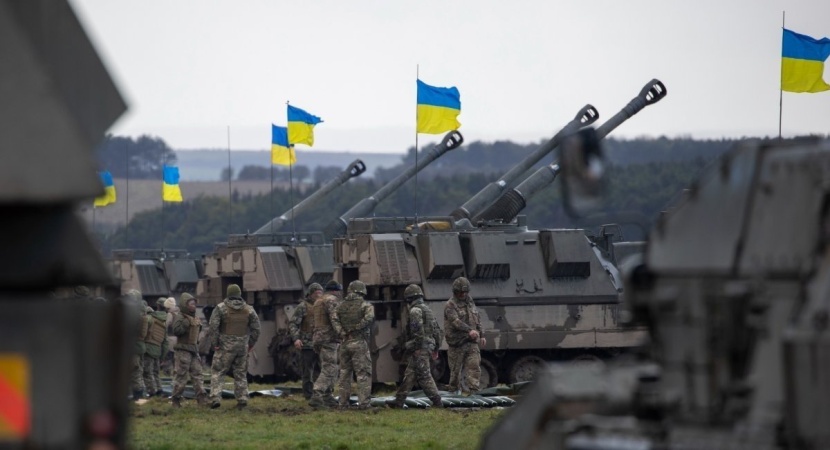
What lessons British forces are absorbing from Ukrainian soldiers, how they are learning them, and what this reveals about the structure of the UK's industrial base
Continuing to provide defensive support to Ukraine is beneficial for the United Kingdom from several angles. Most notably, it is British military personnel who are learning from the Armed Forces of Ukraine, rather than the other way around. At the same time, the need to manufacture weapons for Ukraine is helping to stimulate the recovery of the UK's industrial base.
Such complementary conclusions are outlined in a recent publication by the authoritative British think tank RUSI. A careful reading of the report, however, makes the implicit "but" in this arrangement particularly revealing.
Under Operation Interflex, British instructors have trained a total of 60,000 Ukrainian soldiers over the past three years. This figure is significant in terms of strengthening Ukraine's defensive capabilities. Yet it is equally important to examine what specific knowledge British military personnel themselves have absorbed through the principle of "learning by teaching others."
As emphasized in the RUSI analysis, British instructors gained invaluable insight into the realities of modern warfare. This experience was subsequently consolidated in areas such as electronic warfare, various categories of unmanned systems, and, most importantly, the ability to conduct dispersed maneuver operations under concentrated fire. In practical terms, this refers to operating small armored and infantry units against an adversary with superiority in artillery and air power.
Moreover, RUSI's authors acknowledge that the United Kingdom's 2025 Strategic Defence Review was shaped almost entirely by Ukraine's experience in the war against russia. Development programs for the British Army, the Royal Air Force, and the Royal Navy through 2030 are likewise based on an understanding of the conditions in which Ukrainian infantry, aviators, and naval defenders continue to resist russian forces.
This suggests that British military personnel are absorbing the experience of the Armed Forces of Ukraine not only at the tactical level, but also at the operational-tactical and strategic levels. In other words, the process operates at a far deeper level than might previously have been assumed. At the same time, an open question remains not only about how effectively this experience is absorbed, but also about how well it is implemented by British military leadership.
Another section of the RUSI report focuses on the concrete parameters of the UK's direct defensive support to Ukraine. It notes that the British government has pledged up to £21.8 billion for this purpose, of which £13 billion is allocated directly to weapons.
Specific examples include a £1.6 billion contract awarded to Thales to produce 5,000 LMM missiles for the Armed Forces of Ukraine at facilities in Belfast. This contract is expected to preserve at least 700 jobs. In addition, £61 million has been allocated to restore the production of artillery barrels.
A closer look, however, reveals further nuances. Current contracts for weapons production for Ukraine provide the British defense industry with a total of £1.86 billion in orders, supporting around 1,000 jobs. Importantly, these investments are limited to ammunition production alone. This implies that the overall volume of government investment in the UK's industrial base for producing equipment and weapons for Ukraine, as well as the number of personnel involved, is in fact significantly higher.
At the same time, the British defense industry employs more than 430,000 people, with 68 percent of all defense orders placed at facilities outside London.
This raises a key unresolved question. To what extent does Britain's regional industrial base itself feel the impact of investment flows into the industrial capacity required for the direct defense support of Ukraine?
The United Kingdom has declared a commitment to long-term defensive support for Ukraine, which continues to suffer from russian aggression. However, when British interests in this situation are examined more closely, a paradox emerges. It is British military forces that may ultimately benefit the most.
At first glance, within the framework of Operation Interflex, British instructors fulfilled a fundamental need for a country at war by training Ukrainian soldiers to Western standards in an environment free from the risk of russian strikes. At the same time, British military personnel themselves absorbed experience not only at the tactical level, but also at the operational-tactical and strategic levels. The critical question is how this knowledge is translated into practice by the UK's military leadership.
As for the British defense-industrial base, the existing £1.86 billion in contracts, limited solely to ammunition production, together with the £13 billion allocated overall for this area, appear substantial at first glance. Yet these figures must be weighed against the fact that only around 1,000 people in the UK defense sector are currently working on contracts for Ukraine, while the industry as a whole employs some 430,000 people.
Against this backdrop, a legitimate question arises as to whether the British defense industry fully recognizes its own interest in supporting Ukraine's needs, particularly when measured in terms of nationwide employment and job creation. (Defense Express)




