
Updating your news feed...
NEWS EXPRESS is Nigeria’s leading online newspaper. Published by Africa’s international award-winning journalist, Mr. Isaac Umunna, NEWS EXPRESS is Nigeria’s first truly professional online daily newspaper. It is published from Lagos, Nigeria’s economic and media hub, and has a provision for occasional special print editions. Thanks to our vast network of sources and dedicated team of professional journalists and contributors spread across Nigeria and overseas, NEWS EXPRESS has become synonymous with newsbreaks and exclusive stories from around the world.







Loading banners
Loading banners...

Yahoo is using AI to generate takeaways from this article. This means the info may not always match what's in the article. Reporting mistakes helps us improve the experience.Generate Key Takeaways
China is cementing its image as a lasting partner across Africa by gifting high-profile infrastructure, such as presidential palaces and parliament buildings.
A key example is the new US$32 million Economic Community of West African States (Ecowas) headquarters in Abuja. Funded by China and set for handover by the end of January, this centralised complex for the 15-member bloc aims to boost staff productivity and cut operational costs.
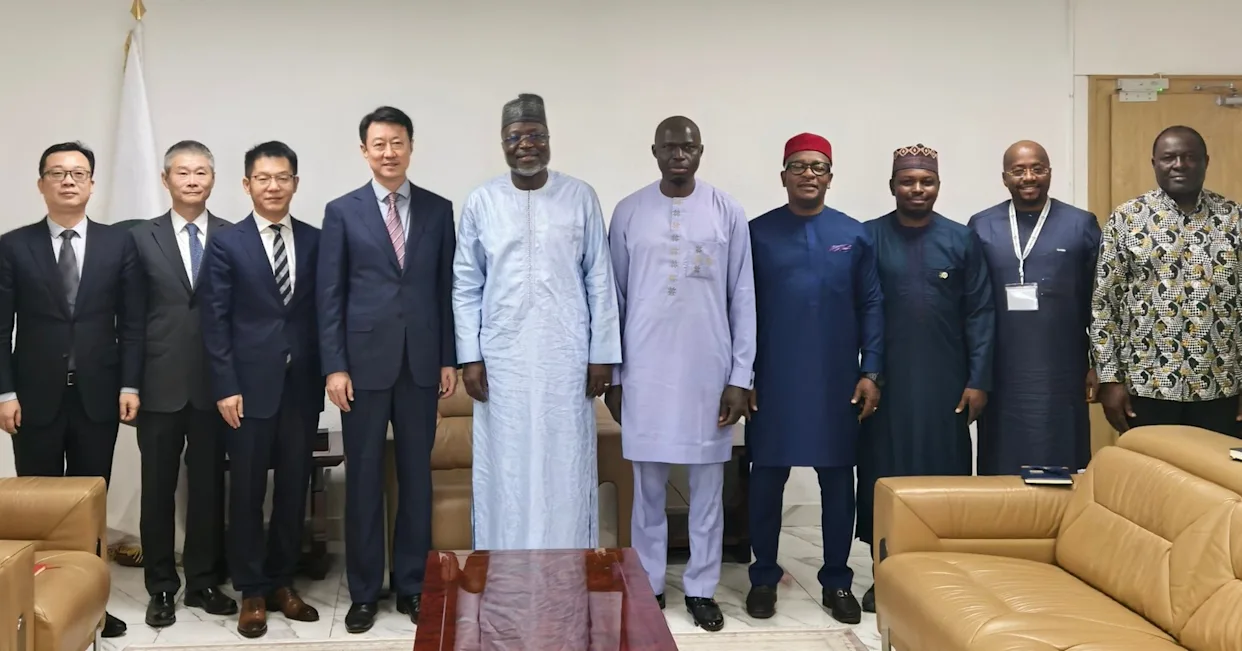
On December 4, Chinese ambassador to Nigeria Yu Dunhai visited the site to review progress and met with the president of the Ecowas Commission, Dr Omar Touray.
Do you have questions about the biggest topics and trends from around the world? Get the answers with SCMP Knowledge, our new platform of curated content with explainers, FAQs, analyses and infographics brought to you by our award-winning team.
Yu hailed the building as a "landmark project of bilateral cooperation" and a strong example of South-South cooperation. Touray, in turn, said the construction, which began in 2022, symbolised "Beijing's commitment" to regional integration.
The Chinese-built headquarters is being completed amid military takeovers across West Africa's "coup belt", including just recently in Guinea-Bissau and an attempted coup in Benin.
Observers said the Ecowas headquarters was a striking example of Chinese "palace or building diplomacy". Reports show that since 2000, Beijing has bankrolled the construction or renovation of nearly 200 government complexes.
According to a 2020 study by Washington-based think tank the Heritage Foundation, Chinese companies have built or renovated at least 186 government buildings including palaces, parliaments, presidential offices, foreign ministries and military facilities.
That number has since gone up, following new projects such as the parliaments in Zimbabwe and the Republic of the Congo, the foreign ministry annex in Ghana, and the Africa Centres for Disease Control and Prevention (Africa CDC) headquarters in Ethiopia.
The projects were funded through various streams including winning commercial contracts, loans and donations.
The Heritage Foundation report claimed that the Chinese-funded projects and gifts created "vectors of Chinese surveillance and influence".
"China has consistently engaged in practical and efficient cooperation with African nations based on their needs. China has constructed numerous infrastructure projects for African countries, delivering tangible benefits to the African people and creating favourable conditions for international partners to cooperate with Africa," then foreign ministry spokesman Zhao Lijian said after the report was released.
China has built at least one in every three African national parliaments. Observers have suggested that through this strategy, Beijing has been quietly securing influence at the highest levels of governance across the continent.
David Shinn, a China-Africa expert and professor at George Washington University's Elliott School of International Affairs, said China's gifting of the Ecowas headquarters in Abuja or the African Union headquarters in Addis Ababa was a clear case of "buying influence with African governments".
He said the only difference between these gifts and providing a football stadium or parliament building was the fact that China had built influence with many governments and not just one capital.
"While China is not the only country to engage in influence buying by gifting highly visible projects, Beijing does more of it than any other donor government," Shinn said.
He said these projects were also inherently different from those based on loans or even grants that focused on capacity building in health and education or improving food security.
"Once the structures have become functional, it is up to individual African governments to put their national interests first, which may be hard to do if Beijing presses them to pursue a pro-China position," Shinn said.
But China's diplomatic gifts extend to other major continental institutions in Addis Ababa, Ethiopia, where it built and funded the African Union headquarters at a cost of US$200 million, handing it over in 2012.
China's funding and building of the US$80 million Africa CDC headquarters in the Ethiopian capital was positioned as a gift to the African Union.
Innocent Batsani-Ncube, an associate professor of African politics at Queen Mary University of London and author of the book China and African Parliaments, said what China was doing as a major global power was not fundamentally different from other powers, as all countries sought influence, but Beijing's strategy was unique in its use of "concrete symbols" or gifted buildings to project influence in the short term.
The long-term plan was to "not just talk to people who are currently in charge of governmental power but to locate themselves within the formal African public institutions so that they can secure long-term access", Batsani-Ncube said of China's gifts to regional blocs such as the African Union and Ecowas.
He said China presented those palaces or parliaments in a way that "paralyses the bureaucracy", severely limiting the recipient's room for negotiation.
The new Zimbabwean parliament in Mount Hampden, 18km (11 miles) northwest of Harare, was funded by a US$140 million grant from China and built by the Shanghai Construction Group. It was handed over in 2022.
"At the top, when the gift is given, there is very limited space for negotiation," Batsani-Ncube added.
He said in many cases, China continued to maintain the buildings long after construction, ensuring sustained leverage.
These gifts have not gone without controversy. In 2018, Beijing was accused of bugging the African Union headquarters.
However, Batsani-Ncube dismissed espionage claims, as he saw "no conclusive evidence" and no realistic basis to believe China would plant listening devices in African parliaments, as their proceedings were typically public.
He said the strategic value lay elsewhere. China's primary goal in providing infrastructure was the overt "symbolism" of its physical presence and the control it granted, which was a more powerful form of influence, Batsani-Ncube added. (Yahoo News)




