Updating your news feed...
NEWS EXPRESS is Nigeria’s leading online newspaper. Published by Africa’s international award-winning journalist, Mr. Isaac Umunna, NEWS EXPRESS is Nigeria’s first truly professional online daily newspaper. It is published from Lagos, Nigeria’s economic and media hub, and has a provision for occasional special print editions. Thanks to our vast network of sources and dedicated team of professional journalists and contributors spread across Nigeria and overseas, NEWS EXPRESS has become synonymous with newsbreaks and exclusive stories from around the world.











Loading banners
Loading banners...

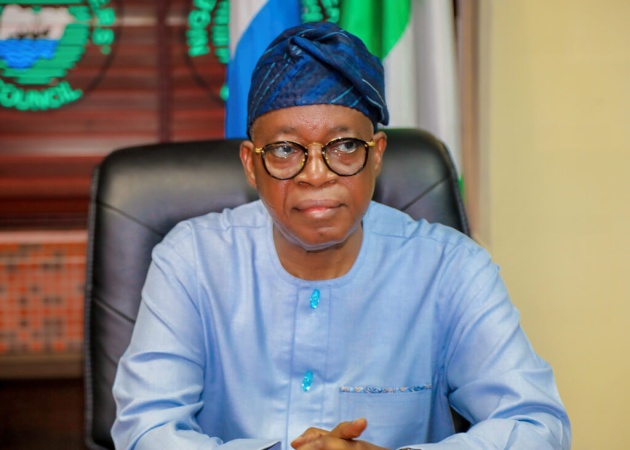
Adegboyega Oyetola, Minister of Marine and Blue Economy
The Federal Government of Nigeria has failed to release the $700 million Cabotage Vessel Financing Fund (CVFF) despite the expiration of its disbursement deadline.
Established to support indigenous shipowners and foster the growth of the nation’s maritime sector, the CVFF has remained dormant for months, causing considerable frustration among industry stakeholders.
The Cabotage Vessel Financing Fund (CVFF) was introduced to support the development of indigenous shipping capacity by assisting Nigerian shipowners in acquiring vessels for domestic coastal trade.
The fund is derived from a 2% surcharge on all cabotage contracts executed by indigenous shipowners in Nigerian waters.
Since its establishment, however, the disbursement process has been delayed multiple times, despite several deadlines set by the Federal Government.
In April 2025, Adegboyega Oyetola, the Minister of Marine and Blue Economy, directed the Nigerian Maritime Administration and Safety Agency (NIMASA) to initiate the disbursement of the fund. However, over nine months after the deadline, the CVFF remains untouched.
Since 2019, the government has failed to release the fund on at least 10 occasions, despite repeated promises from successive administrations. The constant delays have left Nigerian shipowners disillusioned and hindered the development of the country’s maritime industry.
Industry stakeholders are increasingly frustrated by the situation. According to experts, the delay in disbursing the CVFF is responsible for the decline of Nigeria’s indigenous fleet, which has fallen from 24 active vessels in 2005 to fewer than four by 2024.
This has resulted in foreign carriers handling 95% of Nigeria’s cargo, leading to a yearly loss in freight revenue estimated between $6 billion and $8 billion. In addition, more than 4,000 Nigerian seafarers are unemployed due to the lack of opportunities within the domestic fleet.
Violation of the Cabotage Act
The Cabotage law, enacted in 2003, restricts the operation of foreign vessels within Nigerian waters in an effort to boost the local shipping industry. The CVFF was designed to support indigenous shipowners, enabling them to acquire and maintain vessels that could operate within the country’s coastal waters.
However, experts argue that the Federal Government has violated the law by diverting the funds into the Treasury Single Account (TSA), rather than keeping it in a commercial bank as stipulated by the Cabotage Act. Dr. Mkgeorge Oyung, former President of the Ship Owners Association of Nigeria, emphasized that the money collected from indigenous shipowners should be managed by a commercial bank to ensure transparency and facilitate disbursement. He noted that the money currently held in the TSA could be worth over $1 billion, further increasing the urgency of releasing the funds.
The delays in the release of the CVFF are not just an administrative failure—they have severe economic consequences.
Industry experts estimate that the country is losing between $6 billion and $8 billion annually due to the non-disbursement of the fund. Furthermore, Nigeria’s maritime workforce, which once boasted over 4,000 trained seafarers, is now facing mass unemployment. The lack of opportunities has led many to seek employment with foreign vessels, further eroding the country’s maritime manpower base.
A Bleak Future for Indigenous Shipping
The collapse of Nigeria’s once-thriving indigenous fleet has been a major concern for stakeholders in the maritime industry. As foreign vessels dominate domestic coastal trade, the nation’s ability to retain economic value from its shipping industry continues to diminish.
This situation underscores broader governance failures in managing the country’s maritime resources.
At the PortNews Summit/30th Anniversary held in Apapa, Lagos, experts lamented the disappearance of Nigeria’s indigenous fleet, which is now reduced to a fraction of its former size.
Dr. Eugene Nweke, Head of Research at Sea Empowerment and Research Centre (SEREC), emphasized that while 90% of Nigeria’s trade is carried by sea, less than 5% of this trade is handled by Nigerian-owned vessels. He attributed this imbalance to governance failures rather than legislative gaps.
Industry leaders are now calling on the Federal Government to take immediate action to rectify the situation.
Stakeholders are urging the government to expedite the disbursement of the CVFF and ensure that the funds are used for their intended purpose: to strengthen Nigeria’s maritime industry and create employment opportunities for trained seafarers.
In response to the ongoing issues, former President of the Nigerian Bar Association (NBA), Olise Agbakoba, pointed out that the current system of disbursing the CVFF through commercial banks has been disrupted.
According to Agbakoba, the government’s decision to withhold the funds in the TSA has resulted in unnecessary bureaucratic bottlenecks.
Eligibility and Application Guidelines for CVFF
In an attempt to restart the disbursement process, NIMASA has outlined eligibility criteria for shipowners wishing to benefit from the fund:
•Equity Contribution: Applicants must contribute a minimum of 15% of the total cost of the vessel they wish to acquire.
•Loan Ceiling: The maximum loan amount available to a single beneficiary is capped at $25 million.
•Application Process: Interested shipowners must submit a formal application to NIMASA, providing business plans, financial statements, and other documentation as specified in the guidelines.
Strategic Importance of the CVFF
The CVFF is considered a critical tool for revitalizing Nigeria’s maritime industry. It is expected to:
• Enhance Indigenous Participation: The fund will help increase the number of Nigerian-owned vessels operating within domestic waters, boosting local capacity.
• Boost Economic Growth: By strengthening the capabilities of indigenous shipowners, the fund will create jobs, develop skills, and contribute to Nigeria’s GDP.
• Reduce Dependence on Foreign Vessels: Increasing the fleet of indigenous vessels will decrease reliance on foreign ships, keeping more economic value within the country.
Several countries have implemented similar financing schemes to support their indigenous shipping industries, including the United States, South Korea, and the Philippines. Nigeria’s CVFF, once activated, could align with international best practices, helping to reposition the country’s maritime sector on the global stage.
The prolonged delay In the disbursement of the CVFF, according to experts, remains a major obstacle to the growth of Nigeria’s maritime industry.
While the government has renewed its commitment to the fund, there is growing concern that continued delays will undermine efforts to revitalize the sector.
To match global standards, experts argue that Nigeria must ensure timely disbursement, transparency, and continuous oversight of the CVFF. Additionally, expanding the scope of the fund to support green shipping initiatives and technological upgrades could position Nigeria’s maritime sector for long-term success.
Meanwhile, the Ministry of Marine and Blue Economy has stated that NIMASA holds the key to unlocking the disbursement of the Cabotage Vessel Financing Fund (CVFF).
According to the Ministry’s spokesperson, Anastasia Ogbonna, NIMASA’s role is crucial in facilitating the release of the funds, which were established to support indigenous shipping capacity in Nigeria.
The Federal Government’s assertion suggests that NIMASA’s actions and decisions will determine when and how the CVFF funds are disbursed, emphasizing the agency’s critical role in unlocking the funds for the benefit of the maritime sector.
“It is the responsibility of NIMASA to say why the fund has not been disbursed. The Minister has given a clear directive to that effect. He gave NIMASA August 2025 deadline for disbursement so they are in a better position to say why it has not been disbursed,” she added.
Industry experts estimate that the country is losing between $6 billion and $8 billion annually due to the non-disbursement of the fund. Furthermore, Nigeria’s maritime workforce, which once boasted over 4,000 trained seafarers, is now facing mass unemployment. (Daily Trust)