Updating your news feed...
NEWS EXPRESS is Nigeria’s leading online newspaper. Published by Africa’s international award-winning journalist, Mr. Isaac Umunna, NEWS EXPRESS is Nigeria’s first truly professional online daily newspaper. It is published from Lagos, Nigeria’s economic and media hub, and has a provision for occasional special print editions. Thanks to our vast network of sources and dedicated team of professional journalists and contributors spread across Nigeria and overseas, NEWS EXPRESS has become synonymous with newsbreaks and exclusive stories from around the world.









Loading banners
Loading banners...

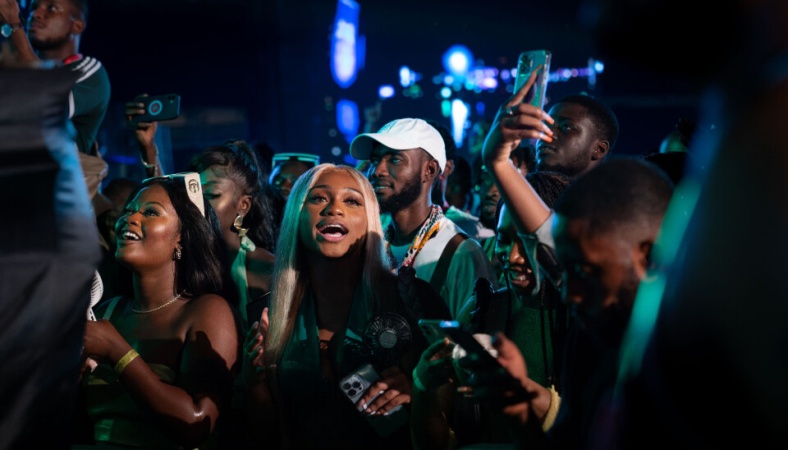
Nigerians enjoying the Detty December holidays
Nigeria’s Detty December boom is fast becoming a billion-dollar tourism engine. Yet, industry experts warn that the gains may falter without urgent fixes to chaotic pricing, weak infrastructure, flawed data systems and overstretched airports, threatening the country’s ambition to mobilise nearly $2 billion this festive season.
‘Detty December’ is the slang term for the festive, party-filled holiday season in Nigeria from mid-December to the New Year, characterised by numerous concerts, festivals, and social gatherings.
An estimated $71.6 million was earned from last year’s festivities in Lagos, highlighting both the scale of the opportunity and the pressure to strengthen the system supporting it.
Data from advisory firm MO Africa Company Limited, which projected the $2 billion foreign exchange earnings, showed that Murtala Muhammed International Airport handled around 550,000 inbound arrivals, with about 90 per cent comprising Nigerians living abroad returning home. Lagos State also received an estimated 1.2 million tourists in December.
Already, the Federal Executive Council (FEC) has approved a Presidential Task Force on ‘Detty December’ to improve coordination among ministries and ensure Nigeria delivers a world-class tourism experience.
The Minister of Art, Culture, and the Creative Economy, Hannatu Musa Musawa, said the task force will facilitate all the necessary interdependencies, including aviation, interior, and power, to ensure the international community is provided with a destination for Dirty December.
“This will also provide federal support to Lagos State and other festival hosts to maximise the season’s potential as a global brand,” she stated.
While riding on last year’s gains for improved earnings in 2025, there are concerns about exploitation in the tourism value-chain, especially as it relates to short-let rentals, a hike in prices of food and other essential services.
With Lagos being the centre of focus, due to it being regarded as a hotspot for lifestyle and entertainment, potential tourists and event seekers are already concerned about the sudden exploitation, as many are quietly returning to hotels: a surprising reversal for a season that once made short-lets the preferred option for convenience, space, and affordability.
Nigerians lambast short-let operators over steep, chaotic pricing
Accordingly, Nigerians have broadly criticised short-let operators for inflating prices beyond reasonable levels, blaming middlemen, poor service standards, and unrealistic profit expectations. Many noted that high fees were pushing visitors back to hotels, leaving apartments unbooked, while others highlighted opportunistic reselling schemes and concerns over charging in foreign currency.
Raising the alarm on X, Leo Dasilva (@SirLeoBDasilva) noted that the prices of apartments in Victoria Island and Ikoyi had become absurd. “Nothing is funnier than the prices of VI and Ikoyi Apartments this December,” he wrote, adding that hotels would likely receive more bookings because short-let operators had priced themselves out of the market. He cited an example: “Over $9000 for 11 nights for a just okay place.”
Some commentators blamed the situation on layers of intermediaries. User @okaykaykurlynz argued that the excessive pricing stemmed from the “number of middlemen/women”, explaining that an owner might list a property for $50 a night, only for several marketers to “add their own cut… until they get to $9000+!!!!”
The backlash also extended to occupancy levels. BIG SYNC (@IfeofGod93) observed that many short-lets were struggling to attract guests. “So many shortlets aren’t booked, shortlets managers are complaining bitterly. A lot of people have gone back to the hotel culture,” he wrote.
Others pointed to the broader Lagos cost environment. “It’s no secret that Lagos is overpriced. The sad part is that they do not have the backing for the prices,” user @Chi_Bu_Eze_ stated.
Some drew comparisons with global destinations. “Even Monaco holiday apartments don’t charge this high lol,” commented @Jioke_nna. Instances of speculative reselling were also highlighted. Nejeeb Bello Oyarese (@NejeebBello) recounted how someone attempted to book his two Airbnb rooms for $1,000 from November to January 2026 “so he could relist for much higher prices”, but also wanted a refund option if his plan failed. “I told him, Oga, once you put your credit card, Otilo!” he wrote.
Legal concerns surfaced, too. Churchill U. Onyeije (@ugochurch) reminded operators that pricing in foreign currency is prohibited. “Btw, it’s illegal for a company doing business in Nigeria to sell its goods and services in USD according to section 20(5) of the CBN Act 2007,” he cautioned.
For his part, Ayodele Timothy @AyodeleTim1 shared a personal experience that, in his view, underscored the irrationality of the market. He said he once sought a three-bedroom apartment in GRA and was met with a “ridiculous price”. After securing a better and cheaper option, he said the original provider tried to call back, but “I told him I’ve gotten a better offer.”
Besides accommodation, the Managing Director of Travelden, a subsidiary of Finchglow Holdings Limited, Gbenga Onitilo, identified excessive pricing across Nigeria’s hospitality and entertainment sectors as the biggest challenge threatening the sustainability of the popular Detty December festivity.
Speaking with journalists yesterday, Onitilo regretted that some vendors were taking advantage of the diasporans and tourists, who had wanted to visit the country for leisure. Onitilo noted that Detty December gained momentum in 2024, largely due to Nigerians in the diaspora returning home after long absences.
These returnees, he noted, contributed significantly to the country’s economy through remittances and seasonal spending, with Lagos, Calabar, Owerri and other cities being major beneficiaries.
However, he said the country had failed to adequately plan for the influx of tourists, leading operators to adopt exploitative pricing practices, which he warned could eventually drive tourists away.
Onitilo lamented that even facilities with available rooms pegged their rates far above regular seasonal adjustments, while some tripled their rates in a bid to exploit the travellers. He also regretted that some show promoters had set ticket and table prices way beyond reasonable limits.
This, he warned, was already prompting potential visitors to look towards other destinations, such as Ghana and Rwanda, which, according to him, offer more predictable pricing and better-curated tourism experiences. He stressed that a well-coordinated ecosystem, spanning nightlife, transportation, shopping, entertainment and accommodation, was essential if Lagos and other cities hoped to maintain their appeal as December tourism hubs.
Onitilo insisted that the long-term success of Detty December depended on curbing excessive pricing and creating a balanced environment that allows tourists to enjoy value for money.
He further pointed out that the airport was important in promoting tourism anywhere in the world, but said the nation’s airports were lacking in some of the fascinating facilities.
Calls grow for unified calendar, visa support, aviation preparedness
TOURISM consultant and founder/organiser of Akwaaba Africa Travel Market, Ukechi Uko, said the influx of tourists in December 2024 was not limited to Lagos State.
“It has been happening in the South-East, every December, as the traffic to the region is crazy, with the airports usually choked,” he said.
noted, however, that what Lagos experienced last December had its roots in the 2016 One Lagos Fiesta, where musical artists like Humble Smith, Olamide and Adekunle Gold performed. He added that as a result of the 2016 fiesta, many who usually travelled to the South-East stayed back in Lagos but left for the region before the New Year.
“So, Lagos is just coming into that December experience. It has always been a regular thing in the South-East and Calabar with the carnival. But last year, Afronation moved to Lagos. Nigerians go to Ghana to spend their Christmas and the festive period since the 2022 Year of Return, because Ghana has musical shows in December that attract different people, including Americans. Our kids from America and other places come to Nigeria, then fly to Ghana for shows and parties.
“But Ghana made the error of banning Nigerian music, then Lagos flipped things. 2023 was actually the threshold, because I monitored the hotels, but 2024 was when the explosion happened.”
Uko nonetheless maintained that almost all the cities in the South-East and South-South were full, noting that a musician called Jeriq “pulled 37,000 people into Enugu stadium, and 17,000 in Onitsha” in December.
“There is another one called Kolaboy, he filled Enugu stadium. The government had to give him an award. Therefore, it is a phenomenon that is going on,” he said.
Uko stated that with the country opening its gates for people in the diaspora to come home for entertainment with their families and friends, efforts must be made to codify the movement.
I am happy it happened last year in Lagos with the explosion, so that as a nation we can plan for what to do this year. This is because the airlines failed woefully last year. Those who wanted to come couldn’t get a flight anywhere; maybe the airlines planned for a million people, and three million people turned up.
“But there has to be some intentionality, just like they plan for Calabar Carnival. You see the statistics for Calabar: the first outing after Covid, 300,000 people turned up. And that is a little city that has about 1,350 hotels, but they were able to host 300,000.
“There has to be planning by different groups: aviation, tourism, event planners and others. There has to be national cohesion, as we see in Ghana. And last year, they were shocked by what happened in Nigeria because the Nigerian musicians stayed back in Nigeria, and Lagos happened.” On making Detty December a national project, Uko said there should be national coordination and a shared calendar.
“We need a coordinator, the Federal Government or the Lagos State government, that will guarantee visas and other logistics to make a success of such a programme.
“Ghana waived visas in December for people coming. They said that all Africans can enter Ghana without a visa. When they get to the Ghana airport, they will pick up their visas. That is intentionality and planning; it is not event organisers that will do that.
“Last year, two big events happened on the same day, December 21. It shouldn’t be. It should be spaced out. Calabar Carnival is 20 years old, and they have different events every day, so there are no clashes.
“Detty December in Lagos was happenstance, because people have been doing this over the years. But can we do it better? Can we do it on a national level?
“There is a lot of planning that needs to go into it. Aviation was a problem last year. Also, Lagos shut down last year because there was no mass transportation, so everybody had to drive. One night club… a thousand people want to enter, and everybody came in a car. There must be efficient mass transportation infrastructure, and extensive planning is necessary.
“People just think these are social events. No, it is a proper tourism product that should be worked at, planned and executed very well,” Uko said.
Rationale behind Detty December earnings methodology
Explaining how the figures were derived, the Chief Executive Officer of MO Africa Company Limited, Kayode Omosebi, said his team surveyed hotels, airports, short-let agents and nightclubs. He listed the top five countries of origin for international arrivals as the United States, Canada, Italy, South Africa and the United Kingdom.
The firm reported that hotel bookings contributed about N54 billion ($36 million) from 15,000 reservations, while short-term apartment rentals added another N21 billion ($13 million) from nearly 6,000 bookings, with an average nightly rate of N120,000 ($74.7).
According to the data, beaches and resorts accounted for about 70 per cent of the N4.5 billion ($2.8 million) generated from recreational activities, while 1,175 event centre bookings grossed N1.2 billion ($804,000). Nightlife activities also proved lucrative, with about 15 lounges and nightclubs earning roughly N4.32 billion ($2.7 million).
Similarly, car rentals grossed about N1.5 billion ($937,500) from 750 bookings, with daily rates ranging from N200,000 ($124.4) to N2 million ($1,244) for high-end vehicles. Lagos alone attracted an estimated 1.2 million tourists, 60 per cent of whom were domestic travellers.
Commenting on the development, the Founder of Tourism Afrikania, Chimezie Mike, noted that one of the biggest gaps in the 2024 season was the absence of centralised tourism data. “While revenue figures were impressive, there was limited insight into visitor demographics, spending patterns, and safety incidents.”
To improve data credibility, he advised the state government to establish a Tourism Intelligence and Data Coordination Centre in partnership with key stakeholders.
“This system can track arrivals, accommodation occupancy, transport usage, and event attendance in real-time, helping decision-makers plan smarter. Such a database would also strengthen investor confidence and inform policy for future Detty December editions.”
Similarly, the Founder of Gatehub Company Limited, Vera Ohioma, observed that there was no detailed response regarding data. “For instance, the short-term rental sector is still growing with easy entry and exit. How many of these property owners have business accounts to determine their revenue last December, especially since demand exceeded supply?
“Additionally, how are these transactions captured? The accuracy, completeness, and challenges in locating and utilising data, coupled with insufficient automation, make the process prone to errors. Investing in data automation and digital solutions is crucial, and public and private partnerships are essential for improving data quality, visibility, and accessibility.”
Mike added that, for the 2025 Detty December celebration, the industry must shift toward transparent, value-driven pricing. “The goal is not just profit maximisation but building visitors’ trust and retention. A fair pricing and service quality framework led by the Lagos State Tourism Board and hospitality associations could ensure ethical rate adjustments and protect the city’s tourism reputation.”
On her part, Ohioma said the peak season last December brought significant sales for lodging businesses as demand exceeded supply. She, however, noted that late bookings were overpriced for some short-term rentals and hotels compared to what early guests paid.
“The short-term rental sector, being relatively new, still lacks pricing controls like hotels, allowing for easy market entry and exit. Another concern is that the prices of some apartments do not always align with the quality of maintenance or service standards expected for their star rating,” Ohioma observed.
States must boost cultural assets, infrastructure to tap economy
ALSO speaking on the impact of Detty December and how other states can replicate the success, Managing Director of Getittome Travels and Co-founder of Nigeria Tourism Lovers, Makanjuola Ibrahim Adebusoye, said: “Every state has its own distinct features, and by identifying and highlighting these, they can create creative and engaging activities during the festive season.
Additionally, it is crucial to ensure that infrastructure, security, and other essential services are well-maintained. By addressing these factors, states can significantly boost their appeal and attract a larger influx of visitors during festive periods.
“Take Oyo State, as an example. I remember my grandfather vividly describing the importance and beauty of the masquerade festival in Ibadan. He spoke about how crowds would gather in large numbers to witness the event, as each household had its own unique masquerade with distinct features.
“He also explained the elaborate process of bringing each masquerade out, which was carefully managed by specific members of the household. That story left a lasting impression on me, and I have always felt a deep sense of loss seeing how such a vibrant tradition has been poorly handled in recent times.
“Now, imagine the transformation in Oyo State’s tourism potential if this festival were revived and well-organised, especially during a festive period like December. The influx of tourists would undoubtedly increase.
“It’s all about recognising these strengths and showcasing them effectively,” he added. Adebusoye nonetheless stressed that no one would travel to a place without good infrastructure. “This serves as the foundation for attracting visitors and creating opportunities for private investors to come in and invest.
“While Lagos also faces challenges with infrastructure, it is clear that the state government consistently works to improve these areas, which has contributed significantly to its appeal.”
On the roles of local stakeholders, he said they must prioritise collaboration among themselves and with the government to ensure the festive season is a memorable experience.
“Gathering feedback from visitors is equally important to identify areas for improvement and share insights with the government to make subsequent years even better. By working together, we can elevate the tourism experience and attract more visitors across the country.” He also suggested that tour operators should design pocket-friendly, well-curated trips to cater to different budgets and preferences.
On building on the successes recorded during Detty December, Mike suggested that Lagos must continue to brand the season not just as a party period, but as a cultural homecoming experience. “Beyond nightlife, our programming should highlight local heritage through food festivals, cultural parades, art exhibitions, and eco-tourism tours, ensuring visitors engage with the soul of Lagos, not just its concerts.
“We must also avoid over-commercialisation by creating platforms for local artisans, street performers, and community-based tourism enterprises to benefit directly from the festive economy. For the international and diaspora markets, curated travel packages combining heritage, music, and leisure will strengthen the city’s global appeal.”
To obtain government input on concerns raised by stakeholders, particularly regarding Detty December, the Lagos State Special Adviser on Tourism, Idris Aregbe, was contacted to explain what the state is doing differently this year, including efforts to shift from data estimates to actual figures on festive activities. He requested that the questions be sent to him, and they were. A text message was also sent to notify him that the questions had been forwarded via WhatsApp, but he had not responded as of press time. (The Guardian)