Updating your news feed...
NEWS EXPRESS is Nigeria’s leading online newspaper. Published by Africa’s international award-winning journalist, Mr. Isaac Umunna, NEWS EXPRESS is Nigeria’s first truly professional online daily newspaper. It is published from Lagos, Nigeria’s economic and media hub, and has a provision for occasional special print editions. Thanks to our vast network of sources and dedicated team of professional journalists and contributors spread across Nigeria and overseas, NEWS EXPRESS has become synonymous with newsbreaks and exclusive stories from around the world.










Loading banners
Loading banners...

By ABDULRAZAQ MAGAJI
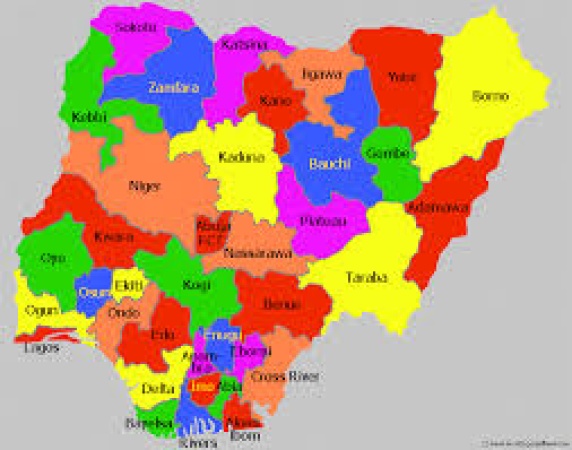
Over the past several years, the agitation for the Nigeria’s breakup has grown louder across various regions. The agitation is fuelled by ethnic mistrust, economic frustrations, perceptions of political marginalization and the burden of insecurity. While these grievances are real and deserving of sincere national dialogue, the rising chorus for dismemberment is both dangerous and shortsighted. It threatens not only the survival of Africa’s most populous nation but also the immense opportunities that come with Nigeria’s abundant and unmatched human and natural endowments.
Clearly, this is a moment of defining crossroads for Nigeria and Nigerians. But, rather than yielding to the tempting but chaotic idea of disintegration, Nigerians need to redirect their energies toward building a stronger, more just, and more prosperous union. A country as richly endowed as Nigeria, both in its people and natural resources, has every reason to thrive as a continental powerhouse. What is needed is not fragmentation but renewed commitment to good governance, national cohesion, and shared purpose.
To begin with, Nigeria’s greatest asset is its people. With a population estimated at over 200 million, mostly of them young, ambitious, and increasingly innovative, the country has a demographic advantage that many nations can only dream of. From the tech hubs of Lagos and Abuja to the creative industries gaining continental and global acclaim, Nigerians continue to demonstrate resilience, creativity, and leadership. If properly harnessed, this youthful energy can drive economic transformation on a scale that would make Nigeria a global player. Fragmenting the country would not only shatter this collective potential but also diminish the reach and influence of its diverse talents.
Nigeria’s ethnic and cultural diversity, often cited as a source of conflict, is in fact one of its biggest strengths. The country’s over 250 ethnic groups offer rich cultural resources, varied skills, and unique perspectives that can produce a strong, dynamic society. Nations across the world, from the United States to India, thrive on diversity. Nigeria, too, can turn its mosaic of cultures into a strategic advantage by promoting mutual respect, equitable development, and effective dialogue.
Economically, the case for unity is even more compelling. Nigeria is blessed with enormous natural resources distributed across its regions. The oil wealth of the Niger Delta, the agricultural potential and mineral deposits of the North, and the commercial vibrancy of the Southwest are all pillars of a shared national economy. A breakup would scatter these complementary strengths into competing fragments, weakening each part and jeopardizing regional stability. The global economy increasingly rewards integration and cooperative markets and, from all indications, Nigeria’s size gives it the necessary bargaining power that smaller, isolated units would struggle to match.
Beyond oil, Nigeria holds massive untapped opportunities in solid minerals, renewable energy, technology, agribusiness and the creative economy. With the right policies and infrastructural investments, the country can diversify its economy and reduce the overreliance on petroleum revenues. What is more, a united Nigeria has the population to sustain large industries and the market size to attract significant foreign investment. Frighteningly, this potential will collapse under any scenario of disintegration.
Politically, Nigeria’s role on the African continent cannot be overstated. As a founding member of the African Union, ECOWAS, and several regional bodies, the country has historically served as a stabilizer in West Africa. Its peacekeeping contributions, dating back to pre-independence in 1960, her diplomatic influence, and economic presence have made it a central figure in continental affairs. A fractured Nigeria would weaken continental stability, reduce Africa’s collective strength on the global stage and embolden external actors who will be main beneficiaries from a divided and destabilised continent.
Those who romanticize secession often underestimate the humanitarian and economic costs of breakaway movements. Nations that have attempted to dismember—such as Sudan and Ethiopia—have endured prolonged instability, violence, economic collapse, and humanitarian crises. Nigeria, with its deep ethnic intermingling and high population density, would be even more vulnerable to devastating conflict if disintegration were pursued. In real terms, no part of the country stands any chance to gain from prolonged chaos and bloodletting.
Yet, dismissing the idea of dismemberment is only the first step. Nigerians must confront the deeper issues driving separatist sentiments such as inequitable distribution of resources, unemployment, corruption, insecurity, political exclusion, and poor governance. The call for unity cannot be meaningful unless accompanied by a sincere effort to build a fairer and more accountable nation. If truth be told, unity must never be a tool for suppressing legitimate grievances, but provide a foundation upon which grievances can be genuinely addressed.
What Nigeria requires at this critical juncture is a national rebirth. Government at all levels must recommit to the principles of federalism, ensuring that every region enjoys a fair share of development and representation. On their part, and recognizing that their destinies are intertwined, citizens must rediscover the spirit of patriotism. Civil society must advocate vigorously for reforms that promote accountability, inclusion, and security while the youth, who constitute the majority, must resist the politics of division and demand leadership that reflects competence and merit.
Most importantly, the narrative must shift. Instead of amplifying what divides the country, national discourse should highlight the remarkable stories of cooperation, innovation, and resilience that define Nigeria. From interethnic collaborations in business and entertainment to shared struggles against insecurity and economic hardship, Nigerians daily demonstrate a unity more profound than political tensions suggest. These examples must be promoted as models for the future.
In a world grappling with fragmentation, nationalism, and economic uncertainty, Nigeria’s strength lies in its unity and potential. The country is not without challenges, but the country's capacity to overcome adversity has been proven overtime. Now is the moment for Nigerians to reject the destructive rhetoric of dismemberment and instead work collectively toward building a nation that reflects the promise of its people and the richness of its resources.
Nigeria can be a continental powerhouse—economically, politically, and culturally. But this future will only be realized if Nigerians choose unity over division, hope over despair, and collective progress over narrow and pedestrian interests. The path forward demands courage, commitment, and clear vision.
Nigeria may be diverse, but the destiny of its people is shared.
•Magaji magaji778@gmail.com writes from Abuja and can also be reached via 234-803-697-9133.